


5 Starting Points If You’re Embarrassed to See a Dentist

What if the first step isn’t explaining every missed appointment, but simply saying, “I’m embarrassed to go to the dentist; where do I start?” A dentist’s role is to assess your teeth and gums and explain your care options, not rank you or shame you. You can start by sharing what feels difficult and asking for a calm conversation about what happens next.
It’s understandable to worry that someone will judge your teeth, especially if you’ve put off care. You don’t need perfect words or a complete history before reaching out. In this article, you’ll learn how to find a considerate dentist, explain your concerns before or during an appointment, and ask for breaks when you need them. You’ll also learn how to discuss sedation if anxiety feels overwhelming. A few clear requests can make the first step feel more manageable, so you can focus on your comfort and oral health.
Table of Contents
1. Can I Request Sedation If I’m Really Anxious?
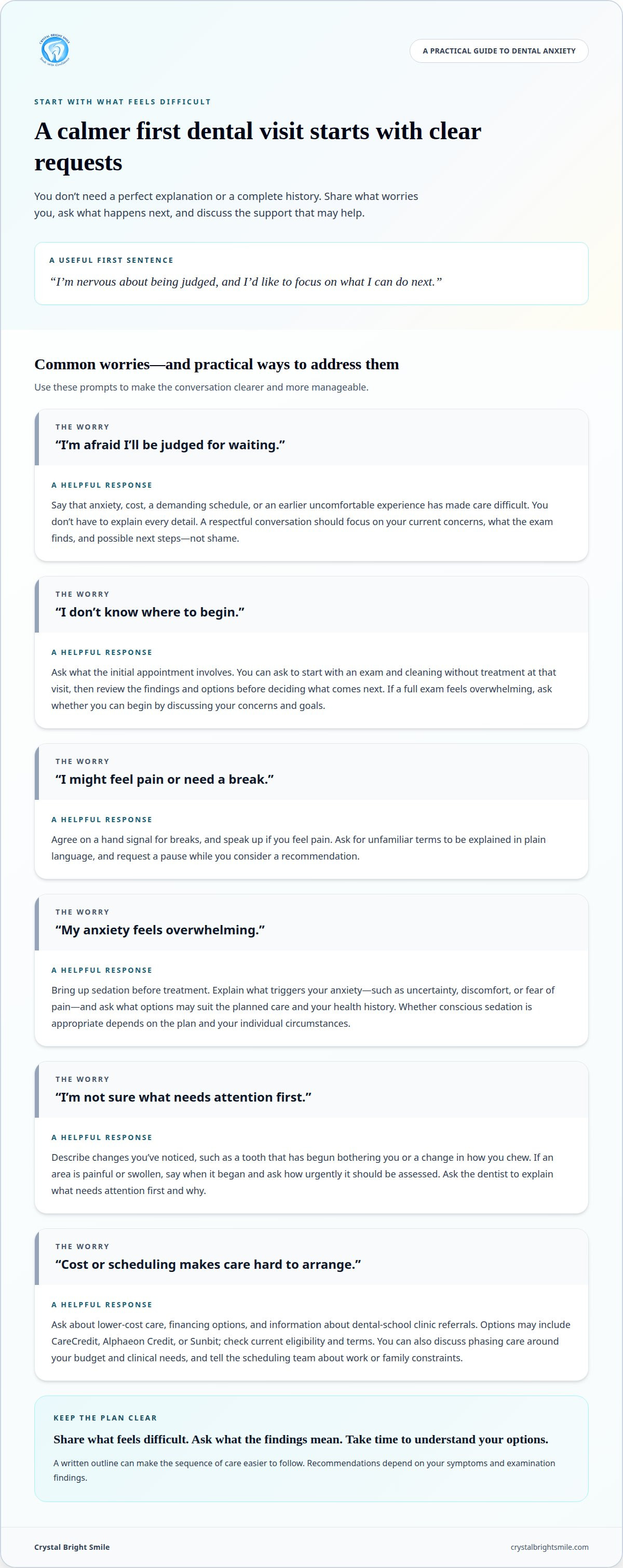
Yes, you can raise sedation with a dentist before treatment. Explain what triggers your anxiety, such as uncertainty, discomfort, or fear of pain. Ask what options may suit the planned care and your health history. The effects of conscious sedation and whether it is suitable depend on the sedation plan and your individual circumstances. A dentist can discuss whether it’s appropriate for your situation rather than assuming it’s needed or suitable.
A long gap can feel embarrassing if you expect criticism about your teeth or past habits. You don’t need to remember the exact date of your last appointment or justify every missed visit. Start with changes you’ve noticed, such as a tooth that recently began bothering you or a change in how you chew. At a first visit, the dentist can examine your mouth, hear your concerns, and explain possible next steps. You can ask to book an exam and cleaning without treatment at that first visit. Say you’d like to understand the findings and options before deciding what comes next.
Dental problems can worsen while care is delayed. For example, untreated decay continues to progress, which may make later treatment more involved. That doesn’t mean every concern needs the same response. A dentist considers your current symptoms and examination findings to decide what to address first. If you’re concerned about a painful or swollen area, describe it when arranging an appointment and ask how urgently it should be assessed. Share when it began and whether chewing has changed.
Make the first conversation practical. Explain that anxiety has kept you away and ask what the initial appointment involves. If a full exam feels overwhelming, ask whether you can start with a conversation about your concerns and goals. A dentist can use your priorities and examination findings to shape a treatment plan, then explain which issues need attention first. You can also ask for a written outline so the sequence feels clear, not like one large, uncertain task.
Cost questions belong in that discussion, too. Ask about lower-cost care, available financing, and whether the practice can provide information about dental-school clinic referrals. Financing options may include CareCredit, Alphaeon Credit, or Sunbit; ask about current eligibility and terms before making decisions. For extensive work, ask how care might be phased around your budget and clinical needs, rather than assuming every step must happen at once.
Work and family responsibilities can make appointments harder to arrange. Tell the scheduling team about your constraints, such as school pickup or limited time away from work, and ask about appointment options that fit. If a painful or swollen gum, a tooth problem, or a change in chewing arises while you wait, call and describe it. The dental team can use those details to assess urgency and explain the next step. Clear information can turn an anxious first move into a manageable plan.
2. Do dentists judge their patients?
A dentist’s job is to assess your teeth and gums, explain what they find, and discuss care options. It isn’t to rank you against other patients. Still, fear of being scolded can feel very real, especially if you’re nervous about visible decay, stained teeth, or a long gap between visits. Those worries can make someone hide a concern or postpone booking. Naming the fear directly gives the dental team a chance to respond.
Feeling ashamed about “my teeth” doesn’t mean you’ve done something wrong. A person may have delayed care because of anxiety, cost concerns, a demanding work schedule, or an earlier uncomfortable experience. Sometimes several reasons overlap. You don’t have to explain every detail before asking for an appointment. You can say, “I’m nervous about being judged, and I’d like to focus on what I can do next.” That gives the conversation a clear, practical starting point.
Pay attention to how the dentist responds. A respectful conversation focuses on your current concerns, examination findings, and possible next steps. For example, if you mention bleeding gums or a chipped tooth, the dentist should explain what they observe and what care could address it. Questions about brushing or past visits should help clarify your needs, not turn into a lecture. If you feel talked down to or shamed about your teeth, take that warning sign seriously.
It can help to separate a clinical explanation from criticism. Hearing that a tooth needs attention may feel uncomfortable, but the information helps you understand your options. Ask the dentist to explain unfamiliar terms in plain language or pause while you consider a recommendation. You can say, “Please tell me what needs attention first and why.” A clear answer should connect the finding with the proposed next step, without making assumptions about your character or effort.
Before the appointment, write down one or two concerns you want addressed, such as tooth sensitivity or embarrassment about smiling. Bring that note or read it aloud if anxiety makes conversation difficult. You can also ask to discuss findings before deciding on treatment. A first visit is a chance to share your priorities and understand possible care, not a test of whether you’ve followed a perfect routine. For a calmer first conversation, you can explore a dental appointment and explain what would help you feel comfortable.
3. Finding a dentist who treats patients without judgment
Look for a dentist who listens before recommending treatment. During an initial conversation, notice whether they ask what worries you, explain findings in plain language, and invite questions. For example, if you mention years without care, a respectful response focuses on your current dental health and next steps. A lecture about past habits is different from a useful explanation of how a problem developed.
Other patients’ experiences can help you understand how a practice communicates. Read comments for specific examples, such as staff explaining procedures, responding kindly to nervous patients, or allowing time for questions. Look for repeated details across different accounts rather than relying on one glowing or critical review. You can also ask someone you trust for a referral, then contact the practice to describe your concerns before booking.
Use the first conversation to notice whether your needs are taken seriously. You might say, “I’m worried about being judged, and I need you to explain each step.” The response can show whether the team acknowledges your request and describes how they’ll communicate. You can ask what happens during an exam, whether you can pause to ask questions, and how treatment choices are explained. Clear answers help you decide whether the setting feels comfortable enough to continue.
If anxiety affects your ability to receive care, bring up sedation before treatment is planned. Ask what type may be appropriate, what it involves, and how the dentist will decide based on your health and the planned procedure. The effects of conscious sedation, including breathing and responsiveness to speech or touch, depend on the sedation plan and individual patient. Sedation isn’t the only way to make an appointment feel more manageable. A clear explanation, agreed pauses, and a chance to discuss concerns may also help.
A considerate dentist treats disease without treating you as a problem. When discussing decay or gum concerns, they should connect examination findings with available treatment options. You can ask, “What needs attention first, and what can wait?” The answer should explain the clinical priorities without blaming you. If the conversation turns into repeated scolding or your questions are dismissed, you can pause and consider whether that relationship suits your needs.
Before choosing, write down two questions: how the dentist handles patient anxiety and how they explain treatment choices. A brief call or consultation can help you hear the answers directly. Look for practical signs of respect, such as permission to ask questions, explanations without jargon, and attention to your stated concerns. Those details offer a more useful basis for trust than promises of a judgment-free experience alone.
4. Communicating concerns before and during appointments
If you feel embarrassed about your teeth, you can tell the dental team before booking an appointment. Call, email, or visit the office to explain what feels difficult and ask what a first dental visit involves. You might say, “I’m anxious about my teeth and would like to know what to expect.” The team can explain the appointment process, discuss a consultation before treatment, and help you prepare without requiring a long explanation.
Before the visit, write down the concerns you most want addressed. For example, note a tooth that hurts, discomfort while eating, or a change in your bite. If speaking feels hard, bring the note and hand it to the dental team. You can also mention whether you feel embarrassed, what makes you nervous, and what would help you feel more at ease. Those details help the team understand your priorities and tailor its communication.
If it’s been more than 10 years since your last visit, say so when you contact the office. You don’t need to recall the exact date; share any changes you’ve noticed, such as new sensitivity or trouble chewing. Mentioning a specific concern helps the team understand what matters to you. If a full exam feels overwhelming, ask whether a consultation can be the first step. You can use that conversation to learn what the appointment may include.
During the dental visit, ask the dentist to explain each step before it happens. For instance, you can request a pause before an examination or ask what a particular instrument is for. If you don’t understand a recommendation, ask what finding supports it and what options follow. A dental team can use your current concerns and examination findings to plan what to address first. You can also ask to listen to music through headphones if dental sounds increase your anxiety.
Clear communication matters if a problem feels serious or changes while you wait. When contacting the office, describe where the discomfort is, when it started, and whether eating or chewing makes it worse. If you notice swelling or a new change, include that detail. The team can use your description to assess the concern and explain the next step. You don’t need to decide what the problem means before calling.
Preparation can be simple: share one concern, ask what to expect, and state what helps you feel comfortable. For example, request explanations before each step or ask to pause if you become overwhelmed. A considerate dental team can use those preferences to guide the appointment and keep the conversation focused on your needs. Speaking up early gives everyone a clearer starting point.
5. Ways to communicate pain or request a break
Agree on a hand signal with the dentist before treatment begins. Raising your hand can mean, “Please stop so I can speak,” even when your mouth is open. Choose a signal you can make comfortably, then confirm the dental team understands it. This gives you a clear way to pause without needing to explain yourself in the moment. If you’re afraid of losing control, discuss the signal during the appointment conversation.
Describe discomfort as specifically as you can. Say where you feel it, whether it’s sharp or dull, and which action brings it on. For example, tell the dentist, “That tooth hurts when pressure is applied,” or “My gums feel sore near the back.” These details help the team understand what’s happening and respond. If you need a break for another reason, such as jaw fatigue or feeling overwhelmed, say so directly.
Whether a local anesthetic is appropriate depends on your individual health history and treatment needs. Discuss the medication and any health concerns with your dentist before treatment. If you feel pain after receiving a local anesthetic, tell the dentist rather than silently enduring it. The dentist can discuss possible next steps to address your comfort. A simple phrase such as “I can still feel pain here” is useful. Don’t worry about interrupting the procedure; speaking up gives the dental team important information.
During a cleaning or examination, tenderness may make it harder to explain what you’re feeling. Before the clinician begins, mention sensitive teeth, sore gums, or discomfort when eating. For instance, you might say, “Please pause if I raise my hand, especially near this gum.” That context can help the team check in at relevant moments. If you have concerns about gum disease or another dental problem, describe the symptoms you’ve noticed rather than trying to diagnose them yourself.
A break can help you reset and share what needs to change before continuing. Use your signal, take a moment, then tell the dentist whether you need a pause, an explanation, or help with discomfort. You can also ask the team to describe the next step before it happens. This keeps the conversation specific and gives you a clearer sense of what to expect throughout treatment.
Before your next appointment, decide on one phrase and one signal to use. For example, say, “I need a moment,” while raising your hand. If pain starts, identify the location and what you were feeling when it began. These small details help the dental team respond to your needs and support your oral health. Schedule a dental appointment to discuss your concerns and comfort preferences.
Crystal Bright Smile
Crystal Bright Smile offers a considerate next step for patients ready to restart dental care in Tujunga, California. Clear communication and personalized treatment planning can help you discuss what feels difficult, understand examination findings, and consider care at a pace informed by your needs and goals. If you’re also thinking about changes to your smile, options include Invisalign, porcelain veneers, and teeth whitening. Recommendations depend on your examination, dental condition, goals, and clinical needs. You don’t need to have every concern organized before reaching out; sharing what makes you anxious can begin the conversation. Contact Crystal Bright Smile to discuss scheduling an appointment.
Take the First Step on Your Terms
You don’t have to map out every part of your dental future before you begin. Choose one manageable next step, such as arranging a conversation about your concerns or asking what an initial visit involves. If the thought “I’m embarrassed to go to the dentist; where do I start?” still feels difficult to say aloud, write it down and share it with the dental team.
Once your immediate oral health concerns have been discussed, you can explore other goals at your own pace. Crystal Bright Smile offers dental implants, Invisalign, and porcelain veneers. Recommendations and candidacy depend on your examination, dental condition, goals, and clinical needs. You don’t need to decide on cosmetic or restorative treatment before you understand your options.
Let your first conversation be about what matters to you, whether that’s comfort, function, or feeling more confident about your smile. When you’re ready, contact Crystal Bright Smile to discuss a dental appointment. One thoughtful step can open the door to care that feels more approachable.
Frequently Asked Questions
Do dentists judge their patients?
Dentists make clinical assessments of teeth and gums, but that isn’t a judgment of your character. If a comment leaves you unsure, ask what the dentist observed and how it affects your oral health. For example, “Can you explain what you’re seeing?” keeps the discussion focused on the finding and its meaning, rather than assumptions about you.
Is it common to feel embarrassed about going to the dentist?
Yes, embarrassment can make arranging care feel difficult. If you’re thinking, “I’m embarrassed to go to the dentist; where do I start?” choose one small first action: write down what you want help with, then use that note when you contact the office. You don’t need to solve every concern in advance. A clear first priority can make the next step easier to picture.
Are my teeth the worst the dentist has ever seen?
There’s no meaningful way to compare your teeth with every patient a dentist has treated. A comparison also can’t tell you which concerns need attention. Instead, ask for a clear explanation of your examination findings and how they relate to your goals. That gives you useful information for deciding what to address, without turning your dental visit into a contest.
How can I make sure the dentist won’t scold or lecture me?
No one can guarantee how another person will speak, but you can set a communication preference early. Try saying, “I’d like straightforward explanations without blame.” If the conversation feels uncomfortable, ask to pause and clarify what you need. Their response gives you information about whether you feel heard and can continue the discussion comfortably.
What if it’s been over 10 years since my last visit?
You can describe the gap as “more than 10 years” if you don’t remember the date. An apology or detailed account of every year isn’t needed to begin a conversation. If a form asks about your dental history, answer as accurately as you can and note anything you’re unsure about. You can then focus the appointment discussion on your present priorities.
What if I’m afraid my dentist will scold or embarrass me?
You can bring a short written note if saying the fear aloud feels uncomfortable. For example, write, “I’m worried about being embarrassed, so please speak with me respectfully.” Handing over the note can start the conversation without requiring you to explain everything at once. If someone accompanies you for support, decide beforehand whether you’d like them to speak or simply be present.
Can I request sedation if I’m really anxious?
Yes, you can ask about sedation. A useful next question is what the option would involve for the specific procedure being considered and what to expect during the appointment. Discussing it as part of treatment planning gives you time to understand the proposed approach. The dentist can consider your health history and planned care when discussing whether an option is appropriate.
How do I know if my dental anxiety is serious enough to mention?
You don’t need to reach a particular level of fear before bringing it up. Mention anxiety if it affects your ability to book, attend, or talk through care. You can name the moment that feels hardest, such as entering the exam room or hearing dental sounds. That specific detail helps the team understand what part of the experience concerns you most.

Comments