


Dental Implants and Autoimmune Disease: Healing and Risks

An autoimmune diagnosis doesn't automatically rule out dental implants. Whether dental implants are safe for people with autoimmune disease depends on factors such as disease activity, bone and gum health, and medications; healing may be slower for some patients and may need closer monitoring.
It’s understandable to have questions about infection, implant healing, and whether treatment could affect your condition. Candidacy is assessed individually: a controlled condition may be compatible with implants, while active inflammation or certain medications can affect risks and timing.
This article explains how autoimmune conditions and immunosuppressants may influence oral health, healing, and implant survival. You’ll learn what clinicians consider when assessing candidacy, why survival findings need context, and how coordination with your medical team can support thoughtful treatment planning.
Table of Contents
How Are Dental Implants Related to Autoimmune Diseases?
Autoimmune conditions can affect inflammation, oral tissues, and the body’s response to surgery. For patients asking whether dental implants are safe for people with autoimmune disease, the answer is generally yes, but disease activity and medications matter.
Effects on Healing and Implant Integration
Osseointegration is the process in which jawbone grows around and bonds with an implant. This connection provides stability, and integration can take several months. Autoimmune disorders may affect healing during that period, especially when inflammation or changes to bone metabolism are involved. Active disease affecting bone may increase failure risk. Long-term rheumatoid arthritis and some related medications can also affect bone density, an important factor in implant stability.
Inflammation and Healing Responses
Autoimmune diseases cause the immune system to attack the body’s own tissues, which can lead to inflammation and pain. After implant surgery, inflammation may make gum healing and bone integration more difficult. The effect partly depends on disease activity and how the condition affects the patient’s tissues. For example, chronic systemic inflammation can influence oral health and healing. This matters because an implant needs healthy surrounding gums and bone to integrate properly.
Medication-Related Infection and Bone-Healing Risks
Medication can change how the immune system responds to surgery and how bone heals. Immunosuppressants used for rheumatoid arthritis may increase infection risk and compromise bone healing. Long-term corticosteroid use can affect bone density and immune response, while some anti-inflammatory medicines may contribute to bone loss over time. Bisphosphonates used to treat bone loss can also affect the bone’s response to oral surgery. A complete medication review is therefore an important part of implant planning.
Healing Risks After Implant Surgery
After surgery, the gums must heal around the implant while the jawbone integrates with it. A weakened immune response can slow that process and make infection more concerning. Dental implants are generally safe for people with autoimmune disease, but active disease, bone changes, or medication effects can raise risks for some patients. The dental team reviews the diagnosis, symptoms, medications, and overall health before planning treatment. Patients should also share their medication history and coordinate with their prescribing physician. They should not stop or adjust biologic therapies without discussing the decision with both clinicians.
When implants aren’t recommended, dental bridges and removable dentures are alternatives for replacing teeth. The appropriate option depends on oral health, bone support, and clinical needs. A careful assessment connects these factors with a treatment plan that supports healing and function.
Q: Do immunosuppressants affect dental implant healing?
Yes. Immunosuppressants can affect infection risk and bone healing, so medication history matters before implant surgery.
Medication Considerations for Implant Treatment
Immunosuppressants can change immune responses that help control infection and support healing after surgery. For example, medicines used for rheumatoid arthritis may increase infection risk and compromise bone healing. Long-term corticosteroid use can affect bone density and immune response. Some anti-inflammatory medicines may contribute to bone loss over time, while bisphosphonates can affect how bone responds to oral surgery. These effects make each medication relevant to treatment planning.
Biologic therapies also need careful review before surgery. Give the dental team a complete list of current medicines and diagnoses, including treatments for rheumatoid arthritis or lupus. Your prescribing physician can help assess disease control and whether a medication change is appropriate. Don’t stop or adjust biologic therapies on your own. A treatment plan weighs the medicine’s purpose alongside infection and bone-healing considerations.
Timing Surgery Around Flare-Ups and Treatment
Timing implant surgery around an autoimmune flare-up or another medical treatment may support coordinated care. For someone with rheumatoid arthritis, the dental team and rheumatologist can discuss disease stability and treatment timing. A similar discussion can help someone with lupus plan around symptoms or medication cycles. Surgery timing is based on the individual’s condition and care plan, not a single schedule for every disorder.
There’s no universal period for stopping immunosuppressive medication before implant surgery. Don’t stop or change a prescribed medicine without discussing it with your dentist and prescribing physician. They can consider disease activity, medication cycles, and the planned procedure together. Coordinating these details helps avoid a medication change that could affect management of the autoimmune condition.
Medical and Dental Evaluations
Before implant treatment, the dental team reviews medical history, diagnoses, medicines, and recent lab results. The evaluation also considers symptoms, flare-up frequency, and overall health stability. For rheumatoid arthritis, bone density and gum health can affect candidacy. For lupus, disease control and current symptoms are relevant planning details. Sharing complete information helps clinicians identify concerns that could change surgery timing or follow-up.
In some cases, the dental team may contact the rheumatologist to discuss disease stability, surgery timing, or whether medication changes are needed. This coordination connects the oral treatment plan with care for the autoimmune disorder. Prepare by providing your medication history and describing recent changes in symptoms. Decisions can then reflect both the dental findings and the medical context.
For a personalized review of dental implant treatment planning, bring your diagnosis and medication list to an examination.
Autoimmune conditions and oral health effects
Autoimmune conditions can affect oral health in different ways. Sjögren’s syndrome may reduce saliva, increasing the risk of oral infections and bacterial buildup around an implant. Lupus may involve dry mouth or oral ulcers, which can affect comfort and tissue health. Rheumatoid arthritis can affect the temporomandibular joint, or jaw joint, and may influence dental treatment planning. These effects vary by diagnosis and individual symptoms.
Dry mouth matters because saliva helps protect the mouth. With less saliva, patients may face a greater likelihood of cavities and infections. A weakened immune response can also increase gum disease risk. Around an implant, gum inflammation deserves attention because implants are more vulnerable than natural teeth to gum disease. Healthy gums help reduce infection risk and support ongoing implant care.
Daily oral hygiene supports the tissues around an implant. Gentle, thorough brushing twice a day helps remove bacterial buildup along the gumline. Cleaning around implant surfaces also matters because plaque can irritate the surrounding gums. Rheumatoid arthritis may make brushing or flossing difficult for some people, especially when hand movement is affected. If these tasks become challenging, tell the dental team so your oral hygiene needs can be considered during care.
Monitoring continues after healing. Regular dental follow-ups let the dental team assess implant and gum health over time, including signs of inflammation. Professional cleanings every 3-6 months may help reduce infection risk for people with autoimmune conditions and implants. The appropriate interval depends on the patient’s oral health and clinical needs. Report changes such as persistent gum irritation, discomfort, or new oral ulcers during follow-up visits.
Medical history helps connect oral symptoms with the broader condition. Tell the dental team about diagnoses such as multiple sclerosis, type 1 diabetes, celiac disease, lupus, rheumatoid arthritis, or Sjögren’s syndrome. Include symptoms such as dry mouth, oral sores, or jaw-joint concerns. These details help guide implant maintenance and identify potential complications early. A tailored plan can address brushing challenges, gum health, and follow-up needs without assuming every autoimmune condition affects the mouth in the same way.
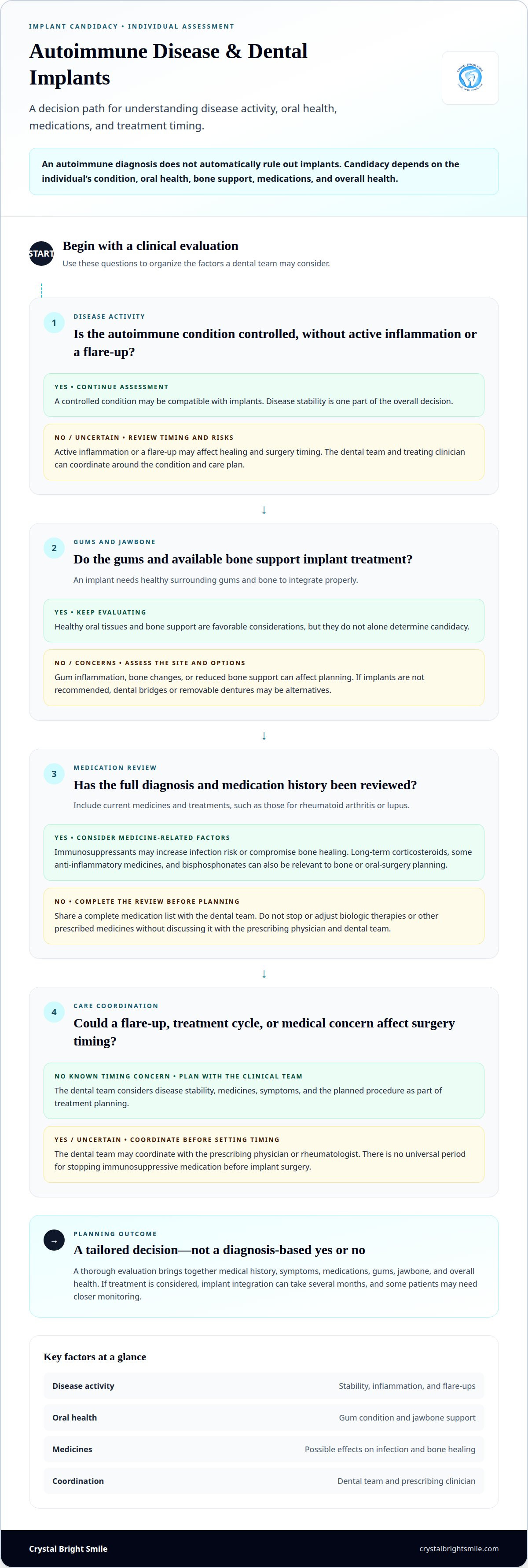
Conditions that may support implant candidacy
An autoimmune diagnosis alone doesn’t automatically rule out implant treatment. Candidacy depends on disease control, oral health, medications, and jawbone support.
Factors in Implant Candidacy
Implant candidacy is assessed individually, taking health, bone support, and oral conditions into account. A controlled autoimmune condition can be compatible with treatment, while active disease may complicate healing. Disease severity, symptoms, and flare-up frequency help shape the clinical picture. The goal is to understand how these factors affect the tissues that must support an implant.
Bone density and strength matter because an implant needs healthy jawbone for stability. Osteoporosis can affect that support, and rheumatoid arthritis may also be relevant when bone density is reduced. Gum health is another consideration: active oral infection and inflamed gums can undermine the conditions needed for healing. Good oral hygiene helps maintain healthy tissues around the planned implant site.
Examples show why diagnosis alone doesn’t determine suitability. A patient with well-controlled lupus may be considered when oral health and bone support are adequate. Someone with rheumatoid arthritis may need closer attention to bone density and gum health. People with cold agglutinin disease may also be candidates, with condition-specific challenges considered in planning. These differences make individual assessment more useful than a broad rule for all autoimmune conditions.
Pre-Surgical Candidacy Assessment
A pre-surgical assessment reviews medical and dental findings before treatment is planned. The dental team considers the autoimmune diagnosis, current symptoms, medication use, overall health, gum condition, and available jawbone. Recent lab results may also be reviewed as part of the medical history. Together, these details help determine whether the disease is stable and whether further coordination is needed.
Imaging helps show whether the jaw can support an implant. Digital X-rays or a 3D scan can assess bone structure; a 3D CBCT scan can also show nearby nerves and sinus areas. These findings help identify the available bone and inform placement planning. If bone support is inadequate, the treatment plan may need to account for that limitation before implant surgery is considered.
Before proceeding, clinicians also consider whether an active oral infection is present and whether the patient can maintain oral hygiene. Healthy gums, stable disease, and suitable jawbone may support candidacy. If symptoms are active or bone health is a concern, those findings guide planning and monitoring. The examination connects the patient’s medical history with the specific needs of the proposed implant site.
Implant survival rates with autoimmune disease
Rheumatoid arthritis, lupus, and Sjögren’s syndrome can influence implant healing in different ways. Active inflammation, reduced saliva, medication effects, and changes in bone metabolism are relevant considerations. Conditions that affect bone health may influence jawbone support, while symptoms affecting hand movement can complicate daily implant care. A diagnosis alone doesn’t explain how an individual implant will perform.
Which autoimmune diseases affect implant success or healing? Rheumatoid arthritis, lupus, and Sjögren’s syndrome may affect healing or oral conditions, and active diseases that affect bone metabolism can raise failure concerns. The specific diagnosis, disease activity, medication use, bone health, and oral hygiene all shape the clinical picture.
Survival findings need context. A one-year implant survival result and an average measured over several years describe different follow-up periods. Findings reported for one autoimmune condition don’t automatically apply to another. For example, Sjögren’s syndrome can reduce saliva, while rheumatoid arthritis may involve bone-density or medication considerations. These differences make a single rate an incomplete guide for an individual patient.
Survival also isn’t the same as a complication-free experience. An implant may remain in place while the gums still need attention, or healing may require monitoring. The dentist considers implant stability in the jawbone alongside gum health, infection concerns, and the patient’s medical history. These details help explain what a reported outcome can and cannot tell someone considering treatment.
Long-term care is part of assessing implant health. Regular dental follow-ups allow the dental team to monitor the gums and implant over time. For patients with autoimmune conditions, follow-up timing and focus can reflect oral health, symptoms, and clinical needs. For example, persistent gum inflammation or changes in comfort provide information that a survival statistic alone cannot capture.
Use published survival figures as background, not a personal forecast. A patient with stable rheumatoid arthritis and healthy jawbone support has different considerations from someone with active inflammation, reduced bone density, or dry mouth. The dentist brings these details together with the treatment plan and ongoing maintenance needs. A thorough implant evaluation can turn broad research findings into a discussion grounded in the patient’s health.
If you’re considering implant replacement, schedule a dental implant evaluation to discuss your health history, jawbone support, and care needs.
Crystal Bright Smile: Dental Implants
Crystal Bright Smile provides dental implant treatment with personalized planning based on each patient’s examination, dental condition, goals, and clinical needs. For patients with autoimmune disease, an evaluation can consider oral health and jawbone support when determining whether implants may be appropriate.
Bring your medical history and current medication list to your appointment. Clear communication about your diagnosis, symptoms, and treatments helps inform the dental discussion. Crystal Bright Smile is a fully digital dental office, using modern technology as part of individualized treatment planning. The practice is located in Tujunga, California.
If you’re considering dental implants and have questions about your candidacy, contact Crystal Bright Smile to discuss an appointment.
Take the Next Step Toward a Personalized Plan
Whether dental implants are safe for people with autoimmune disease is best considered alongside your health history and what you hope to restore. Bring your priorities to a dental evaluation so the discussion can focus on your needs rather than a general statistic. Treatment recommendations depend on your examination, dental condition, goals, and clinical needs.
Crystal Bright Smile offers dental implants, as well as Invisalign and porcelain veneers for other smile goals. These treatments serve different purposes, and an examination helps determine which options fit your situation. A clear plan can give you a more confident basis for deciding what comes next.
Contact Crystal Bright Smile to discuss an implant evaluation and your questions. Take the next step at a pace that feels right for you.
Frequently Asked Questions
Are Rheumatoid Arthritis Patients Candidates for Dental Implants?
Yes, some people with rheumatoid arthritis may be candidates for dental implants. The evaluation considers jawbone support, gum health, disease activity, and medication effects. For example, reduced bone density or difficulty cleaning around teeth may affect treatment planning. Share any changes in hand movement or daily oral-care routine, since these can help the dental team plan suitable implant maintenance.
Does lupus prevent someone from getting implants?
No, lupus doesn’t automatically prevent implant treatment. Disease control, oral symptoms, bone health, and medications all inform candidacy. If you experience dry mouth or oral ulcers, mention them during the dental evaluation because they can affect oral comfort and tissue health. Coordination with your rheumatologist can also help align dental planning with lupus care and current treatment.
Q: Who decides if I am eligible for dental implants?
The dental team assesses oral health and implant-site conditions, while your medical provider contributes information about the autoimmune condition and its treatment. For example, a rheumatologist can discuss disease stability or medication timing when rheumatoid arthritis or lupus is involved. Eligibility depends on the combined picture, including examination findings, medical history, bone support, and your ability to maintain oral care.
What Are Autoimmune Diseases, and How Do They Impact the Body?
Autoimmune diseases occur when the immune system mistakenly attacks the body’s own tissues. Conditions such as rheumatoid arthritis, lupus, multiple sclerosis, type 1 diabetes, and celiac disease can affect different parts of the body. Their effects vary by diagnosis. For dental planning, the useful details are the condition’s symptoms, treatment, and any oral changes, rather than the diagnosis name alone.
How do immunosuppressants, steroids, and biologics affect dental implant surgery?
These medicines can influence immune response, infection risk, and bone healing around surgery. Long-term corticosteroid use can affect bone density, while some medicines used for rheumatoid arthritis may compromise bone healing. Bring a current medication list, including biologics and dose changes, to the dental evaluation. Never stop or adjust prescribed treatment for implant surgery without discussing it with your dentist and prescribing physician.
What is the dental implant failure rate in patients with autoimmune disease compared with healthy patients?
There isn’t one failure rate that applies to every autoimmune condition or provides a fair comparison for every healthy patient. Outcomes depend on factors such as disease activity, bone health, oral infection, medication use, and ongoing hygiene. A dentist can explain how these considerations relate to examination findings and proposed treatment, rather than treating a broad statistic as a personal prediction.
Does rheumatoid arthritis affect dental implant success or recovery?
Rheumatoid arthritis can affect implant planning and recovery, particularly if the condition is active or associated with reduced bone density. Some patients also find brushing and flossing harder when joint movement is limited. Tell the dental team about these challenges before treatment. They can consider whether the planned implant site, oral-care routine, and follow-up approach fit your current needs.
Are dental implants safe for people with lupus, Sjögren's syndrome, or scleroderma?
For lupus, implant treatment may be considered when the condition is well-controlled. Sjögren’s syndrome can affect oral health through reduced saliva, so its specific effects matter in treatment planning. The information here doesn’t establish a condition-specific candidacy conclusion for scleroderma. If you have scleroderma, discuss your diagnosis, symptoms, and medications during an individual dental evaluation.

Comments