


Replacing Failing Dental Work in Tarzana: How Dentists Decide

A failed dental implant isn’t always replaced right away, or at all. For patients in Tujunga considering replacement of failing dental work, the first decision is whether the implant, tooth, or restoration can be preserved. Infection, bone loss, fractures, and damage to surrounding teeth or gums can all shape the next step.
It’s understandable to want a clear answer when a crown loosens, a tooth hurts, or an implant feels unstable. The right plan depends on the cause and what an examination and imaging show, not simply on how old the dental work is.
Learn how dentists assess failing crowns, fillings, root canals, bridges, and implants, and when repair, retreatment, removal, or replacement may be appropriate. You’ll also see how infection treatment, bone grafting, and imaging can guide planning if an implant may need replacement. The goal is a treatment plan based on the condition of your teeth, gums, and jawbone.
Table of Contents
Causes of failed crowns, fillings, root canals, and implants
Dental work can develop problems as the tooth, gums, and bite change. Decay may form where a crown or filling meets natural tooth structure, or around a bridge. A crack can weaken the tooth beneath a restoration, while heavy bite forces can loosen or damage dental work. Infection and bone loss can also affect whether a tooth or implant remains stable. The visible damage is only one part of the assessment; its cause helps determine whether repair, retreatment, or replacement makes sense.
Fillings may need replacement every 10-20 years, depending on oral hygiene and other risk factors. That range is not a deadline: a filling can fail sooner if decay develops around its edges or the tooth fractures. A crown may protect a weakened tooth, but it cannot prevent every new cavity. If decay or damage reaches the tooth’s nerve, root canal therapy may be needed before a new crown can restore the tooth.
Root canal treatment can be followed by persistent infection, returning symptoms, or changes around the root. Missed canals, hidden anatomy, leakage around a restoration, fractures, and bacterial reinfection can all contribute. Retreatment may be considered if the tooth can still be preserved. The dentist assesses the root and surrounding tissues, then weighs the cause of symptoms against the tooth’s remaining structure before recommending a next step.
Implants cannot develop tooth decay, but gum disease can affect the tissues and bone around them. Peri-implant disease may cause inflammation, tissue breakdown, and bone loss, weakening support. A loose implant restoration is different from a loose implant: the attached crown, bridge, or denture may be the problem. Examination and imaging help distinguish a repairable restoration from damage involving the implant itself. If the implant cannot be predictably preserved, removal and treatment of the site may be considered.
Extraction followed by bone preservation and implant placement may be appropriate for a tooth that cannot be predictably saved. Bone grafting can rebuild lost volume and support planning for a possible future implant; healing is part of the process. For several neighboring missing teeth, multiple implants can support a bridge or another restoration, rather than requiring an implant for every tooth. Implant-supported crowns, bridges, and dentures replace visible teeth while implants provide support in the jaw.
To choose a dentist serving Tujunga and nearby communities, compare relevant training and experience, patient reviews, and clear explanations of treatment options. Ask how the plan addresses infection, bone support, and restoration repair, and compare written payment terms. Insurance benefits depend on the plan, while financing terms depend on the available option and approval. Review coverage and payment details alongside the clinical plan, so replacement treatment supports both oral health and a natural-looking, beautiful smile.
Broken Tooth: Do You Extract or Get a Crown?
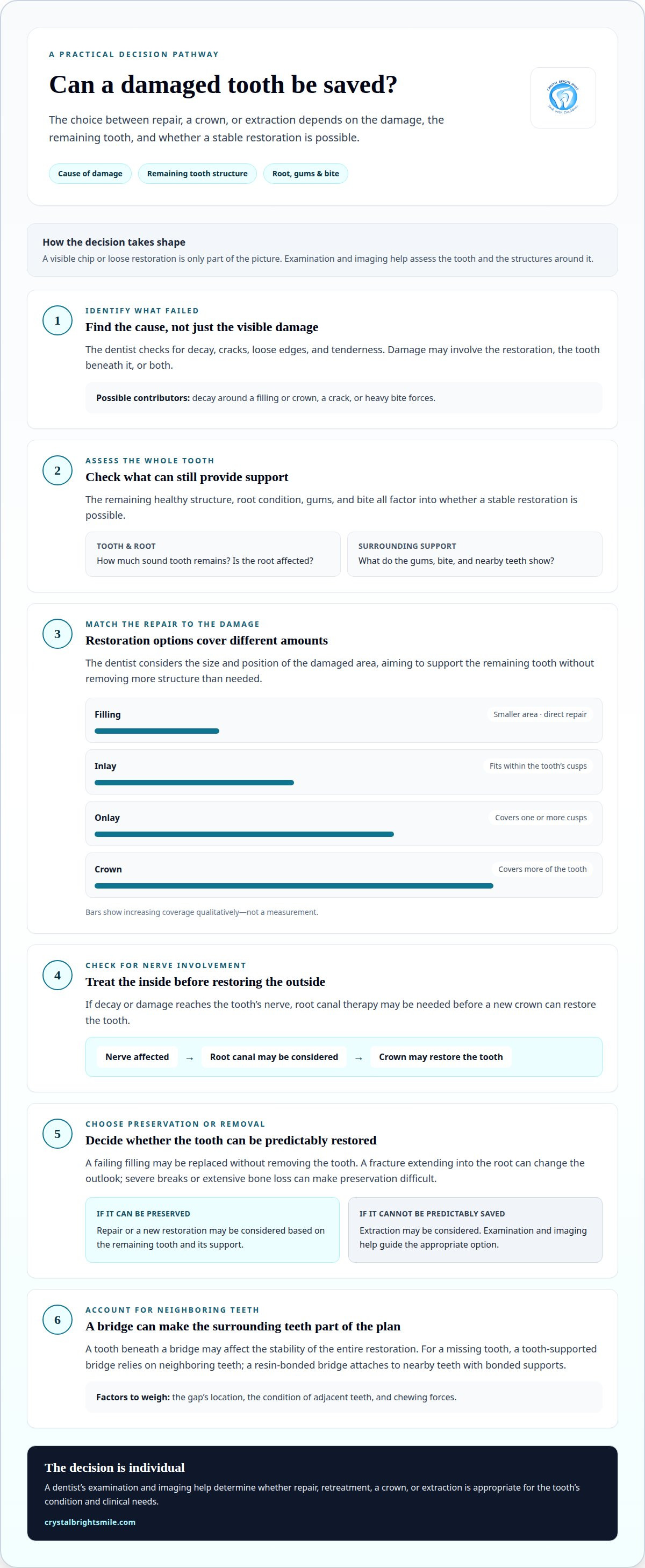
A damaged tooth isn’t automatically lost. The decision depends on how much sound tooth remains, the condition of its root, and whether a stable restoration is possible.
Repairing or Replacing Damaged Teeth
A filling, inlay, onlay, or crown replaces damaged tooth structure to different degrees. A filling repairs a smaller area directly, while an inlay fits within the tooth’s cusps. An onlay covers one or more cusps, and a crown covers more of the tooth. The dentist considers the size and position of the damage to choose a restoration that supports the remaining tooth without removing more structure than needed.
For example, replacing a large filling with another filling may further weaken a tooth. An inlay, onlay, or crown may be more appropriate when the remaining walls need added coverage. The choice depends on the tooth’s condition and clinical needs.
Assessing Whether a Tooth Can Be Preserved
Assessing whether a tooth can be preserved means examining the restoration, remaining tooth, root, gums, and bite together. The dentist checks for decay, cracks, loose edges, and tenderness, then considers whether the damaged area can be treated while leaving enough healthy structure for support. A failing filling may be replaced without removing the tooth; a fracture extending into the root can change that outlook.
Nearby teeth also matter. A damaged tooth beneath a bridge, for example, may affect the stability of the entire restoration. Examination and imaging help show the extent of damage and whether repair, a new crown, or extraction is the more appropriate option.
Crowns for Extensive Damage
A crown covers a tooth when damage is too extensive for a small filling to protect it. It can restore the tooth’s shape and chewing surface after substantial decay or a large existing restoration. The dentist checks how much healthy tooth remains, whether the root is sound, and whether the bite places excess force on the area.
If decay or damage reaches the tooth’s nerve, root canal therapy may be needed before crown placement. The treatment addresses the inner tooth first, then restores its outer structure. A crown isn’t suitable for every fracture: severe breaks and extensive bone loss can make preservation difficult.
Bridge Replacement Options
A tooth-supported bridge replaces a missing tooth by connecting a replacement tooth to neighboring teeth. Those supporting teeth need to remain healthy because they carry the bridge. A resin-bonded bridge attaches to nearby teeth with bonded supports, often preserving more natural tooth structure than a conventional bridge.
The gap’s location, the condition of adjacent teeth, and chewing forces help guide the choice. If a supporting tooth has decay or a fracture, that problem needs attention before bridge placement. A dentist assesses the teeth and gums around the gap to determine whether a bridge can provide stable support.
Extraction may be considered when a severe fracture, extensive bone loss, or structural damage leaves too little sound tooth for predictable restoration. After removal, a replacement plan helps address the gap and its effects on nearby teeth. An examination can clarify which option fits the tooth’s condition; a restorative dental evaluation can help map the next step.
Treatment planning when multiple teeth are involved
When several teeth need attention, the plan considers each problem in relation to the health of the whole mouth. A dentist assesses teeth, roots, gums, bite, and nearby restorations before setting priorities.
A staged plan separates urgent problems from work that can wait. Infection, severe pain, or a damaged tooth that affects chewing may take priority over elective changes to tooth color. Treating gum inflammation and stabilizing painful teeth can create a healthier foundation for later restorations. If multiple teeth are missing, the plan considers how replacement choices affect chewing and neighboring teeth.
Temporary restorations can help test a proposed bite before permanent prosthetic teeth are made. For example, a provisional restoration may let the dentist assess how the teeth meet during chewing and whether the shape feels comfortable. Adjustments at this stage can guide the final restoration’s design. The sequence depends on which teeth need treatment and whether infection or gum disease needs attention first.
A broken crown or bridge, swelling, fever, severe pain, a loose implant restoration, or trouble chewing calls for prompt dental attention. A lost crown can expose the prepared tooth, while a broken bridge may affect several teeth at once. Don’t use household glue to reattach either restoration. A dentist can examine the area, identify damage, and decide whether the existing work can be repaired or needs replacement.
Discoloration needs careful assessment before cosmetic treatment. Surface stains on natural teeth may respond to professional whitening, while crowns, fillings, and bridges won’t change color with whitening treatment. The dentist identifies natural teeth and restorations, then considers whether whitening fits the patient’s goals and overall plan. This helps avoid a mismatch between newly whitened teeth and older restorative work.
For a coordinated plan, the dentist can organize findings into practical priorities:
Address infection, inflammation, or pain that could complicate later treatment.
Stabilize damaged teeth and decide whether each needs repair, retreatment, or replacement.
Plan temporary restorations when testing bite position can inform permanent work.
Coordinate tooth replacement with the health of neighboring teeth and gums.
Consider whitening only after identifying which visible teeth are natural or restored.
For example, a patient with a painful cracked tooth, gum inflammation, and stained front teeth may need those concerns addressed in sequence. The dentist may first assess the crack and gums, then stabilize the tooth, and later discuss cosmetic changes. The order follows the clinical findings, not appearance alone. Separating urgent care from elective improvements helps patients understand what each step addresses and how the treatments fit together.
Consultation imaging and questions to ask
An implant evaluation starts with the site and the patient’s overall oral health. The dentist examines the gums, restoration, and nearby teeth, then uses imaging to assess the bone and implant. For a dental bridge, the supporting teeth and tissues matter too. These findings help distinguish a loose crown or bridge from a problem involving the implant or its support.
Images answer different questions. Dental X-rays can show the implant and surrounding bone, while photographs and digital scans can document visible teeth and restorations. A 3-D cone beam CT scan can help assess bone quality and implant placement when a failed implant is being investigated. The dentist chooses imaging based on the clinical question, such as whether bone loss or implant position affects the treatment options.
Focus on the cause, not just the visible symptom. A crown that moves may have a damaged connection, while tenderness near an implant may point to inflammation around the site. Examination and imaging help clarify what is happening. Patients can ask how each finding affects the plan and whether the proposed repair addresses the underlying problem.
Useful questions during a consultation include:
What do the images show about the implant, root, or surrounding bone?
Is the restoration itself damaged, or does the problem involve the tooth or implant beneath it?
Can the existing implant or tooth be preserved, and what findings support that option?
Would infection treatment or bone grafting be part of the plan before replacement?
How would a new crown, bridge, or implant-supported restoration fit the bite?
For example, a 3-D scan may show whether bone around an implant can support another restoration. If the implant is removed, the dentist can explain whether the site needs treatment or grafting before a future implant is placed. Healing and the condition of the gums also shape the sequence. Ask which steps are proposed and how each one responds to a specific examination finding.
A clear plan connects clinical findings to treatment options. Ask the dentist to explain the diagnosis, the purpose of each image, and the alternatives for your oral health. If a dental bridge is being considered, ask how its supporting teeth affect the choice. If an implant may need replacement, ask what imaging shows about bone support and placement. These focused questions help you understand the reasoning behind treatment and the factors that affect the restoration plan.
What types of failing dental work can be replaced, including crowns, fillings, bridges, and implants?
Replacement depends on what failed: the restoration, the natural tooth beneath it, or the supporting tissues. A dentist matches treatment to the damaged structure and the condition of the surrounding teeth, gums, and jawbone. For example, a worn filling and a loose implant crown involve different parts of the mouth, so they need different assessments.
A filling restores a limited area of a tooth. If decay or a crack extends beyond that area, a crown can cover more of the remaining structure. A crown may also need replacement if it no longer fits securely or decay has formed at its edge. The dentist checks the tooth underneath before making a new restoration, since replacing the crown alone won’t address an untreated problem beneath it.
A bridge replaces one or more missing teeth by joining replacement teeth to neighboring teeth. Those supporting teeth need to remain healthy and strong enough to carry the bridge. If a bridge breaks, the dentist examines both the bridge and its supports. Repair or replacement depends on whether the damage is limited to the restoration or also involves decay, fractures, or other problems in the supporting teeth.
A dental implant replaces a missing tooth’s root and can support a crown, bridge, or denture. If an implant crown fails, the implant itself may remain usable. If the implant has lost support or is damaged, the treatment question changes. Revision may be considered when the problem is limited and the bond between implant and bone remains intact. Bone damage or a faulty implant may lead to consideration of full replacement.
Replacing an implant isn’t always a direct swap. The dentist first assesses the implant site and surrounding oral health, then considers whether the old implant must be removed. Bone grafting may be needed to rebuild support before placing a new implant. Healing and gum condition influence the sequence. A single missing tooth and several adjacent missing teeth also require different restoration plans.
For multiple missing teeth, several implants can support a bridge or denture, so each tooth doesn’t necessarily need its own implant. An implant-supported restoration replaces visible teeth while implants provide support in the jaw. The number and position of missing teeth, available bone, and health of nearby teeth shape the options. A treatment plan also accounts for how the replacement will meet the opposing teeth during chewing.
Bring questions about a loose crown, damaged bridge, or implant to an examination. Schedule an examination to discuss which replacement options fit your dental condition and treatment goals.
Crystal Bright Smile
Crystal Bright Smile helps patients understand replacement options through personalized treatment planning based on an examination, dental condition, and goals. At its Tujunga, California office, the team can assess whether Dental Implants may suit a missing tooth and explain how the broader smile plan fits together.
Dental concerns can overlap: a failing restoration may affect chewing, while discoloration or alignment goals shape the appearance a patient hopes to achieve. When appropriate to the clinical findings, treatment discussions may also include Invisalign, Porcelain Veneers, or Teeth Whitening. Recommendations depend on each patient’s needs and clinical condition.
If you have a loose restoration, discomfort, or questions about next steps, contact Crystal Bright Smile to arrange an examination. Call (818) 352-8200 to discuss an appointment.
Move Toward a Clear, Personal Treatment Plan
The next step is turning uncertainty into a plan that fits your health priorities and smile goals. At an examination, describe what feels different, which restoration concerns you most, and what you hope to improve. That context helps shape a conversation about function, appearance, and the order of care, rather than treating each concern in isolation.
For patients in Tujunga, Sunland, La Crescenta, Montrose, Shadow Hills, and Lake View Terrace considering replacement of failing dental work, the right decision starts with the condition of the tooth, restoration, or implant, alongside their goals. Recommendations depend on an individual examination and clinical needs. If appearance is also a concern, Dental Implants, Invisalign, and Porcelain Veneers may be discussed when appropriate.
A thoughtful plan can make the choices easier to understand and help you decide what to address first. Take the next step toward a personalized evaluation: Contact Crystal Bright Smile to discuss an appointment. A clearer picture of your options can help you move forward with confidence.
Frequently Asked Questions
Can a failed implant always be replaced?
No. Replacement isn’t always possible or the right next step. The dentist assesses the implant, surrounding bone, gums, and any infection to determine whether it can be preserved or needs removal. If bone support has been damaged, grafting and healing may be needed before another implant is considered. In some cases, the plan may focus on treating the site first or choosing a different tooth-replacement option.
Can I Replace an Old Filling with a New One?
Yes, an old filling can be replaced when enough healthy tooth structure remains to support a new one. The dentist removes the failing material and evaluates the tooth for decay or cracks. If the cavity is large, another filling may leave the tooth vulnerable to further damage; an inlay, onlay, or crown may better cover the weakened area. The restoration is chosen based on the tooth’s condition.
Do Cavities Form Around Existing Dental Work?
Yes. Decay can develop where a filling or crown meets natural tooth structure, and it can also occur around a bridge. For example, a dark or rough edge near an older filling may prompt an examination, but appearance alone can’t confirm decay. A dentist checks the tooth and restoration, then uses imaging when needed to assess the area beneath or beside the visible dental work.
How long does the whole process take?
The timeline varies with the treatment sequence and the condition of the tooth or implant site. Replacing a filling involves different steps from treating infection, extracting a tooth, grafting bone, and later placing an implant restoration. Healing between procedures can shape the overall schedule. Ask which stages are planned, what needs to heal before the next step, and whether a temporary restoration is appropriate for your situation.
How do dentists diagnose a failing crown, filling, bridge, or implant?
Dentists consider your symptoms alongside an examination of the restoration and surrounding tissues. They may check for movement, visible cracks, tenderness, bite changes, or signs of decay along an edge. X-rays or other images can help assess roots and bone that aren’t visible during an exam. For an implant concern, they also examine the implant site and your overall oral health.
What are the treatment options for replacing failing dental work?
Options include repairing or replacing a filling, placing a crown, retreating a previously treated tooth, or replacing a bridge or implant restoration. A tooth that can’t be predictably preserved may require extraction, followed by a replacement plan. For a missing tooth, options can include a bridge, denture, or implant-supported restoration. The choice reflects the damaged structure, nearby teeth, bone support, and your treatment goals.
How much does it cost to replace a crown, filling, bridge, or implant in Tujunga?
Costs depend on the case and the treatment needed. Factors include which restoration needs attention, how many teeth are involved, the condition of the underlying tooth or implant, and whether additional care is needed. An examination helps define the treatment plan and its components. Contact the office to discuss treatment costs and how the proposed procedures relate to your individual dental needs.
Does dental insurance cover replacement of failing dental work, and what are common coverage limits?
Coverage depends on the plan, the procedure, and its benefits. Coverage for crowns, fillings, or bridges can follow different terms. Before treatment, review how your plan handles the proposed procedures and any applicable limits. Crystal Bright Smile can help patients verify current insurance coverage and available financing options.

Comments