


Invisalign for Adult Crowded Teeth in Tarzana: Who May Qualify

Crowded teeth don’t automatically rule out clear aligners. At Crystal Bright Smile, Invisalign may be an option for adults with crowded teeth in Tujunga when the crowding is mild to moderate, depending on tooth overlap, bite, and available space.
It’s natural to wonder whether aligners can address your particular pattern of crowding, especially if your teeth shifted after braces. The answer depends on more than appearance: tooth positions, your bite, and the room needed for movement all matter.
This article explains what crowding means, which patterns aligners may treat, and how candidacy and space are assessed. It also covers why teeth can shift after braces and how retainers help maintain alignment, so you can approach your options with a clearer picture.
Table of Contents
What Are the Different Types of Dental Crowding Invisalign May Treat?
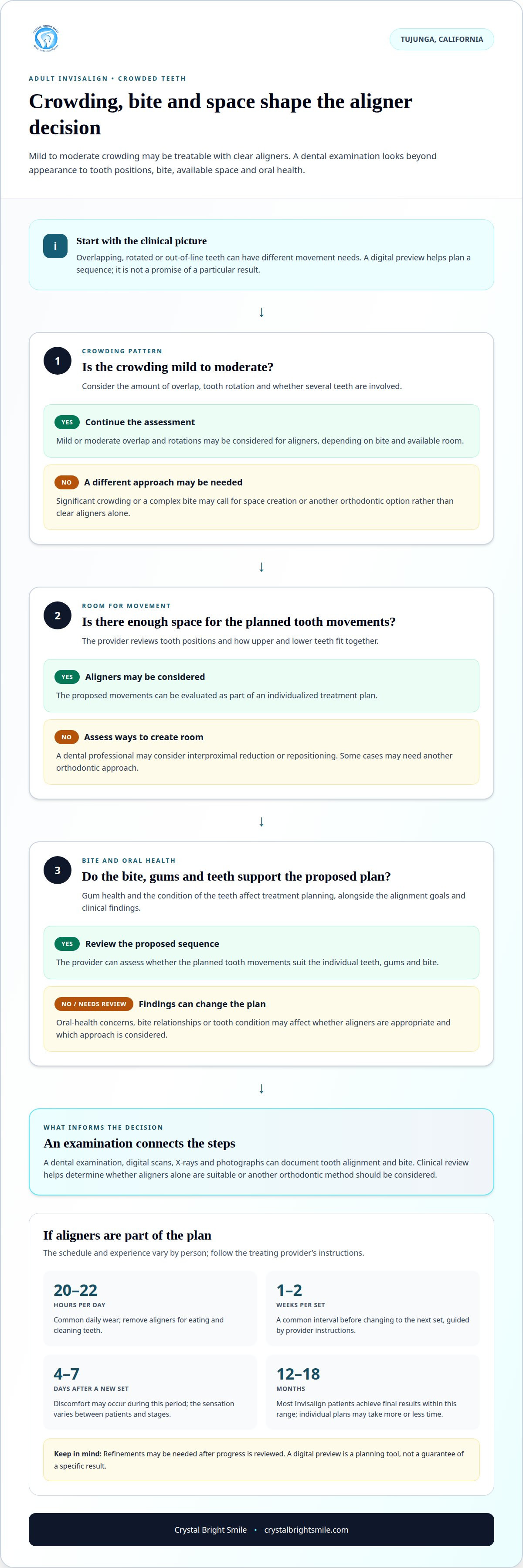
Invisalign may address mild to moderate crowding, including overlapping teeth, rotations, and some bite concerns. Whether aligners can move teeth into a healthier position depends on the crowding pattern, tooth positions, bite relationship, and available space. More significant crowding or complex bite problems may call for another orthodontic approach rather than clear aligners alone.
For readers considering Invisalign for adults with crowded teeth in Tarzana, the assessment starts with a dental examination, digital scans, X-rays, and photographs. These records document tooth alignment and bite, helping shape a treatment plan. Three-dimensional imaging maps planned tooth movements and shows how aligners are intended to work through each stage. Tarzana describes the topic here; Crystal Bright Smile’s physical office is in Tujunga, California.
With mild crowding, a few teeth may overlap slightly or sit out of line while the rest of the bite remains relatively balanced. Moderate crowding can involve several overlapping or rotated teeth, sometimes alongside spacing or bite concerns. Digital records help the dentist evaluate which movements are practical and whether the teeth have enough room. Gum disease and other oral-health concerns also matter, since gum and tooth condition affect treatment planning.
Significant crowding can leave too little room for planned tooth movements or involve a more complex bite relationship. In those cases, the plan may require space creation or another orthodontic option. Braces offer a different way to guide tooth movement, and some cases may need care beyond aligners. The choice depends on clinical findings, not simply on whether teeth look crowded in a photograph.
Duration varies with the movements required and how consistently aligners are worn. Most Invisalign patients achieve final results in 12 to 18 months, while individual treatment plans may take more or less time. Mild adult crowding may improve after several months, but that isn’t a reliable timeline for every case. Refinements may also be needed: after reviewing progress, the treating professional can adjust the plan and prescribe additional aligners if teeth need further movement.
These distinctions help explain why a digital preview is a planning tool, not a promise of a particular result. Records show how the proposed sequence may address rotations, overlaps, and bite concerns; clinical review determines whether those movements suit the patient’s teeth and gums. A case with mild front-tooth overlap and a stable bite may call for a different plan from one involving extensive overlap across both arches. That assessment clarifies whether aligners alone are appropriate or another orthodontic method should be considered.
For adults exploring Invisalign for adults with crowded teeth in Tarzana, the key is an individualized review of alignment, bite, gum health, and available space. The city in the topic doesn’t change the clinical factors that shape a treatment plan.
What is teeth crowding?
Teeth crowding describes teeth that overlap, twist, or sit out of line because their positions compete for room. A front tooth tucked behind its neighbor is one example; rotated teeth or several overlapping teeth are others. Crowding can occur with spacing or bite concerns, so an orthodontic assessment considers how upper and lower teeth fit together. The pattern helps determine which movements a treatment plan may address.
Clear aligners use a planned series of removable trays to guide tooth movement. Each set applies pressure to selected teeth, and the next set continues the sequence. Digital records help the provider map those movements and assess how teeth meet. Aligners are typically worn for one to two weeks per set before changing to the next. The provider’s instructions guide the schedule for an individual treatment plan.
Daily wear is central to the sequence. Invisalign aligners are commonly worn for 20 to 22 hours a day, with removal for eating and cleaning teeth. Water is the only beverage or food item to consume while wearing them. For example, remove the trays for a meal, brush your teeth afterward, and reinsert them. Extended breaks can affect how consistently each set fits and follows the planned movement.
A new aligner set can feel snug as it begins guiding teeth toward their next positions. Discomfort may occur during the first 4-7 days after starting a new set. The sensation can differ between patients and treatment stages. If a tray feels unusually uncomfortable or doesn’t fit as expected, contact the treating provider for guidance instead of changing the schedule independently.
Temporary pressure or tenderness can occur during aligner treatment. Poor cleaning can also contribute to oral-health problems: overlapping areas may trap food and bacteria, increasing the risk of decay or gum disease. Remove aligners for eating and brushing, and clean your teeth before putting them back in. If aligners aren’t worn as planned, they may not track the intended movement, so progress should be reviewed.
Wear habits, hygiene, and tooth movement all affect the treatment process. A digital dental examination can assess crowding, bite alignment, and oral health before a plan is made. It also gives the provider a chance to discuss how each aligner set fits the proposed sequence and what to do if a tray feels different than expected. The assessment connects everyday wear with the clinical details of the patient’s teeth.
Adult Invisalign candidacy and oral health
Adult candidacy involves more than whether a tooth looks crooked. A dental examination considers the overlap, tooth rotation, bite, gum health, and condition of existing dental work. For example, one front tooth sitting behind another presents different movement needs from crowding across both arches. Adults in their 60s, 70s, and 80s may also seek straighter smiles, so age alone doesn’t describe the alignment challenge.
Bite correction matters because upper and lower teeth meet during chewing. A patient with overlapping front teeth may also have a bite relationship that needs assessment, while another patient’s concern may be limited to a few crooked teeth. Digital scans, X-rays, and photographs can help document tooth positions and the bite. Those records support a treatment plan shaped around the patient’s dental condition, goals, and clinical needs.
Oral hygiene is another part of the assessment. Overlapping teeth can create tight spaces that make brushing and flossing harder. Food and bacteria may collect in those areas, contributing to tooth decay or gum disease. Clear aligners can be removed for eating, brushing, and flossing, giving patients access to tooth surfaces that fixed brackets can partly obstruct. Removability still requires a consistent cleaning routine.
During treatment, brushing twice daily helps maintain everyday oral hygiene. Flossing reaches between teeth where a toothbrush may not clean fully, including crowded areas. If you find a narrow space difficult to clean, mention it during your dental examination. The dentist can assess gum condition and existing buildup, then consider these findings alongside the planned tooth movement.
Traditional braces use brackets attached to teeth, while clear aligners are removable. That difference affects daily routines, but it doesn’t determine which approach can correct a particular bite. The extent and direction of movement, available space, and condition of teeth and gums guide the treatment choice. More complex alignment needs may call for a different approach than a small overlap.
Good candidacy combines a workable movement plan with oral health that can support treatment. An adult with a rotated tooth, healthy gums, and a manageable bite presents different planning factors from someone whose crowding makes cleaning difficult. An examination connects those details: tooth position, bite contact, gum health, and hygiene habits. Together, they help establish whether aligners fit the patient’s needs and what dental concerns to address in the plan.
Can Crowding Return After Braces?
Yes. Teeth can shift after braces, so straightening isn’t always permanent without retention. A retainer is recommended after orthodontic treatment, including aligner treatment, to help maintain tooth alignment. If you stop wearing a prescribed retainer, teeth may gradually move from their corrected positions. For example, a previously straight front tooth may begin overlapping its neighbor again.
Adult crowding can also develop or become more noticeable over time. Teeth may overlap or shift when the jaw has too little room for them, or when teeth are large relative to available space. A change in one tooth’s position can affect how nearby teeth fit together. This can create a gradual change rather than a sudden shift noticed on a single day.
Retainer fit offers a useful clue. If a retainer no longer seats comfortably, don’t force it into place. A dental professional can examine the fit and current alignment, then determine whether the teeth have shifted and what response makes sense. Regular brushing and cleaning around a retainer also help keep it ready for use.
The amount of change matters. Mild to moderate crowding may show as a small overlap or rotation, while severe crowding can involve several teeth and less available space. These patterns need different assessments. A dentist considers which teeth moved, how the bite meets, and whether the gums and teeth remain healthy before recommending further straightening.
Invisalign may be considered for some adults whose teeth have shifted after braces, but it isn’t automatically suitable for every relapse. The assessment looks at current tooth positions, bite, amount of crowding, and space for movement. A mild front-tooth shift differs from severe crowding across both arches. Those details shape whether aligners may address the change or another approach is more suitable.
Retention is part of keeping an orthodontic result stable, not an optional final detail. Follow the retainer schedule provided for your treatment, and bring the retainer to an appointment if its fit changes. If crowding returns, an examination can distinguish a limited tooth shift from a broader bite or spacing change. That gives the treatment plan a clear starting point, based on today’s alignment rather than assumptions about the earlier braces result.
Creating space with interproximal reduction or tooth movement
Making room for crowded teeth can involve changing their positions or considering other space-creating approaches. The right plan depends on the pattern of misalignment, the bite, and the patient’s dental needs.
Creating Space Through Tooth Movement
Tooth movement can create room by guiding crowded teeth into positions that use the available arch space differently. For example, a treatment plan may reposition tilted teeth so their edges no longer overlap as much. The dentist needs to determine whether the proposed movement can address the crowding and support the intended bite, not just improve the smile’s appearance.
Interproximal Reduction, Extraction, and Expansion
Interproximal reduction creates space by carefully reshaping selected contact areas between teeth. A dentist considers the individual teeth and the amount of room needed before including it in a plan. In extreme crowding, palatal expansion or tooth extraction may also be considered. These approaches differ, so examination findings and the patient’s clinical needs guide which option is appropriate.
Crowding Types and Severity
Crowding ranges from slight overlap to more extensive misalignment across several teeth. A rotated tooth may need a different movement from teeth that overlap through much of the arch. Mild to moderate cases and severe crowding therefore call for different space assessments. The dentist evaluates tooth positions, bite, and available room to determine what movements a plan can reasonably include.
Age and Tooth Movement
Adults can seek tooth straightening at different stages of life, but age alone doesn’t describe the movement needed. The dentist also considers the current dental condition, gum health, and bite. For an adult with previous orthodontic treatment, the present alignment may differ from the original crowding. Those factors help shape a plan around the patient’s needs rather than appearance alone.
Attachments may be considered when planning particular tooth movements. Their role depends on the movements required and the clinical assessment; they aren’t a universal feature of every plan. A discreet aligner approach may appeal to adults, but the treatment plan still needs to account for how teeth should move and whether the proposed approach suits their dental condition.
Space creation is a planning decision, not a one-size-fits-all step. A dentist weighs the crowding pattern, bite, and available space before selecting an approach. For an assessment of your alignment and potential space needs, schedule an Invisalign examination.
Crystal Bright Smile: Invisalign
Crystal Bright Smile offers Invisalign and can assess whether clear aligners fit your crowding, bite, and dental needs. Treatment planning uses digital technology and is personalized to your examination, oral health, and goals. If crowding is severe or the bite needs movements aligners may not address, the assessment helps clarify the options rather than assuming every case qualifies.
The practice is located in Tujunga, California. If you’re considering aligners after braces or have noticed new overlap, an examination can review your current alignment and discuss a suitable plan. Contact Crystal Bright Smile at (818) 352-8200 to arrange an appointment and talk through your Invisalign questions.
Take the Next Step Toward a More Confident Smile
Your next step can be a focused conversation about what you’d like to change, whether that means easing overlap, improving how your teeth meet, or understanding options after braces. Bring your questions about appearance and daily oral care so the discussion can connect your goals with the movements your teeth may need.
Whether Invisalign for adults with crowded teeth at Crystal Bright Smile in Tujunga, California, suits your situation depends on an examination of your teeth, bite, oral health, and treatment goals. That assessment can clarify what aligners may address and whether another approach better fits your clinical needs.
Crystal Bright Smile offers Invisalign with personalized treatment planning. If you’re ready to discuss your options, contact Crystal Bright Smile. A clear, informed next step can help you move forward with greater confidence.
Frequently Asked Questions
What is Invisalign®?
Invisalign® is a brand of clear aligner orthodontic treatment, not a general term for every removable tray. Its aligners are made as part of a professionally planned course of care. For patients comparing treatment approaches, the useful distinction is that the plan is specific to their teeth and goals. A dental examination establishes whether this branded system fits the clinical needs involved.
Can Changing Tooth Positions Create More Usable Arch Space?
Sometimes, but changing tooth positions doesn’t guarantee enough room for every desired correction. A useful planning question is whether the proposed arrangement can fit the teeth while maintaining a functional bite. The assessment also considers where space is needed, rather than only the total amount. If repositioning alone can’t meet those needs, the plan may require another space-management approach.
Can Invisalign Fix Mild, Moderate, and More Complex Crowding?
Invisalign may suit some mild or moderate crowding, while more complex alignment needs can call for another approach. Complexity isn’t judged by appearance alone. A single rotated tooth may have different movement demands from several teeth that affect how the bite closes. The assessment weighs those demands together, then identifies whether aligners can be used for the planned correction.
Can Invisalign Straighten One Overlapping or Rotated Tooth?
Possibly. The key question is whether the tooth can be moved as part of a stable arrangement with the teeth around it. A front tooth that overlaps may also contact an opposing tooth differently during biting. The assessment considers the surrounding teeth and bite, even when the visible concern is only one tooth. That helps clarify the scope of treatment being considered.
Can Tooth Size and Dental Arch Size Cause Crowding?
Yes. The relationship between tooth size and available arch space can contribute to crowding. A smile photograph alone can’t show how much room each tooth needs or how the arches meet. A clinical assessment can compare tooth dimensions with available space and consider how those proportions affect alignment. This helps distinguish a localized overlap from a broader space concern.
Does Dental Insurance Cover Invisalign?
Coverage depends on the individual dental policy and its orthodontic benefits. Verify any applicable coverage with your plan and Crystal Bright Smile. Review the plan’s benefit details to understand whether orthodontic care is included and what conditions apply. Crystal Bright Smile offers insurance and flexible financing options; contact the office to discuss current coverage, eligibility, and treatment costs for your situation.
Is Invisalign Treatment Different for Older Adults?
Older adults can explore treatment, but planning should reflect their current dental condition and personal goals. A useful conversation can include previous orthodontic care, existing dental work, and the changes they hope to see. Those details help make the assessment relevant to the person’s present needs, rather than relying on age as a stand-alone measure of suitability.
How Does Invisalign Treat Crowded Teeth in Adults?
For adults, the planned aligner sequence is designed around the movements identified during clinical assessment. Progress reviews give the dentist an opportunity to assess how treatment is tracking and whether the next stage remains appropriate. If an aligner’s fit changes or a tooth doesn’t appear to follow the plan, bring that up at the review. The dentist can evaluate the issue and determine the next step.

Comments