


Loose Dental Implant Repair in Tarzana: Cost and Care

A loose implant crown or abutment may be repaired by adjusting or replacing a component. A loose implant post requires a different evaluation and treatment plan. When patients from Tarzana visit Crystal Bright Smile for loose dental implant repair, the process starts by identifying which part is moving, since that determines the next steps.
It’s natural to wonder what treatment involves and how much disruption to expect. The answer depends on the care needed, so don’t assume every loose implant requires the same procedure. This guide explains how to recognize movement in a crown, abutment, or post, what to do before your dental visit, and what an examination may involve.
Repair cost depends on the component involved, whether parts need adjustment or replacement, and whether additional treatment is needed. Pricing is provided after a quote request. You’ll also learn which symptoms call for prompt attention and what factors can shape your care, so you can take the next step with a clearer picture of your options.
Key Takeaways
A loose restoration and a moving implant post are different problems, so identifying which part feels unstable helps clarify the next step.
Contact a dentist promptly if the implant moves or you notice severe pain, pus, significant swelling, or fever with gum pain.
Until your visit, avoid testing or wiggling the implant, choose soft foods, and keep the area gently clean.
An examination may include imaging to assess the implant and surrounding bone, which helps guide the treatment plan.
Repair costs depend on what is loose and whether additional treatment is needed; the article explains the factors that shape the estimate.
Table of Contents
Risks of delaying treatment, including bone loss and infection
A loose implant needs prompt dental attention because movement may signal a problem with the restoration or supporting tissues. A dentist can examine the implant and surrounding oral health to determine whether infection, bone loss, or another issue needs treatment.
Bone Loss and Infection Risks
Delaying an examination may allow inflammation or infection around an implant to continue. Watch for discomfort while chewing, inflamed or bleeding gums, gum recession, or discoloration near the implant. These changes don’t identify the cause on their own, but they give the dentist useful details for the assessment.
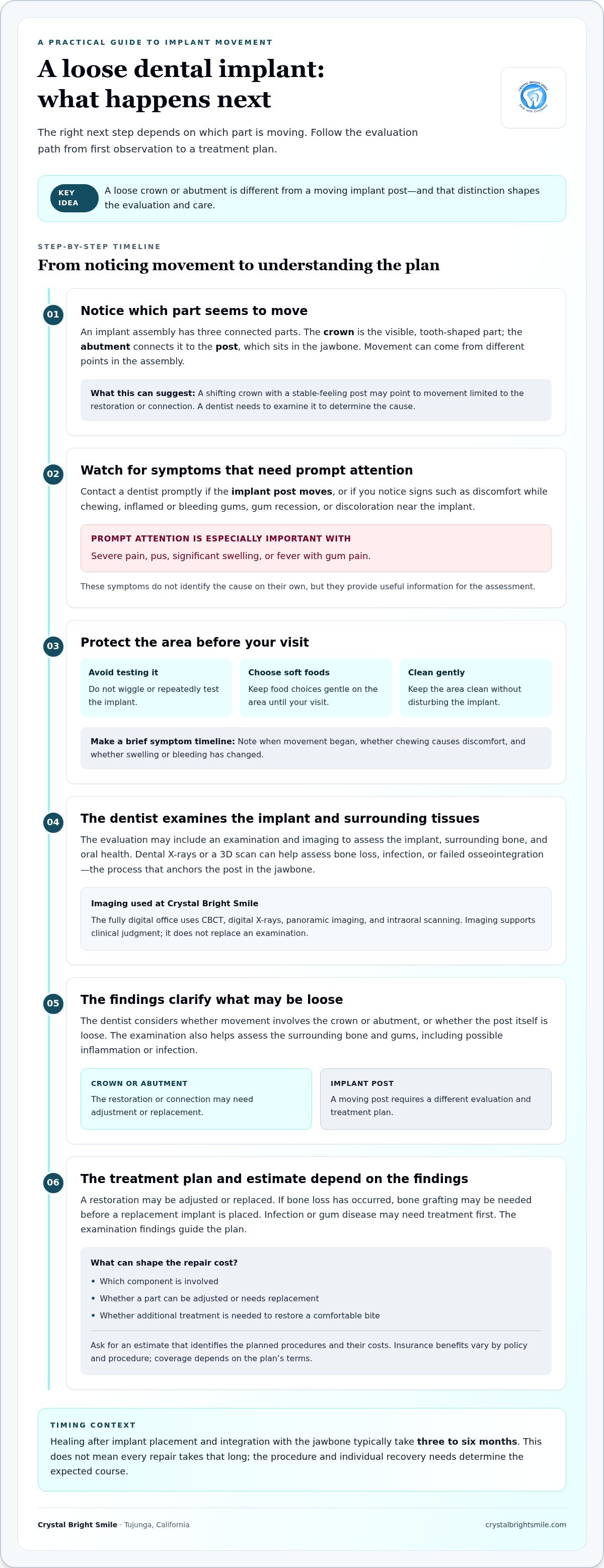
A dentist may use dental X-rays or a 3D scan to examine the bone around the implant. Imaging can help reveal bone loss, infection, or failed osseointegration, the process that anchors the implant post in the jawbone. Describe when the movement began and any new symptoms at the appointment.
If bone loss has occurred, bone grafting may be needed before a replacement implant is placed. When the post itself has loosened, additional treatment may also be needed to support the area. Treating infection or gum disease first helps prepare the tissues for new implant treatment.
Bone and Gum Health Requirements
Dental implant candidates need healthy gums and enough jawbone to support an implant. The post relies on surrounding bone for support. A history of missing teeth doesn’t show whether enough support remains; an examination and imaging help assess the site.
Active gum disease or infection needs attention before new implants are placed. A dentist assesses the gums for inflammation, recession, and bleeding, then considers how those findings affect implant support. For example, bleeding around a loose implant raises a different concern than movement without visible gum changes.
Bone and gum health work together. If an examination shows reduced bone, the treatment plan may include grafting before another implant is considered. If gum disease is present, addressing it first can help establish healthier conditions. The dentist uses the clinical examination and imaging to evaluate the site, surrounding teeth, and overall oral health.
Bring a clear symptom timeline to your visit. Note when the implant began moving, whether chewing causes discomfort, and whether swelling or bleeding has changed. These details help the dentist connect symptoms with examination findings and choose the next step. Prompt evaluation is especially important if the post visibly moves or signs of infection appear.
Cost, insurance coverage, pain, and laser treatment questions
Compare Tarzana dentists by their stated experience with implant restorations, patient-review themes, and emergency contact arrangements. Look for reviews discussing clear explanations and follow-up, rather than relying on ratings alone. Loose dental implant repair in Tarzana may involve different steps depending on the component and its condition.
The cost depends on the case and the treatment plan. Factors include the component involved, whether it can be adjusted or must be replaced, and what work is needed to restore a comfortable bite. Ask for an estimate that identifies the planned procedures and their costs, so you can understand what contributes to the total.
Insurance benefits vary by policy and procedure. Before treatment, review your plan’s implant, crown, and diagnostic-imaging benefits, including exclusions or annual limits. The dental office can provide proposed procedure names and documentation for your insurer. Coverage decisions depend on your plan’s terms, so distinguish the insurer’s estimate from the dental office’s treatment estimate.
Pain management depends on the procedure and your health history. Local anesthetic may be used for implant placement, and over-the-counter pain medication may help manage soreness afterward. Tell the dentist about medications, allergies, and prior reactions to anesthetics during the consultation. This information helps inform a plan suited to your needs.
Laser treatment may be discussed for peri-implantitis, but the word “laser” alone doesn’t explain the treatment plan. Ask what the laser is intended to address, how the dentist will assess the result, and whether other measures are part of the approach. The examination findings and condition of the surrounding tissues guide those decisions.
Three-dimensional CBCT imaging provides cross-sectional views of the implant area. At Crystal Bright Smile, the fully digital office uses CBCT, digital X-rays, panoramic imaging, and intraoral scanning, along with advanced treatment planning. Imaging supports clinical judgment but doesn’t replace an examination.
Repair time depends on the procedure. Adjusting a restoration differs from treatment that requires surgery, and recovery instructions reflect the work performed. Healing after implant placement and integration with the jawbone typically take three to six months. That doesn’t mean every repair takes that long; the treatment plan and your recovery needs determine the expected course.
Distinguishing a loose crown or abutment from a loose implant post
An implant has several connected parts, and movement can come from different points in the assembly. Noting what seems to move helps the dentist focus the examination.
Crown or Abutment Versus Implant Movement
The crown is the visible, tooth-shaped part. Beneath it, the abutment connects the crown to the implant post, which sits in the jawbone. If the crown shifts but the post feels stable, the movement may be limited to the restoration or connection. A dentist needs to assess the parts directly, since sensations in the mouth can be hard to pinpoint.
Describe the movement without repeatedly testing it. Tell the dentist whether you noticed a change while speaking, eating, or cleaning. Also mention any change in how the crown meets neighboring teeth.
Crown and Abutment Repair Options
The right approach depends on the condition of each component and how the restoration fits. A dentist evaluates whether the crown remains intact, whether the abutment connection is stable, and whether the bite places uneven pressure on the area. These findings help distinguish a problem with the visible restoration from instability deeper in the implant assembly.
Share relevant history, such as a recent change in your bite or damage to the crown. That context helps the dentist assess the restoration as part of the complete implant, rather than treating the visible movement in isolation.
Replacing a Faulty Abutment
A faulty abutment may affect how securely the crown connects, even if the implant post remains stable. The dentist assesses the abutment’s condition and compatibility with the restoration before planning the next step. The final restoration must fit the treated components and surrounding teeth.
If the post itself is loose or fractured, the concern differs from an abutment issue. The dentist evaluates the post and supporting site to determine whether the problem is limited to a connector or involves the implant itself.
Keep track of what you notice before your appointment. Does the crown seem to shift independently, or does movement feel deeper near the gumline? Is your bite suddenly different? These observations don’t establish a diagnosis, but they can help you describe the change clearly.
A useful question during the visit is, “Which part is moving, and what findings show that?” Ask the dentist to explain how the condition of the crown, abutment, and post affects the proposed plan. Clear distinctions make it easier to understand the recommendation and what the final restoration is intended to address.
Immediate care before a dental visit
A loose dental implant needs prompt dental attention. Sudden movement of the post, severe pain, pus, heavy swelling, or fever with gum pain warrants an immediate call to a dentist. Report these symptoms clearly so the dental team understands what’s happening and can advise you on the next step.
While arranging your appointment, reduce pressure on the affected area. Choose soft foods such as yogurt, eggs, or soup, and avoid chewing hard foods or objects. If chewing causes discomfort, use the other side of your mouth when practical. These choices limit extra stress while you wait for an examination.
For swelling, apply a cold pack to your cheek for 10 to 15 minutes at a time. Use a cloth between the pack and your skin, and remove it between applications. This simple measure can help manage discomfort while you arrange dental care.
Keep the implant area clean without scrubbing aggressively. Gently rinse around it with warm salt water. Continue brushing with a soft-bristled toothbrush, using light movements near the gumline. Don’t stop cleaning the surrounding teeth; plaque around the area can aggravate gum irritation.
When you call, describe your symptoms specifically. Say whether discomfort occurs while chewing, whether swelling is increasing, or whether you’ve noticed bleeding. Mention when symptoms began and whether an injury happened beforehand. A clear timeline helps the dentist understand the concern and prepare for your appointment.
Keep meals simple until you’re seen. Soft foods can include scrambled eggs, yogurt, or soup that isn’t hot enough to irritate tender tissue. Avoid biting into hard foods or chewing ice, which can put force on the implant crown. Drink water and maintain your usual gentle oral hygiene routine.
Bring a list of medications and allergies to your visit, along with relevant details about your dental history. Tell the dentist about any recent changes in your general health or oral care. These details can inform the examination and treatment decisions.
Follow the dentist’s instructions after the examination, including guidance about eating, cleaning, and follow-up care. If treatment involves implant placement, recovery advice will reflect the procedure and your clinical needs. Keep the appointment details and instructions together so you can refer to them as your care progresses.
Mechanical stress and physical causes of implant instability
Implant instability can develop from repeated force, injury, infection, or problems during healing. The cause affects what the dentist examines and which treatment may address it.
Mechanical Stress on the Implant
Chewing hard foods or objects can damage an implant or its restoration. A cracked shell, loose screw, or new discomfort after biting something hard gives the dentist useful clues. Avoid using the implant to bite hard objects, and note what you were eating when movement began.
A review reports screw loosening in 5% to 12% of single-tooth implant cases over several years. That figure describes screw loosening, not every form of implant failure. The entire implant may not be moving when a patient notices a change in the crown or screw.
Causes of Implant Looseness or Damage
Physical trauma, such as a blow to the mouth, can affect an implant or its restoration. Improper osseointegration, meaning the post hasn’t properly integrated with the jawbone, can also contribute to instability. Infection and gum disease are other possible causes, so report bleeding, swelling, or discomfort along with movement.
Placement and healing also matter. If the implant doesn’t integrate properly with the jawbone, it may lack the support expected from a stable post. A dentist considers the placement history, symptoms, and imaging when assessing the implant’s condition. Movement alone can’t identify the cause.
Different patterns can help describe the problem. For example, movement after a fall suggests possible trauma, while discomfort alongside inflamed gums may point to tissue concerns. These clues guide the examination but don’t replace it. Tell the dentist what changed and whether symptoms appeared together.
Mechanical stress can build during ordinary activities. Repeatedly chewing ice or biting hard objects puts force on the restoration. Stop those habits while the implant is assessed. Don’t deliberately test the implant by biting down or pushing it with your tongue, since that adds force without showing which component is affected.
Infection or gum disease can threaten the tissues supporting the implant. A dentist examines the gums and may use imaging to assess the bone around the post. If infection is present, it needs treatment before new implant placement. When bone loss has occurred, bone grafting may be considered before another implant is placed.
Keep a short record for your appointment: when movement began, any recent injury, discomfort during chewing, and visible gum changes. Include examples, such as biting a hard object or noticing swelling after the area began moving. These details help connect your experience with the examination findings and guide the next step.
Crystal Bright Smile: Dental Implants
Crystal Bright Smile provides dental implant care for patients concerned about a loose restoration or implant. An examination can help identify which component needs attention and what treatment suits its condition. Recommendations depend on your dental health, clinical needs, and goals.
At its office in Tujunga, California, the practice uses modern dental technology and personalized treatment planning. If you’re experiencing implant movement, discomfort, or changes around the gums, a dental appointment can help clarify the next step. Contact Crystal Bright Smile to discuss an examination, or visit the practice website.
Take the Next Step Toward a Stable Smile
For someone seeking loose dental implant repair in Tarzana, a focused dental evaluation can turn uncertainty into a clearer plan. The next step is understanding what your implant needs now and how to care for your oral health. Treatment recommendations depend on your examination, dental condition, and clinical needs.
Crystal Bright Smile provides dental implants and can discuss restorative care alongside broader smile goals. Its services also include Invisalign and porcelain veneers, with recommendations shaped around each patient’s needs. The practice is located in Tujunga, California, and welcomes patients seeking individualized dental care.
Take the next step at a pace that feels right for you. Contact Crystal Bright Smile to discuss an appointment and move toward a confident, comfortable smile.
Frequently Asked Questions
Will I be able to return home after surgery?
Your return-home plan depends on the procedure performed and the anesthesia used. A crown adjustment differs from surgery to remove or replace an implant post. Implant placement is performed under local anesthesia, but that fact alone doesn’t determine your individual discharge plan. Before treatment, ask what the procedure involves, what recovery instructions apply, and whether you’ll need help getting home or managing your usual activities afterward.
Which dentists in Tarzana repair loose dental implants?
People seeking loose dental implant repair in Tarzana should note that Crystal Bright Smile’s physical office is in Tujunga, California, not Tarzana. The practice provides dental implant care for patients, including those from nearby communities such as Sunland, La Crescenta, Montrose, Shadow Hills, and Lake View Terrace. A loose implant needs an examination to identify the affected component and appropriate care. When comparing options, consider whether the dentist evaluates both the restoration and its supporting tissues.
What causes a dental implant to become loose?
Causes include physical injury, infection, gum disease, and improper integration between the implant post and jawbone. Mechanical stress can also damage the crown or loosen its screw without loosening the post. For example, a change noticed after a blow to the mouth differs from gradual movement accompanied by gum inflammation. Tell the dentist when the change began and what was happening at the time.
How can you tell whether an implant crown, abutment, or implant itself is loose?
You usually can’t identify the moving component by sensation alone. A crown may shift while the post remains stable; movement of the post suggests a deeper problem. The abutment connects those parts, so its failure can also make the restoration feel unstable. Avoid testing the area repeatedly. Describe where the movement seems to occur and let the dentist examine the full implant assembly.
What should you do and avoid before seeing a dentist for a loose implant?
Call a dentist promptly and describe any movement, discomfort, swelling, or gum changes. Avoid chewing hard foods on the implant, and don’t push it with your tongue or fingers. If a crown or component comes out, keep it and bring it to your appointment rather than trying to attach it yourself. Mention any recent injury, since that context can help guide the examination.
How do dentists diagnose and repair a loose implant crown or abutment?
The dentist examines the restoration and connection, then may use imaging to assess the surrounding implant site. A crown may be re-cemented, replaced, or secured after a screw is tightened or replaced. To access the abutment, the dentist may need to remove the crown temporarily. The recommended repair depends on which component is faulty and whether it remains in suitable condition.
What treatments are available if the dental implant itself is loose or failing?
A loose or fractured implant post may need removal and replacement, rather than crown repair alone. The dentist assesses the bone and tissues to plan the next step. If bone loss has occurred, grafting may be needed before another implant is placed. Infection or gum disease must be treated before new implant treatment. The examination findings help determine whether the site can support another implant.
How much does loose dental implant repair cost in Tarzana, California?
For loose dental implant repair in Tarzana, costs depend on the case and proposed treatment. Factors include whether the crown, abutment, or implant post is affected, whether a component needs replacement, and whether additional treatment such as bone grafting is needed. Insurance benefits also depend on your plan and procedure. Ask for a treatment estimate that clarifies the proposed steps and costs.

Comments