


What Does a Dental Implant Infection Feel Like? Signs to Watch For

What if a dental implant problem doesn’t begin with severe pain? If you’re wondering what does a dental implant infection feel like, it may start with subtle changes: discomfort that keeps worsening, tender or swollen gums, bleeding when you brush, or a persistent bad taste. It can be hard to tell whether these changes are part of healing or a reason to seek care.
Some soreness and swelling can occur after implant surgery, but symptoms that intensify instead of easing deserve attention. Pus, fever, or an implant that feels loose should be assessed promptly. Symptoms alone can’t confirm an infection or show whether an implant has failed. A dental examination is needed to understand what’s happening.
This guide explains how a possible infection may feel, how concerning changes can differ from expected healing, and when to contact a dental professional. Crystal Bright Smile provides dental implant care and emergency dentistry at its office in Tujunga, California, serving nearby communities including Sunland, La Crescenta, Montrose, Shadow Hills, and Lake View Terrace. Knowing what to watch for can help you decide on a clear next step without trying to diagnose the problem yourself.
Table of Contents
What Can a Dental Implant Infection Feel Like?
Symptoms vary, and only a clinical assessment can determine whether an implant site is infected. Some people notice discomfort that persists or worsens; others first see a change in the gum tissue. Pain may feel like a dull ache, throbbing, or tenderness when the area is touched or used for chewing. The pattern is useful to report, but it can’t identify the cause by itself.
Possible warning signs include redness, swelling, warmth, discharge, persistent bleeding around the implant, or an unpleasant taste or odor that doesn’t go away. These changes deserve attention, especially if they’re new, worsening, or returning after they seemed to settle. Because they can have more than one cause, treat them as a reason to seek an assessment, not as proof of infection.
Local symptoms around the implant
Discomfort may stay close to the implant or involve the surrounding gum tissue. You might notice that the gum looks red or puffy, feels tender, or bleeds when you brush. Swelling and redness are observations, not a diagnosis. A persistent bad taste or visible fluid near the site is also worth reporting, even if you don’t have significant pain.
Take note of what changed and when you noticed it. Is the area becoming more uncomfortable? Has bleeding continued during cleaning? Those details can help a dentist assess the situation. The term peri-implantitis refers to inflammation affecting tissue around an implant and may involve supporting bone. Similar symptoms can occur for other reasons, so an examination is needed to understand what’s happening.
Symptoms that may affect more than the implant site
Fever or feeling generally unwell alongside changes at the implant site can raise concern and warrant prompt dental guidance. A dental problem doesn’t always cause whole-body symptoms, and their absence doesn’t rule out a local issue. Symptoms can occur in different combinations, so don’t wait for a particular set of signs before asking for help if the area is worsening.
Facial swelling or difficulty swallowing calls for urgent attention. These symptoms may signal a more serious problem that needs immediate assessment. If swallowing is difficult or swelling is spreading, seek urgent medical help. For other concerning changes, contact a dentist promptly and describe what you’re experiencing.
Symptoms can raise concern, but only an examination can determine whether an implant site is infected. Share when the change began, whether it’s worsening, and whether you’ve noticed bleeding, discharge, an unpleasant taste, fever, or facial swelling. Clear details help guide the next step without requiring you to diagnose the problem yourself.
How Can You Tell a Possible Infection From Expected Healing?
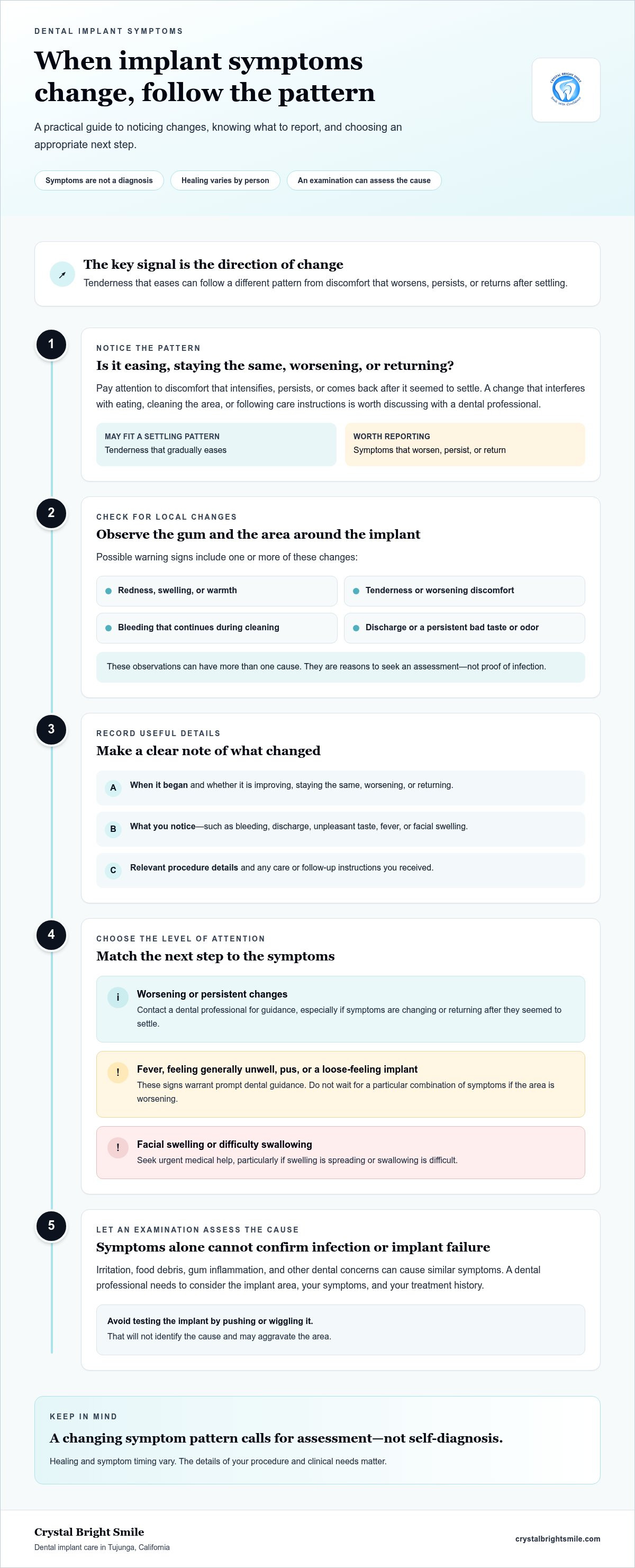
The direction of a change can be more useful than judging one sensation on its own. Tenderness that gradually eases may follow a different pattern from discomfort that intensifies, persists, or returns after settling. Healing doesn’t follow the same schedule for everyone, however, so this comparison is a guide, not a way to diagnose an implant site.
Timing and treatment details matter. The expected response may depend on the procedure performed, the condition of the surrounding tissues, and how your body heals. A symptom that needs attention in one person may have a different explanation in another. General descriptions of symptoms of dental implant infection can help you know what to report, but they can’t account for your individual clinical picture.
Why symptom progression matters
Pay attention to whether a change is improving, staying the same, worsening, or appearing again. A symptom that persists or develops after things seemed to be settling is worth discussing with the dental office, especially if it interferes with eating, cleaning the area, or following your care instructions.
Rather than relying on a fixed number of days, consider the overall pattern and any guidance you received for your procedure. Note when the change began and what seems to make it better or worse. Share these details when you call. If symptoms are rapidly worsening or you feel unwell, don’t wait for a routine follow-up to ask for advice.
Does pain mean the implant is failing?
No. Pain is a symptom, not a verdict on the implant. It can have several possible causes, including irritation in nearby gum tissue, pressure when biting, or another dental issue. Infection is one possibility a dentist may assess, but discomfort alone can’t show whether an implant is infected or failing.
That distinction matters: a concerning change deserves attention, but it doesn’t confirm the worst-case explanation. An examination lets a dental professional consider your symptoms alongside the implant area and your treatment history. Avoid testing the implant by pushing or wiggling it. That won’t establish the cause and may aggravate the area.
A changing symptom pattern calls for assessment, not self-diagnosis. Before contacting the dental office, jot down what you’ve noticed, when it started, whether it’s changing, and any relevant procedure or follow-up instructions. Mention any new symptoms too. These observations can help the dental team decide what guidance or examination is appropriate.
Crystal Bright Smile provides dental implant care in Tujunga. You can read about a dental implant evaluation and get an assessment based on your symptoms and clinical needs.
What Could Cause Pain, Swelling, or a Bad Taste Near an Implant?
It can be difficult to tell what a dental implant infection feels like compared with other changes in the mouth. Similar discomfort may come from irritation, inflamed gum tissue, food debris caught near the area, or a concern involving a nearby tooth. A bad taste or tenderness is a clue to describe, not enough to identify the cause.
That uncertainty is why an examination matters. A dental professional can assess the implant area and nearby teeth and gums, consider your symptoms and treatment history, and recommend an appropriate next step. Avoid trying to label the problem yourself based on one sensation or how the area looks in a mirror.
Infection and inflammation around an implant
Gum tissue around an implant can become inflamed. Peri-implant mucositis describes inflammation limited to the soft tissue around an implant. Peri-implantitis refers to inflammation around the implant that also involves loss of supporting bone. These are clinical terms, not conditions you can reliably identify at home by checking for redness or bleeding.
To distinguish between tissue changes, a dental professional assesses the gums and supporting structures around the implant. The evaluation may also take account of whether symptoms are changing and what procedure was performed. These terms can help explain what a clinician is looking for, but they don’t tell you which condition, if any, is causing your symptoms.
Other reasons an implant area may feel uncomfortable
The implant may seem like the source simply because it’s close to where you feel discomfort. Nearby teeth or gums can also be involved. Food debris or local irritation may make an area feel tender, while pressure when biting or a bite concern may call for a closer look. These are possibilities, not conclusions about your specific situation.
Pay attention to when discomfort occurs. For example, note whether it happens during chewing, when cleaning the area, or even when you’re not eating. Share those details rather than testing the implant by pressing on it or changing your usual care routine. A dentist can determine whether the implant site, surrounding tissue, or another dental concern needs attention.
A persistent or changing symptom is worth discussing, even if the cause turns out not to be an infection. An examination can provide an assessment tailored to your dental condition and treatment history. It’s the reliable way to understand what’s behind the change and what response, if any, is appropriate.
When Should You Contact a Dentist About a Possible Implant Infection?
Contact a dentist promptly if pain or swelling is getting worse, fluid is draining from the area, or an unpleasant taste persists. These changes don’t confirm an infection, but they do deserve professional assessment. If you’re unsure whether a change is significant, describe what you’ve noticed and follow the dental team’s individualized advice rather than waiting for symptoms to become more severe.
Use a simple sequence:
Note the changes. Record what you feel or see and when it began.
Call the dental office. Explain your symptoms and mention any recent implant treatment.
Follow the guidance you receive. The appropriate next step depends on your symptoms and clinical needs.
Fever or feeling generally unwell alongside implant-area symptoms also calls for prompt attention. Spreading facial swelling or difficulty swallowing requires urgent help. If swallowing is difficult or swelling is spreading, seek urgent medical attention. Don’t try to manage severe or rapidly changing symptoms by waiting for a routine appointment.
What information to share when you call
Describe when symptoms began and whether they’re improving, worsening, or changing. Be specific about the location of pain, swelling, any discharge, changes in taste, and whether you have a fever. Mention recent implant treatment and the care instructions you were given. You don’t need to identify the cause; clear observations help the dental team guide you.
Until you receive advice, avoid squeezing, probing, or wiggling the implant area. Don’t apply home remedies or change your care routine in an attempt to treat a suspected infection. These steps can irritate the tissue and won’t establish what’s causing the symptoms. If something changes while you’re waiting for a response, update the dental office.
What a dental assessment may involve
The dental team will ask about your symptoms and evaluate the implant area. Any further diagnostic steps depend on the examination findings, your treatment history, and individual needs. There isn’t one test or response that applies to every person. The purpose of the assessment is to understand what may be causing the change and recommend an appropriate plan.
The question “what does a dental implant infection feel like” can point you toward signs to watch for, but symptoms alone can’t provide a diagnosis. Crystal Bright Smile offers dental implant care and emergency dentistry at its Tujunga office. Read about how to request an implant symptom evaluation based on your individual symptoms and clinical needs.
Getting Implant Symptoms Evaluated in Tujunga
If a change around your implant concerns you, an in-person evaluation can help clarify what may be contributing to it. Crystal Bright Smile’s physical office is in Tujunga, California. The practice also serves nearby communities, including Sunland, La Crescenta, Montrose, Shadow Hills, and Lake View Terrace. These are service areas, not separate office locations.
Dr. Souren Rostomyan is a board-certified oral and maxillofacial surgeon with more than 20 years of experience, including dental implant reconstruction. His background informs implant care, while recommendations for each patient depend on an examination and individual clinical needs.
What to expect from an individualized evaluation
Your visit can begin with a conversation about what you’ve noticed and any relevant treatment history. The dental team will assess your concerns and examine the area. What happens next depends on the findings and your circumstances; not every patient needs the same follow-up or care.
Bring your questions, too. You might ask what the examination suggests, whether further assessment is appropriate, and what changes should prompt another call. Clear explanations can help you understand your options and make decisions without relying on an online description to determine what’s happening.
Prepare for an appointment in the Tujunga office
Gather any available details about your implant treatment and the care instructions you received. It may help to note when you first noticed a change and how it has affected daily activities, such as eating or cleaning your teeth. Share those details plainly, even if you’re uncertain which ones matter.
During the appointment, ask for clarification if a recommendation or next step isn’t clear. You can also ask how to follow your existing care instructions while your concern is being assessed. A dental implant guide can provide general background, but it can’t replace advice based on your examination and treatment history.
Crystal Bright Smile provides dental implant care in Tujunga. To discuss an appointment, call (818) 352-8200 and describe the change you’ve noticed. The office can help you understand how to proceed.
Take the Next Step With Confidence
Uncertainty can make every change feel more worrying. Turn that concern into a clear question for a dental professional, and use the conversation to understand what your own findings mean. Guidance based on your circumstances is more useful than trying to match your symptoms to a list online.
The question “what does a dental implant infection feel like” can help you describe what you’ve noticed, but it can’t provide a diagnosis. Bring your questions forward and take the next step with calm, informed support.
Explore your options for dental care and get clearer guidance about your smile.
Frequently Asked Questions
Can a dental implant infection go away on its own?
You shouldn’t assume a suspected infection will resolve without dental guidance. Symptoms may fluctuate, but a temporary change doesn’t establish that the cause has cleared. While waiting for an appointment, keep following the care instructions you were given and avoid starting leftover antibiotics or other medication without professional advice. If the concern settles, mention it at your next dental visit so the change can be considered in context.
Can a dental implant infection happen years after surgery?
Yes, a problem around an implant can arise long after placement, so the age of the implant alone can’t rule out a new concern. If a change appears years later, share when you first noticed it and any past implant treatment or follow-up details you have. Records or treatment notes can help the dental team understand the implant’s history, even if you’ve had no trouble with it before.
Does a bad taste mean my dental implant is infected?
No, a bad taste alone can’t establish that an implant is infected. To make the detail more useful, notice whether it is present all day or occurs in particular situations, such as after eating or cleaning your teeth. Keep following the oral-care instructions you’ve been given, and avoid taking leftover antibiotics to try to address the taste. Share the pattern with your dental team if it continues.
What happens if a dental implant infection is left untreated?
The effects can vary, and no one can predict an individual outcome from symptoms alone. A possible infection is a reason to arrange an assessment rather than wait for a dramatic change. If you’re unsure whether to keep an upcoming routine visit or request guidance sooner, explain what has changed when you contact the dental office. The clinician can advise you based on your circumstances and examination findings.
Can a loose dental implant be a sign of infection?
A loose feeling needs professional assessment, but it doesn’t prove infection. Sometimes what feels mobile may be part of the restoration, such as the visible crown, rather than the implant itself. Don’t try to tighten or move anything yourself. Describe what seems loose and when you first noticed it; an examination can help identify which part is involved and what attention it needs.
Is swelling around a dental implant always an infection?
No. If the implant was placed recently, some swelling may be part of the expected response to surgery, but your post-procedure instructions are the best guide for what to expect. Consider whether the swelling is changing in a way your instructions tell you to report. If you’re uncertain, contact the dental office with the date of your procedure and a clear description of the change.
Should I go to the emergency room for a dental implant infection?
For breathing difficulty, seek emergency medical help immediately. If symptoms are limited to the implant area and you’re stable, contact a dental office for direction about the appropriate assessment. If you seek emergency care, bring a list of medications you take and any implant treatment details you have available. That information can help the care team understand your health and dental history.
For an evaluation of implant symptoms or other dental concerns, contact Crystal Bright Smile in Tujunga, California, at (818) 352-8200.

Comments