


How to feel more confident at work after major dental work

Can dental implants help you feel more confident at work? They may restore aspects of your smile and oral function, making speaking, smiling, and eating feel more comfortable. Still, confidence can take time to catch up with physical changes. Learning how to regain confidence after major dental work means allowing yourself time to adjust while building comfort in everyday situations.
It’s understandable to feel self-conscious during meetings or hesitate to smile while you get used to your results. Your professional skills and experience remain yours, even when you feel unsure about your appearance. Taking small steps can help you reconnect with your confidence.
This article looks at how dental improvements may support workplace confidence, how to identify concerns adding to your stress, and how positive self-talk and gradual practice can help you feel more at ease. You’ll find practical ways to take these steps at your own pace.
Table of Contents
1. What improvements can patients expect after treatment?
After major dental work, improved comfort, chewing, or appearance can make daily interactions easier. Treatment for missing or damaged teeth may also support clearer speech. For example, someone who previously avoided speaking in meetings may feel more at ease contributing. These changes can be physical and practical, while confidence often grows through repeated experiences, such as answering a question, sharing an idea, or smiling in conversation.
Communication during treatment can shape how prepared you feel afterward. Ask the dental team to explain each step in plain language, including what sensations to expect and what comes next. If something is unclear, speak up before treatment continues. A simple request, such as “Please explain the next step before you begin,” gives the team a clear way to respond. Step-by-step explanations can make the process easier to understand and reduce uncertainty.
How can you manage anxiety or self-consciousness after dental work? Name the specific concern, then choose one manageable action, such as practicing a short introduction before a meeting. If your worry is about treatment or recovery, describe it clearly to your dental team. Clear communication and practical preparation can make the experience feel more manageable, without expecting yourself to feel completely confident right away.
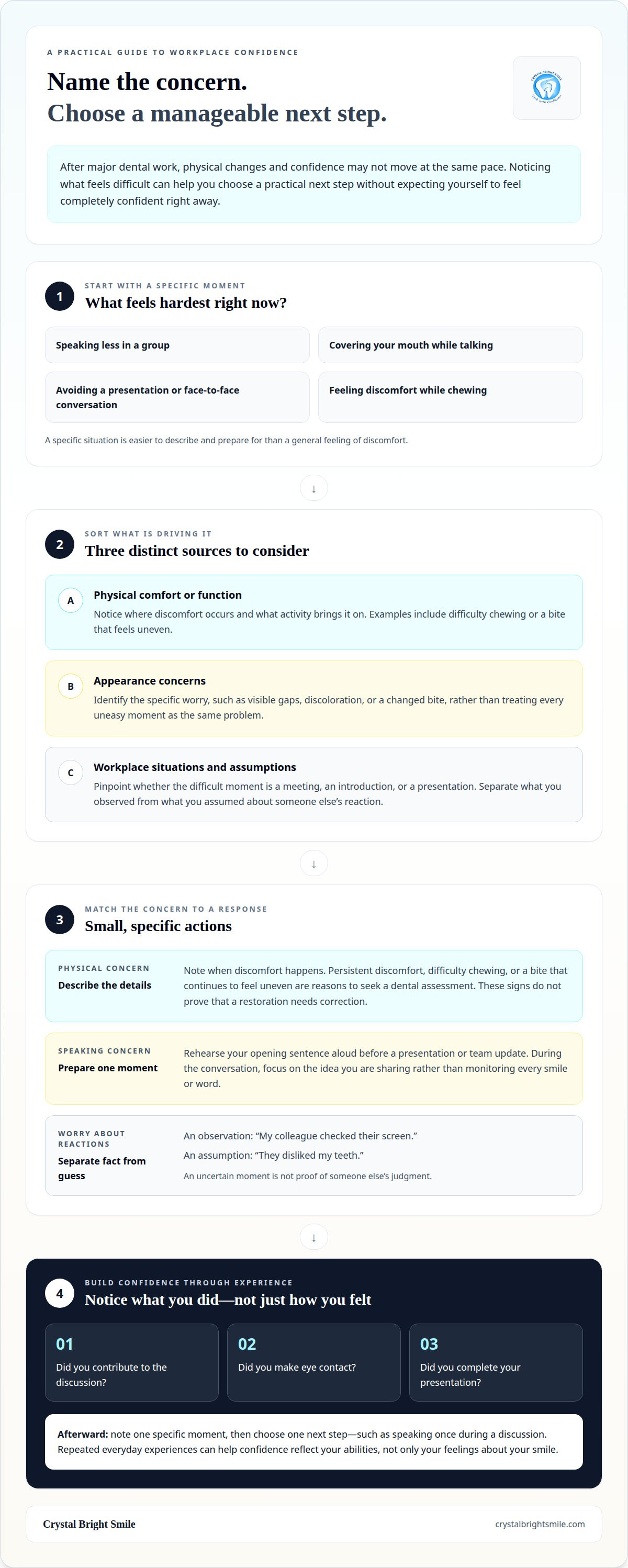
At work, self-consciousness may affect more than smiling. You might speak less in a group, cover your mouth while talking, or avoid a presentation. Notice which situation feels hardest, then prepare for it. For example, rehearse your opening sentence aloud before a team update. Focus on the idea you’re sharing rather than monitoring every smile or word. Each conversation is an opportunity to focus on participating.
A trusted mentor or professional peer can offer a useful perspective. Choose someone who listens without making your dental concerns the focus. You might say, “I’m adjusting after treatment, and I want to feel more comfortable speaking up.” Then ask to practice a presentation or get feedback on its clarity. If you work in dentistry, a supportive professional community can also make space for honest questions and shared learning.
Track progress through specific moments, not a vague demand to feel confident. After a meeting, note whether you contributed, made eye contact, or completed your presentation. Choose one next step, such as speaking once during a discussion. This practical record connects dental improvements with everyday experiences. Over time, positive workplace interactions can help your confidence reflect your abilities, not just your feelings about your smile.
2. How dental appearance can affect workplace confidence
A smile can affect how comfortable you feel in everyday workplace interactions. If you’re worried about visible gaps, discoloration, or a changed bite, you might hold back in meetings or avoid speaking face-to-face. That hesitation can affect your participation, but it says nothing about your skills or qualifications. Notice the specific moment that feels difficult, such as introducing yourself or presenting an idea.
Dental treatment may change more than your appearance. Addressing missing or damaged teeth can support chewing and comfort, while a restoration may change how your teeth meet. For example, someone who previously avoided certain foods might find eating less distracting after treatment. Outcomes depend on the dental condition and treatment plan. Changes in appearance or function don’t automatically restore workplace confidence overnight.
Self-consciousness can also shape how you interpret other people’s reactions. A colleague looking away during a conversation doesn’t prove they’re judging your smile, but worry can make that interpretation feel convincing. Separate what you observed from what you assumed: “My colleague checked their screen” is an observation; “They disliked my teeth” is an assumption. This distinction can stop an uncertain moment from becoming a judgment about your worth.
Career concerns deserve the same careful perspective. You may worry that your smile affects interviews, client meetings, or promotion prospects, but appearance alone doesn’t measure professional ability. Prepare for an upcoming interview by practicing your answers and reviewing relevant accomplishments. If dental appearance is distracting you, choose one manageable step, such as speaking once during a meeting, rather than waiting to feel perfectly confident.
How can you find a dentist for adjustments if dental work affects your smile or bite? Arrange an evaluation with a dentist who can examine the restoration, assess how your teeth meet, and discuss your symptoms and goals. Bring specific examples, such as discomfort while chewing or a bite that feels uneven.
What signs suggest dental work needs correction rather than more time to adjust? Persistent discomfort, difficulty chewing, or a bite that continues to feel uneven are reasons to seek a dental assessment. These signs don’t prove a restoration needs correction, but describing when they occur can help guide the evaluation.
If a change in your smile or bite is affecting daily comfort, explore dental restoration options as a next step. Treatment recommendations depend on an individual examination, dental condition, goals, and clinical needs.
Identifying sources of stress and dissatisfaction
Stress after major dental work can stem from several distinct concerns. Separate physical discomfort, changes to everyday routines, and worries about appearance. For example, trouble chewing may create a different concern from feeling reluctant to smile. Naming each issue helps you describe what’s bothering you instead of treating every uncomfortable moment as one problem.
Start with the physical details. Note where discomfort occurs, what activity brings it on, and whether it changes. “My jaw feels uncomfortable while chewing lunch” gives clearer information than “my mouth feels wrong.” Also note changes in how your teeth meet, your speech, or eating. These observations can help you explain your experience at a dental appointment.
Next, consider which daily tasks have become stressful. You might avoid crunchy foods, take longer to finish meals, or feel distracted while speaking. Write down an example after it happens. If eating with colleagues feels uncomfortable, identify whether the concern is chewing, pain, or self-consciousness. Different causes call for different conversations and practical next steps.
Appearance concerns can follow you into work and social settings. You may notice yourself hiding your smile during video calls or avoiding photos with coworkers. Record the situation and the thought that followed: “I covered my mouth during the meeting because I worried about my teeth.” This turns a broad feeling into a specific pattern you can address.
Dental stress can build when several concerns overlap. Difficulty eating can make lunch with colleagues less enjoyable, while worry about appearance can make conversation feel harder. Identify which concern has the greatest effect on your day. Choose one priority, such as comfortable meals or speaking freely, rather than expecting every concern to resolve at once.
Use a short written check-in to spot patterns. After a difficult moment, note the activity, the concern, and what would help. For example: “Team lunch, chewing feels uncomfortable, I want to discuss it at my next appointment.” Keep your notes factual. They can help you explain changes clearly without relying on memory when you feel anxious.
Then share the most important details with your dental team. Describe when the issue began, what triggers it, and how it affects eating, speaking, or daily comfort. If your concern is emotional rather than physical, say so plainly. Clear descriptions help the team understand your experience and discuss appropriate next steps for your needs.
4. Positive self-talk and confidence building
After dental work, an automatic thought like “Everyone notices my smile” can feel convincing. Pause and ask what you actually know. A coworker’s glance doesn’t reveal what they think. Replace the assumption with a balanced statement: “I’m adjusting, and I can still contribute clearly.” This isn’t pretending every concern has disappeared. It’s choosing a more accurate thought before worry takes over your next conversation.
Build affirmations from evidence, not pressure to feel perfect. Write down a skill you used recently, such as explaining a project clearly or helping a teammate solve a problem. Turn that example into a reminder: “I communicate well, even when I feel self-conscious.” Keep the sentence where you’ll see it before a meeting. A specific accomplishment gives your attention something real to return to.
Try a simple three-step reset when a negative thought appears. First, name the thought: “I’m worried people will judge my teeth.” Next, identify what triggered it, such as turning on your camera. Then choose a useful response: “I can focus on the update I’m sharing.” This brief practice shifts attention from imagined criticism to the task in front of you.
Use language that recognizes effort as well as outcomes. Instead of demanding, “I must look confident,” try, “I’ll share one useful point.” Before a team discussion, choose that point and write it down. Afterward, note whether you shared it. This gives you a concrete measure of progress, separate from whether you smiled, felt nervous, or received visible approval.
Keep a short record of moments that challenge old assumptions. For example, note when a colleague responds to your idea, a client understands your explanation, or you complete a presentation. Record what happened without guessing what others thought about your appearance. Reviewing these examples can remind you that your knowledge, preparation, and communication also shape workplace interactions.
Positive self-talk should feel believable. If “I love my smile” doesn’t feel true today, don’t force it. Choose a steadier alternative, such as “I’m getting used to this change” or “My work deserves attention.” Repeat it before a specific situation, like a video call, then focus on one action you control. Confidence can grow as you practice showing up and treating yourself with respect.
Let a positive affirmation remind you of your personal worth when negative thoughts about your smile return. It doesn’t need to make you feel instantly certain. You can also bring your attention back to the skills, knowledge, and accomplishments you contribute at work. These parts of your professional identity offer meaningful evidence beyond appearance.
5. Building confidence through incremental practice
Confidence often grows through small, repeated experiences, not one dramatic moment. Start with a low-pressure situation, such as greeting a familiar coworker. Notice whether you can speak comfortably and stay present. Then try a slightly more challenging opportunity, like contributing one idea during a team discussion. Each step gives you practical experience to build on.
Practice relaxed posture and eye contact before a specific work interaction. Stand naturally, release your shoulders, and look toward a friendly face while speaking. Try this during a brief conversation before using it in a presentation. A mirror can help you notice facial tension, but the goal isn’t to perfect your appearance. Focus on feeling steady while communicating.
There isn’t one fixed timeline for feeling confident after major dental work. Your pace depends on how comfortable everyday activities feel and how often you practice them. If you’re wondering how to regain confidence after major dental work, track concrete moments, such as speaking up in a meeting or joining lunch with colleagues. Don’t expect confidence to arrive on a particular day.
After dental surgery or extensive treatment, rebuild confidence with manageable steps. Choose one activity, such as smiling during a greeting or speaking in a short meeting. Repeat it in familiar settings before trying a more demanding situation. Follow your dental team’s instructions for recovery, and keep confidence-building activities comfortable for your current needs.
Use a simple learning cycle: choose, practice, review, and repeat. Choose one situation that feels challenging. Practice a specific response, such as introducing yourself without covering your mouth. Afterward, review what went well and what felt difficult. Then adjust one detail for next time. This turns an intimidating goal into a series of clear, achievable actions.
Keep a brief record of each attempt. Write down the situation, the action you took, and one observable result. For example: “Asked a question during the project meeting; finished my point.” Avoid grading your smile or guessing what colleagues thought. The record shows how your participation changes with practice, even when your feelings fluctuate.
Let each success guide your next step. If a short conversation felt manageable, try sharing an idea with a small group. If that still feels difficult, repeat the easier conversation and identify what helped. Learning how to regain confidence after major dental work doesn’t require skipping ahead. Returning to a comfortable step gives you a clear starting point for continued practice.
Crystal Bright Smile
Located in Tujunga, California, Crystal Bright Smile offers dental care to support your comfort and smile goals. If missing teeth affect your confidence or everyday function, dental implants may be an option to discuss. For appearance concerns, Invisalign, porcelain veneers, or teeth whitening may be relevant. Recommendations depend on an examination, your dental condition, goals, and clinical needs.
A conversation can help clarify what’s contributing to your concern and which next step makes sense. Share how your smile affects speaking, eating, or participating at work, along with the changes you hope to achieve. The team can use that information to discuss a personalized treatment plan. Contact Crystal Bright Smile to discuss your concerns and arrange an appointment.
Take your next step with confidence
Confidence doesn’t have to arrive all at once. Choose a useful next step, whether that means continuing your gradual practice or discussing a dental concern that still affects your comfort. If you’re thinking about how to regain confidence after major dental work, let your priorities guide the conversation. Feeling more at ease at work can begin with a clear understanding of what matters to you.
For smile concerns, Crystal Bright Smile offers dental implants, Invisalign, and porcelain veneers. Which treatment may suit you depends on an individual examination, your dental condition, goals, and clinical needs. A conversation can connect your concerns with possible care, without assuming one approach fits everyone.
Take the next step at a pace that feels right. Contact Crystal Bright Smile to discuss your dental concerns and arrange an appointment. You deserve care that respects your goals and supports the confidence you’re building.
Frequently Asked Questions
Can dental implants improve confidence?
Dental implants may support confidence when missing teeth affect your smile or oral function. They’re designed to restore appearance and function, and may make speaking or chewing feel more comfortable. Feeling more confident can also depend on how you adjust to treatment and your personal goals. An examination helps determine whether implants suit your dental condition and needs. Outcomes vary from person to person.
Is it normal to feel anxious about dental procedures?
Yes, dental anxiety is common, and it’s reasonable to tell the dental team what worries you. For example, you might feel uneasy about discomfort, unfamiliar sounds, or not knowing what happens next. Ask for explanations in clear, manageable steps and share what helps you feel more comfortable. Understanding your concerns allows the team to discuss ways to support you during treatment.
What improvements can patients expect after treatment?
Depending on the treatment and your dental condition, you may notice changes in appearance, chewing, comfort, or speech. Replacing missing teeth, for instance, may help address a gap that affects eating or speaking. Specific improvements depend on the treatment plan and individual needs. Discuss which daily activities matter most to you so expectations focus on practical goals, not appearance alone.
How can I adjust to the appearance of crowns, veneers, dentures, or implants?
Give yourself opportunities to get familiar with your smile in everyday settings. You could take a photo during a relaxed moment, practice speaking aloud, or ask a trusted person for supportive feedback. If a restoration feels uncomfortable, your bite feels different, or eating is difficult, contact your dentist for an assessment. Emotional adjustment and physical comfort are separate concerns, and both deserve attention.
How can I talk about dental work or cosmetic changes with friends, family, or coworkers?
You decide how much to share. A simple response such as “I’ve had some dental treatment and am still getting used to the change” can set a boundary without inviting a long discussion. If you prefer privacy, say, “I’d rather keep the details personal.” With a trusted friend, you might explain what kind of support would help, such as listening without commenting on your appearance.
Can counseling or support groups help with dental anxiety and confidence?
Counseling or a supportive group may give you space to talk through anxiety, self-consciousness, or changes in daily life. For example, you could discuss a specific concern before a work presentation or practice ways to respond to intrusive worries. These supports complement dental care rather than assessing your teeth or treatment. If anxiety is interfering with daily activities, consider speaking with a qualified mental health professional.

Comments