


Afraid of the Dentist? Find Support in Los Angeles

Updated: Oct 7
If you’re searching “I’m afraid of the dentist help Los Angeles,” you don’t have to feel fearless to take a first step. Dental anxiety can make booking feel daunting, whether you’re worried about discomfort, needles, unfamiliar sounds, or feeling out of control. If it’s been a while, embarrassment about your teeth may add another layer of stress.
You deserve to be heard, not judged. A first conversation gives you room to explain what feels difficult, ask questions, and learn what an examination or possible next steps may involve. You can also ask for explanations before care begins so you can stay involved in decisions.
This guide explores what may contribute to dental anxiety and practical ways to feel more prepared. You’ll also learn how to plan a low-pressure next step with Crystal Bright Smile, a dental practice physically located in Tujunga, California, and serving nearby communities. Start with your concerns, then take the process one conversation at a time.
Table of Contents
Afraid of the Dentist in Los Angeles? Start by Understanding the Fear
Feeling uneasy about dental care doesn’t make you difficult, careless, or undeserving of help. Fear can become a real barrier, especially if worry starts before you’ve even left home. You deserve respectful, nonjudgmental care, whatever your dental history looks like today.
Dental anxiety is a broad, everyday term for worry or fear connected with dental visits or treatment. For some people, it’s mild nervousness that fades once they know what to expect. For others, the distress can make booking or attending an appointment difficult. This description isn’t a diagnosis; it’s simply a way to describe an experience that varies from person to person.
Dental fear triggers and anxiety levels differ between individuals. Some people mainly worry in advance, while others feel more distressed during an examination or procedure. The overview of dental fear, anxiety, and phobia also describes how these experiences can have different causes and levels of intensity.
If the thought “I'm afraid of the dentist help Los Angeles” sounds familiar, treat it as a starting point for identifying what feels hard, not as a reason to judge yourself. Naming one concern can help you ask for information or support that would make you feel more prepared.
What can make a dental visit feel frightening?
Several parts of a visit may contribute to worry. You might be concerned about discomfort, uneasy about needles, or unsettled by the sounds and sensations of dental equipment. Sitting back in a chair can feel vulnerable, particularly when it’s difficult to speak or see what’s happening. Not knowing what comes next may add to that tension.
Past experiences can shape how someone feels about future care, but they aren’t the explanation for everyone. Embarrassment about delayed visits or changes in dental health may also make it harder to reach out. Fear can arise while scheduling, in the waiting room, during care, or at more than one point. You don’t need to identify a single cause before talking about what would help.
Does dental anxiety mean you are overreacting?
There’s no single “right” level of worry. One person may feel slightly tense, while someone else may feel strong distress at the thought of an examination. Neither reaction needs to be minimized or compared with another person’s experience. Describing what you feel is not the same as diagnosing yourself.
A simple description can guide a useful conversation: “I’m nervous about not knowing what’s happening,” or “I’d like you to explain each step before it begins.” Share only what you’re comfortable discussing. You don’t have to recount a difficult experience or justify your feelings to ask a question, request an explanation, or say you need a moment.
Understanding what concerns you can help you decide what to ask next. You might want to know what an initial examination involves, how findings will be explained, or how to signal that you need a pause. Take these questions one at a time. The goal isn’t to force yourself to feel calm; it’s to make your needs easier to communicate and keep you involved in decisions about care.
Why Dental Fear Persists, and What You Can Control at a Los Angeles Dentist
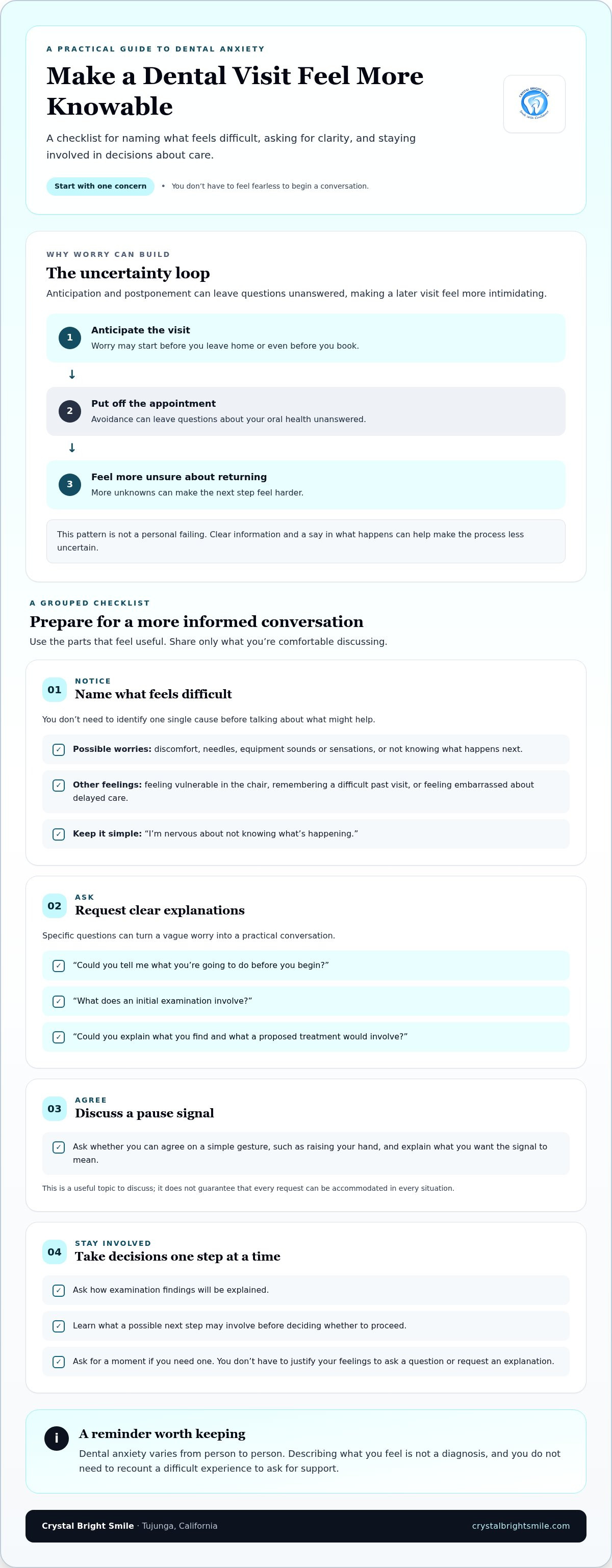
Dental worry can build in a loop. Anticipating a visit may lead you to postpone it; postponing can leave questions about your oral health unanswered; and returning later may feel more intimidating because so much is unknown. This pattern isn’t a personal failing. It helps explain why reassurance alone may not be enough: clear information and a say in what happens can make the process feel less uncertain.
A difficult past visit may shape what you expect today, but it can’t predict exactly how a future appointment will go. Uncertainty about the order of an examination, the sounds in the room, or what a sensation might mean may also intensify worry. You can share only the context that seems useful, such as “I had a hard time with dental visits before,” without describing anything you’d rather keep private.
You can raise a concern, ask questions, and understand your options before choosing a treatment step. Saying you’re worried isn’t embarrassing; it gives the dental team information that can guide a more considerate conversation. If you’re thinking, “I'm afraid of the dentist help Los Angeles,” you can begin with that concern rather than feeling you need a complete explanation or a decision before you arrive.
How past experiences and uncertainty can shape dental fear
Memory can influence expectations: if a previous visit felt difficult, a similar setting may bring the worry back. That doesn’t mean the next appointment will unfold the same way. Uncertainty can add another layer, especially if you don’t know what an instrument does or what step follows an examination. The American Dental Association shares strategies for managing dental anxiety, including communicating concerns with the dental team.
What can you ask for during a dental appointment?
Specific questions can turn a vague worry into a practical conversation. Ask for an explanation in plain language before an examination begins, or ask what a proposed treatment would involve before discussing whether to proceed. If you’d like a pause signal, agree on a simple gesture, such as raising your hand, and explain what you want it to mean. These are useful topics to discuss, not guarantees that every request can be accommodated in every situation.
“Could you tell me what you’re going to do before you begin?”
“Can we agree on a signal I can use if I need a pause?”
“Could you explain what happens after the examination, before we discuss next steps?”
It’s understandable to wonder whether speaking up will be dismissed. Make one clear request and notice how the conversation responds. You don’t need to disclose more than you want, and you can ask for unfamiliar terms to be explained or repeated. At Crystal Bright Smile, clear communication and individualized planning are part of the practice’s approach to care. Explore patient-centered dental care as you consider a manageable next step.
Compare Practical Ways to Feel Calmer Before a Dental Appointment
There isn’t one approach that works for everyone. Some people feel more prepared after organizing their thoughts; others benefit from talking with the dental team or discussing whether additional comfort approaches are appropriate. Consider these options as tools to explore, not promises that fear will disappear or every appointment will feel easy.
If you’re wondering, “I'm afraid of the dentist help Los Angeles,” start with the option that feels most manageable. You can combine approaches, adjust them over time, and tell the dental professional what has or hasn’t helped before.
Preparation and communication strategies to consider
Keep preparation simple. Note your main concern, one question about what to expect, and any past experience you think could affect your care. If you prefer to understand each step, say so before the examination begins. You can also try a few steady breaths or a grounding exercise beforehand, then decide whether it helps. These are optional strategies, not a test you need to pass.
When should you discuss additional comfort approaches?
Bring it up whenever your concerns feel hard to manage or when you want to understand options related to a proposed procedure. Explain what worries you and ask the treating professional to discuss possible approaches in light of your health history and planned care. Any recommendation requires clinical judgment and an individual conversation. Ask questions first, take time to consider the information, and make decisions with a clear understanding of what’s involved.
Plan Your First Dental Visit in Los Angeles When You Feel Anxious
A first visit can start with a conversation, not a commitment to treatment. If you’re thinking, I'm afraid of the dentist help Los Angeles, a simple plan can help you arrive with clearer questions and a stronger sense of what you want to understand. Take each step at your own pace.
What should you prepare before contacting a dental office?
Before you reach out, write down your main concern, relevant dental history, and questions you want answered. You don’t need a long explanation. A few notes can help you remember what matters if you feel nervous during the conversation. Decide what would make the first interaction clearer, such as knowing what an initial examination involves or how to raise concerns.
If you’re traveling to Tujunga from a nearby community such as Sunland, La Crescenta, Montrose, Shadow Hills, or Lake View Terrace, practical preparation can make the visit feel more organized:
Save the office address, 7738 Foothill Blvd, Tujunga, CA 91042, and plan your route.
Keep your questions and relevant dental history together so they’re easy to refer to.
Note any concerns about the visit itself, including what information would help you feel prepared.
If insurance coverage is on your mind, review this dental insurance guide for Tujunga as you prepare questions about your coverage.
For a broader overview of local care, the family dentist guide for Tujunga can help you get familiar with the practice and its approach.
How can you stay involved during the appointment?
Use your notes as a guide, not a script. At the beginning, explain what feels difficult and what information would help. You can repeat a concern if you don’t feel it’s been understood, and ask for explanations in language that makes sense to you.
1. Identify your concerns. Pick the main worry you want the dental team to know about.
2. Prepare questions. Write down what you want to understand about the visit or your dental health.
3. Explain your needs. Share your preferences, including whether you’d like steps explained before they happen.
4. Hear the options. Ask what an examination shows and what possible next steps may involve.
5. Choose what comes next. Take time to consider the information and decide how you want to proceed.
Before an examination or discussion of care, you can ask, “What happens next?” If treatment is proposed, ask questions until you understand the recommendation and any alternatives discussed. An initial conversation doesn’t obligate you to proceed with proposed treatment. Crystal Bright Smile is located in Tujunga, California, and its team uses clear communication and personalized planning to help patients understand possible next steps. Plan a first dental conversation when you’re ready to begin.
Find Dental Fear Support at Crystal Bright Smile in Tujunga
Taking a first step doesn’t mean you have to know exactly what care you need. At Crystal Bright Smile, a fully digital dental practice physically located in Tujunga, California, the first conversation is a chance to explain what feels difficult, ask questions, and understand possible next steps. Clear communication and personalized treatment planning keep the discussion focused on your individual dental needs and goals.
If you’re worried about going to the dentist, begin by sharing the concern that feels most important. You might mention that you’re uneasy about needles, unsure what an examination involves, or uncomfortable because it’s been a while. You don’t need to have every detail ready. The team can discuss your concerns and possible next steps based on your situation, while recommendations depend on your individual needs and clinical assessment.
What can a first conversation help you understand?
A first discussion can help you clarify what you want explained before deciding what happens next. Ask what an initial examination may involve, how findings will be discussed, or what questions to consider if care is recommended. You can also explain what would help you feel more informed, such as plain-language explanations or knowing the sequence of steps. Treatment recommendations depend on an individual examination, dental condition, goals, and clinical needs.
You’re allowed to take the conversation one question at a time. Ask for clarification if a term is unfamiliar, or say when you need a moment to think. Understanding the options gives you a more useful basis for making decisions; it doesn’t require you to agree to proposed treatment during that first conversation.
How can local care help you take the next step?
Crystal Bright Smile serves nearby communities including Sunland, La Crescenta, Montrose, Shadow Hills, and Lake View Terrace. The practice’s physical office is in Tujunga, California.
The practice’s modern dental technology supports a fully digital office, while personalized planning keeps attention on your particular needs and goals. Comfortable care and clear communication are part of the practice’s approach, but each person’s experience and clinical plan are individual. Call (818) 352-8200 to begin a conversation and describe what would make the next step feel manageable.
There’s no need to wait until you feel completely confident. Start with one question, share only what you’re comfortable sharing, and learn what options may fit your circumstances. Contact Crystal Bright Smile to discuss a manageable next step when you’re ready.
Take One Small Step Toward Care That Feels More Manageable
You don’t have to wait until you feel completely ready to begin. A question, a brief conversation, or a note about what worries you can be enough for a first step. If the thought “I'm afraid of the dentist help Los Angeles” describes how you feel, your concerns deserve to be heard, and you can move at a pace that feels manageable.
At Crystal Bright Smile, Dr. Nazy Rafieyan brings more than 30 years of clinical experience and a personalized approach to patient care. Use an initial conversation to explain what you need, ask what to expect, and understand possible next steps without deciding everything at once.
Let your next step be simple. Contact Crystal Bright Smile to discuss a manageable next step and share what would help you feel more informed. You deserve care that treats your questions with respect. One conversation can open the door to a clearer plan, on your terms.
Frequently Asked Questions
Why am I so afraid of going to the dentist?
Dental fear can have more than one cause, and it doesn’t mean there’s something wrong with you. A previous difficult appointment, worry about unexpected news, or discomfort with close physical contact may all play a part. Sometimes it’s hard to pinpoint a single reason. Noticing when the worry starts, such as while booking or on the day of a visit, can help you describe what kind of support or information you need.
Can I tell a dentist that I am afraid?
Yes. A brief, direct statement is enough to begin: “I’m anxious about dental visits, and I’d like to talk about that before we start.” You can also say what would help you follow the conversation, such as avoiding unfamiliar terms or having time to ask questions. You don’t have to explain the full history behind your fear. Sharing only what feels relevant is a valid way to set expectations.
How can I calm down before a dental appointment?
Choose one or two preparations rather than trying to control every detail. You might set out the information you want to bring the night before, leave yourself time to get ready, or practice a slow, comfortable breathing rhythm. A familiar song or calming audio may suit you, too. These steps won’t affect everyone the same way, so treat them as options to try, not requirements for feeling calm.
What happens if I panic during a dental appointment?
If panic rises, try to alert the dental team as soon as you can, using a word or gesture you’ve discussed. Ask for a moment and describe what you’re experiencing in simple terms, such as “I need to pause.” The team can then discuss what’s happening and how to proceed. If speaking feels difficult, agree beforehand on a clear signal you can use.
Can I visit a dentist if I have avoided care for years?
Yes. You can seek an evaluation even if it’s been a long time since your last visit. You don’t need to solve dental concerns before asking for care. An examination can help clarify your current needs and what options may be considered; recommendations depend on your individual condition and clinical assessment. If you feel overwhelmed, focus the first conversation on understanding your oral health rather than deciding on treatment right away.
Should I ask about sedation if I am afraid of the dentist?
You can raise the question with the dental professional who will assess your care. Whether medication or another clinical approach is appropriate depends on factors such as your health history, the planned treatment, and professional judgment. Share relevant medications or health conditions, and ask about potential benefits, risks, and alternatives before making a decision. Don’t take someone else’s medication or use medication for a dental visit without professional direction.
What should I say when scheduling a dental appointment if I feel anxious?
Keep it simple: “I feel nervous about dental visits. Could you explain what the first appointment may involve?” You can mention if you’ve delayed care, ask what information to have ready, and say whether you prefer explanations before each step. If your starting thought is “I'm afraid of the dentist help Los Angeles,” turn it into one clear request. Patients in Tujunga and nearby communities can use that first call to ask practical questions.

Comments