


Choose a Porcelain Veneer Shade for a Natural-Looking Smile

The whitest veneer shade isn’t automatically the most natural-looking. Learning how to choose the right shade for porcelain veneers starts with comparing your natural tooth color, the teeth that will remain visible, and the look you want. The VITA Classical shade guide organizes 16 natural tooth shades, giving your dentist and dental lab a reference for discussing color.
A bright smile can look polished and still feel like you. Your age and natural tooth color matter: teeth may darken over time, and the tooth beneath a veneer can influence its final appearance. Rather than choosing the brightest shade by default, aim for one that looks balanced with your smile.
This guide explains how shade selection works, how age and natural appearance factor into the decision, and what to share with your dentist and lab about your preferences. You’ll also learn why matching visible natural teeth and considering the overall look of your smile are important parts of planning.
Table of Contents
1. What Are Porcelain Dental Veneers?
Porcelain veneers are custom-made shells that cover the front surfaces of teeth. They can improve the appearance of discoloration, chips, misalignment, and differences in tooth shape or size. Shade selection starts with the natural teeth that will remain visible beside the veneers. A close match can help restorations blend into your smile rather than look like a separate set of teeth.
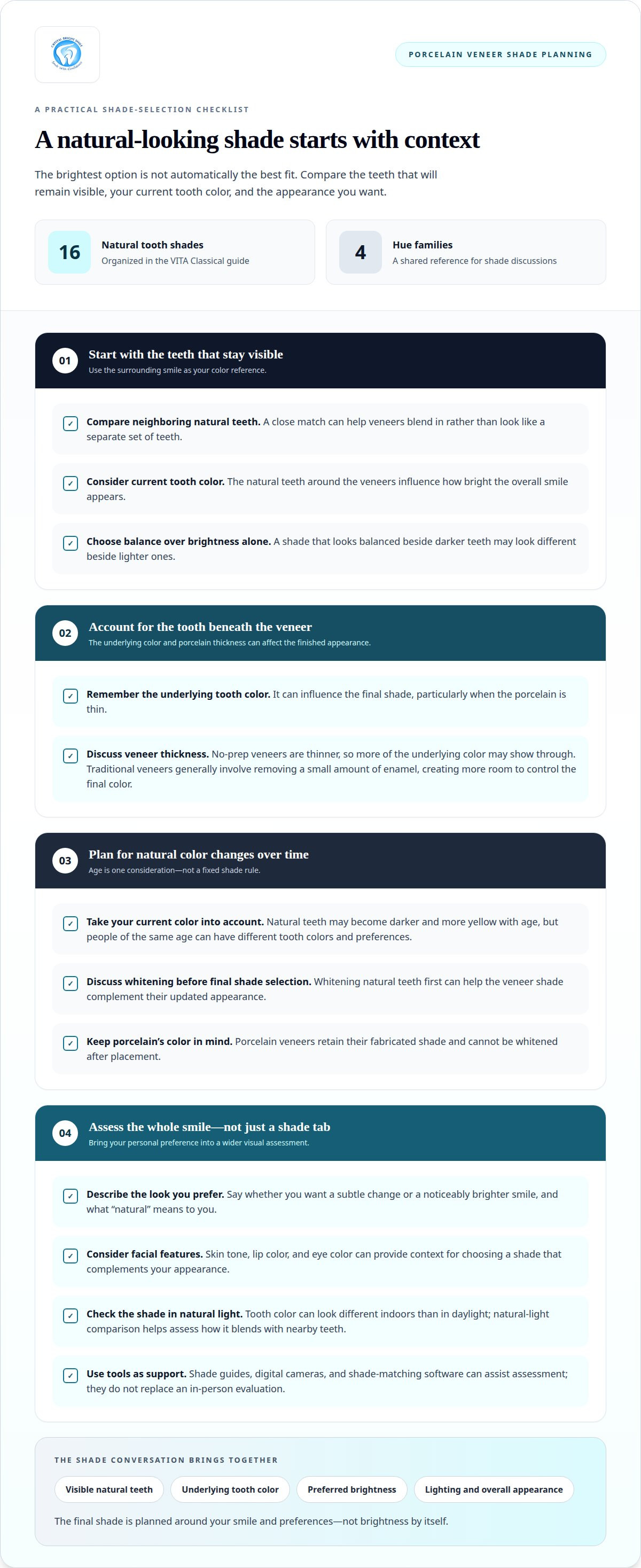
The VITA Classical A1-D4 guide organizes 16 natural tooth shades into four hue families. At a consultation, the dentist compares guide tabs with the patient’s teeth and considers the desired result. The final choice accounts for more than whether a shade looks light or dark. Tooth value, chroma, translucency, and how light reflects from teeth all contribute to the overall appearance.
The tooth beneath a veneer matters, too. Its natural color can influence the finished shade, particularly when the porcelain is thin. No-prep veneers are thinner than traditional veneers, so more of the underlying color may show through. Traditional veneers generally involve removing a small amount of enamel, creating more room to control the final color. Your dentist considers tooth shade and veneer thickness together when planning the appearance.
Porcelain and composite resin differ in their color properties. Porcelain is more stain-resistant and durable than composite resin, but it requires more enamel removal before placement. Porcelain cannot be whitened after fabrication, so its planned shade needs to suit your smile from the start. The surrounding natural teeth may change color over time, making their current shade an important part of planning.
Facial features provide context, not a fixed shade formula. Your dentist may consider skin tone, lip color, and eye color alongside your existing teeth. For example, a warmer skin tone may pair well with a softer, warmer white, while a cooler complexion may suit a cooler-looking shade. The finished look should complement your face, not compete with one feature.
Visual shade guides remain useful, and digital cameras and shade-matching software can help assess tooth color. Neither replaces an in-person assessment, because lighting and the underlying tooth affect how a shade looks. Tell your dentist whether you prefer a subtle change or a brighter smile, then discuss how that preference fits your facial features and natural tooth color.
No. Whitening treatments cannot change the shade of porcelain veneers after placement. Because the shade is chosen before fabrication, discuss whitening your natural teeth before selecting the final veneer color.
2. How your dentist selects shades for a natural appearance with age
Natural teeth may become darker and more yellow with age. That matters when planning cosmetic dentistry, because a very bright veneer can contrast sharply with surrounding teeth. Your dentist considers your current tooth color, the teeth visible when you smile, and the appearance you want. Age is one factor, not a shade rule: people of the same age can have different natural colors and preferences.
Brightness is assessed in context, not as a standalone choice. Your dentist considers whether a proposed shade complements your facial features and the natural teeth around it. A brighter shade may look balanced if it suits your overall appearance, while that same shade could look stark beside darker neighboring teeth. The goal is a smile that reflects your preference without making the veneers look disconnected.
Before finalizing a veneer shade, your dentist may discuss professional whitening for your natural teeth. Whitening is generally recommended before the final shade is selected because porcelain retains its color after fabrication. If your surrounding teeth are lightened first, the veneer shade can be chosen to complement their new appearance. This sequence is especially relevant when natural teeth will remain visible beside the veneers.
Shade assessment also takes lighting into account. Your dentist evaluates your teeth in natural light because a color can look different indoors than it does in daylight. Comparing the proposed shade in natural light can show whether it blends with nearby teeth or looks overly bright. Discuss the settings where you want your smile to feel natural, such as daytime conversations and indoor gatherings.
Your preferred brightness matters, too. Tell your dentist whether you want a subtle change or a noticeably brighter smile, and explain what “natural” means to you. You might prefer a soft, understated appearance or more brightness while keeping the result harmonious with your face. These preferences help guide the shade conversation without letting brightness alone determine the final look.
Planning also accounts for how veneers and natural teeth may differ over time. Natural teeth can darken with age, while porcelain veneers retain their fabricated shade. Your dentist can consider this contrast when discussing the shade for visible teeth and your overall smile. A restrained increase in brightness may look more cohesive than choosing the whitest option simply because it is available.
A cosmetic consultation brings together your preferences, current tooth color, age-related changes, and natural-light assessment. If you’re considering porcelain veneer treatment, discuss the level of brightness you want before the shade is finalized. That conversation helps connect your personal vision with a shade plan designed around your smile.
3. Shade matching appointment and laboratory communication
At a shade appointment, your dentist compares veneer shades with the natural teeth that will remain visible. The VITA Classical guide provides a shared reference, while shade charts group options into A, B, C, D, and bleach shades. Your preference matters, but matching visible teeth helps the veneers blend naturally. For example, a very bright shade may stand out beside darker neighboring teeth.
Clear communication with the dental laboratory helps turn that comparison into a custom restoration. Your dentist records the selected shade and relevant tooth characteristics, then sends the information with the case details. Share whether you want a subtle change or a brighter result, and describe what you like about examples you have seen. Specific preferences help the team understand your goal better than a vague label such as “white.”
Shade guides provide a visual comparison, while digital tools can analyze tooth color or suggest shades. Your dentist may use a camera or scanner alongside a guide, then consider the result under neutral lighting. Digital readings are one part of the assessment, not the whole decision. The dentist also evaluates translucency and how light reflects from your teeth, since these qualities affect the final appearance.
Matching adjacent natural teeth is especially important when veneers cover only some teeth. Your dentist compares the planned shade with the teeth beside the veneers and considers how much of each tooth shows when you smile. If several teeth are treated, the shade can be planned across a wider area. Either way, the goal is a cohesive smile rather than an isolated, artificial-looking patch.
Skin undertones offer another point of reference. A softer, warmer white may complement golden, olive, or yellow undertones; a slightly beige shade is another possibility. These are not strict rules. Your dentist weighs skin tone alongside tooth color, facial features, and your preferred brightness so the final choice reflects your overall appearance.
Tooth shape also contributes to the cosmetic effect. For an angular face or strong jawline, a rounded veneer shape may soften facial angles; more structured contours can create a different impression. Your dentist also considers how the upper teeth follow the curve of your lower lip when you smile. Length and thickness matter because they can affect lip position and pronunciation, as well as appearance.
Dentists match veneer shades to natural teeth by comparing visible neighboring teeth with a shade guide, then considering the underlying tooth color and your preferred brightness. They also weigh skin undertones and facial features. For example, a warmer complexion may suit a softer, warmer white.
4. How Your Dentist Helps Choose the Right Veneer Color
A traditional shade assessment compares your teeth with physical shade tabs. Your dentist evaluates the match beside nearby teeth and across your smile, rather than judging one tooth alone. Discuss the look you want before treatment planning progresses. Knowing how to choose the right shade for porcelain veneers means considering both your preference and how the shade works with your smile.
Digital tools offer another perspective on shade selection. Cameras and software can analyze tooth color and suggest options, while a spectrophotometer can capture precise color coordinates. These readings help document the assessment, but they are not the whole decision. Your dentist also considers translucency, tooth characteristics, and surrounding light when planning a shade for custom veneers.
Digital imaging can help you visualize possible changes. Digital Smile Design software can show how different veneer shades may look on your smile before treatment begins. A preview can help you discuss whether you prefer a subtle enhancement or a brighter appearance. Treat the image as a planning aid, not an exact promise of the final result.
Facial analysis puts tooth color in context. Your dentist considers how your teeth look with your lips and facial features, not just in a close-up view. A shade that looks appealing on an isolated tooth, for example, may seem too prominent across your face. Comparing these views can help align the shade selection with the appearance you want.
Make the preview discussion specific. Instead of saying only “whiter,” explain whether you want a small change or a more noticeable one. Your dentist can relate that preference to the natural teeth that will remain visible and the planned treatment. This is a practical way to think about how to choose the right shade for porcelain veneers without letting a screen image make the decision for you.
A veneer try-in lets you preview temporary or uncemented restorations before bonding is finalized. In complex cases, this provides an opportunity to assess the proposed shade and overall appearance in context. You and your dentist can discuss how the restorations look together before proceeding with final bonding.
Traditional shade guides, digital imaging, and an in-person assessment each provide different information. A guide supports direct comparison, while digital previews illustrate possible outcomes. Your dentist brings these observations together with your tooth color, facial features, and preferences to plan treatment that fits your smile.
5. Professional Advice vs Personal Preference – Can You Have Both?
Yes. Your preferred shade sets the aesthetic direction, while your dentist assesses how it fits your teeth, facial features, and treatment needs. Share a clear preference, such as “slightly brighter than my natural teeth” or “subtle enough to blend with them.” These examples provide a more useful starting point than simply asking for a beautiful smile.
Age and gender do not determine one correct veneer color. Natural tooth color can change with age, but people of the same age may have different starting shades and goals. Gender alone also does not indicate whether someone prefers a soft, natural appearance or a brighter one. Your preferences, visible teeth, and dental condition are more relevant to planning.
Social settings can shape what feels comfortable. If you speak with clients every day, you may prefer a shade that blends quietly with surrounding teeth. If you want a more noticeable cosmetic change, you may favor greater brightness. Neither preference is automatically better. Discuss when you want the change to be noticeable, then consider how the shade looks in a relaxed smile and during conversation.
Bring specific examples to your consultation. You might describe a smile photo you like, point out whether its color looks warm or cool, or explain that you want less contrast with your natural teeth. Your dentist can use these details to discuss what may suit your tooth color and overall appearance. A photo communicates a direction, not a guarantee that the same shade will look identical on you.
Professional guidance also accounts for how many teeth are being treated and where they are positioned. If you receive veneers on only a few teeth, visible natural teeth around them can limit how different their shade can be without creating contrast. For a broader change, your dentist can discuss how the planned shades relate across your smile. In either case, the examination and your goals inform the recommendation.
Consider long-term color as well as your immediate preference. Porcelain retains the shade selected during fabrication, while natural teeth can change color over time. If you want a brighter look, discuss how it may compare with untreated teeth. If you prefer a subtle result, explain whether “subtle” means matching closely or making a small, visible improvement.
Good dentistry makes room for both your taste and clinical judgment. Ask the dentist to explain how the recommended shade relates to your teeth, the planned treatment, and the look you prefer. If you’re ready to discuss your veneer shade preferences, bring your goals to a cosmetic consultation.
Crystal Bright Smile: Porcelain Veneers
Crystal Bright Smile offers porcelain veneers, with treatment planning shaped around your dental needs, smile goals, and preferred shade. A cosmetic consultation is an opportunity to discuss the look you want, review your teeth, and consider whether veneers suit your needs. Shade selection is part of that conversation, along with your dental condition and the natural appearance you hope to achieve.
For some patients, professional teeth whitening may be worth discussing before veneer shade planning, since porcelain keeps its selected color after fabrication. The right sequence depends on your examination, dental condition, and goals. Care is provided in Tujunga, California, with personalized treatment planning and clear communication to help you understand your options.
Contact Crystal Bright Smile to discuss your porcelain veneer goals and arrange a consultation.
Make Your Smile Plan Personal
Knowing how to choose the right shade for porcelain veneers is a starting point, not a decision you need to make alone. Before your consultation, consider how you want your smile to feel in everyday moments, from conversations to photos. Bring a few words to describe your preference, such as “soft,” “bright,” or “close to my natural color.” This gives your dentist a practical way to understand your vision.
An individual examination can connect your preference with your dental condition, clinical needs, and goals. Crystal Bright Smile offers porcelain veneers, dental implants, and Invisalign as part of its dental care. Recommendations depend on your examination and treatment needs, so your consultation can focus on the options that make sense for you.
Ready to talk through your smile goals? Contact Crystal Bright Smile to take the next step toward a plan that feels like you.
Frequently Asked Questions
What Are Porcelain Dental Veneers?
Porcelain veneers are custom-made shells that cover the front surfaces of teeth. They can improve the appearance of discoloration, chips, alignment, and differences in tooth shape or size. A chipped front tooth, for example, may need an assessment beyond color alone. Your dentist considers the tooth’s condition, your goals, and surrounding teeth when discussing whether veneers suit your needs.
How does a dentist help choose the right veneer color?
Your dentist relates your preferred brightness to your teeth, smile, and treatment needs. A practical way to think about how to choose the right shade for porcelain veneers is to describe the change you want, such as subtle or noticeably brighter. During a consultation, your dentist can discuss how that preference fits your teeth and goals based on an examination.
Does your skin tone secretly control what shade you should choose?
No. Skin tone can inform the shade discussion, but it does not dictate one correct choice. A warmer complexion may complement a softer, warmer white, while a cooler undertone may suit another look. These are visual considerations, not strict rules. Tooth color and personal preference matter too, so complexion alone should not determine your shade.
How white should veneers be?
Choose a brightness that feels right for your smile and works with the teeth that will remain visible. The whitest option may not be the most harmonious for everyone. Consider whether you want a subtle enhancement or a more noticeable change, then share your preference during the consultation. Shape, texture, and translucency also affect how bright veneers appear.
Old School vs High-Tech: What works better for perfect shade matching?
Neither physical shade guides nor digital tools should determine the shade alone. A guide supports direct visual comparison, while digital devices can analyze tooth color and suggest options. For example, a digital reading can help document an assessment, but your dentist still considers your teeth in context. Lighting, neighboring teeth, and your preferred appearance all inform the final choice.
Professional Advice vs Personal Preference – Can You Have Both?
Yes. Your preference describes the look you want, while professional guidance relates that goal to your teeth and treatment needs. If you are considering how to choose the right shade for porcelain veneers, describe your ideal result with words such as “soft,” “brighter,” or “close to my current color.” Explain when you want the change to be noticeable, such as in conversation or in photos.
Who makes the final decision?
You and your dentist make the shade decision through discussion. You explain the appearance you prefer, and your dentist considers how it relates to your dental condition and treatment plan. The laboratory uses the treatment details to make the custom veneers. In complex cases, temporary or uncemented restorations may let you review their appearance before bonding is finalized.
What porcelain veneer shade systems do dentists use, such as the VITA shade guide?
Dentists may use the VITA Classical A1-D4 guide, which organizes 16 natural tooth shades into four hue families. Its letter groups run from A through D, with numbered options such as A1 and B2. The guide gives the dentist and patient a shared reference for discussing color. Some shade charts also include bleach shades as another option to consider.

Comments