


Custom-Fit Dentures in La Crescenta for a Natural Appearance

For dentures that don't look fake in La Crescenta, both a personalized fit and a natural-looking design matter. Dentures are generally removed at night for cleaning and soaking, making overnight care part of your routine.
It’s understandable to want dentures that feel comfortable and look like they belong with your smile. A dental evaluation can help determine the right approach, whether you need full or partial dentures, adjustments to an existing set, or a discussion of implant-supported options.
This guide explains how an evaluation and treatment plan can shape your choices, including options for fit and appearance. You’ll also find practical guidance on overnight wear and denture care to help you make informed decisions about your smile.
Table of Contents
Dental evaluation and treatment options
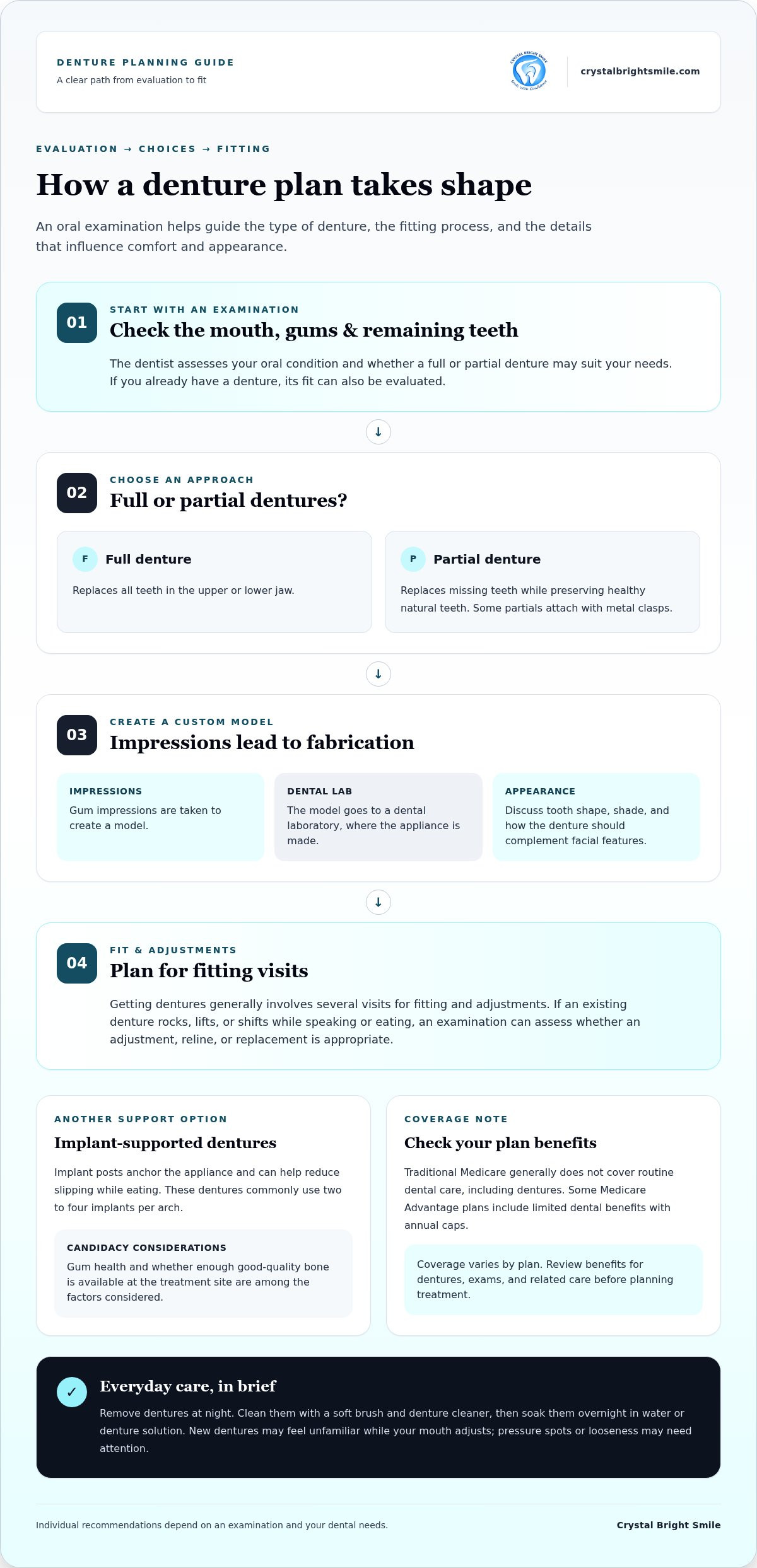
A denture evaluation starts with an examination of your mouth, gums, and remaining teeth. The dentist considers whether full or partial dentures suit your needs. Full dentures replace all teeth in the upper or lower jaw. Partial dentures replace missing teeth while preserving healthy natural teeth; some attach with metal clasps.
Next, impressions of your gums are used to create a model for the denture. The impressions go to a dental laboratory, where the appliance is made. Getting dentures generally involves several visits for fitting and adjustments. For a natural appearance, discuss tooth shape and shade, and how the denture should complement your facial features.
Traditional Medicare generally doesn’t cover routine dental care, including dentures. Some Medicare Advantage plans include limited dental benefits with annual caps. Coverage depends on the plan, so review its benefits for dentures, exams, and related care before planning treatment.
How can I compare denture dentists’ before-and-after photos and patient reviews? Compare photos taken from similar angles and in similar lighting. Look for consistent details, such as tooth proportions and how the denture frames the smile. Reviews can offer insight into communication, fitting visits, and follow-up care.
Which dentists in La Crescenta specialize in natural-looking dentures? Look for a dentist who evaluates both appearance and function, explains full and partial options, and plans for fitting adjustments. Ask how the treatment plan accounts for your remaining teeth, gum shape, and smile goals.
Which nearby denture clinics serve La Crescenta and Montrose? Compare dental practices in these communities that provide denture evaluations and fitting appointments. Consider whether their care addresses your needs, such as partial or full dentures, or adjustments to an existing appliance.
What are the risks, adjustment period, and maintenance needs for new dentures? New dentures can feel strange while your mouth adjusts, and pressure spots or looseness may need attention. Start with soft foods cut into small pieces, and avoid hard or sticky foods that can damage dentures. Remove them at night, clean them with a soft brush and denture cleaner, and soak them in water or denture solution overnight.
Dental implants offer another way to support dentures. Implant posts anchor the appliance and can help reduce slipping while eating. Implant-supported dentures commonly use two to four implants per arch. Candidacy depends on factors such as gum health and whether enough good-quality bone is available at the treatment site. The area is numbed during placement; gum tissue may feel sore or bruised afterward.
Why won't my lower denture stay in place?
A lower full denture may shift if its fit changes, so a dental evaluation can help determine whether it needs attention. If it rocks, lifts, or shifts during meals, its fit may no longer match your mouth. Changes in the jaw ridge can affect the fit over time. A dental examination can assess how the appliance meets the gums and whether an adjustment, reline, or replacement is appropriate.
Daily use can offer useful clues. Notice whether the denture moves while speaking, chewing, or opening your mouth. For example, movement during chewing may feel different from a denture that lifts when you laugh. Tell the dentist about these details and any sore areas at your appointment. Avoid trying to reshape or repair the appliance yourself, as changing its surface can affect its fit.
Costs depend on the treatment needed and are provided after a quote request. Factors include whether you need a new custom denture or an adjustment, how much of the jaw ridge supports it, and whether other dental treatment is needed. Replacing missing teeth with a partial denture involves different planning from replacing a full arch. The treatment plan also considers the condition of remaining teeth and your fit goals.
An oral examination helps determine what care is needed before a denture is made or adjusted. The treatment plan may include assessing gum health, remaining teeth, and the fit of an existing appliance. If a tooth must be removed first, that need can affect the overall plan. The number and position of teeth involved, along with the condition of surrounding tissue, help shape the recommended steps.
Long-term costs can include maintenance as your mouth changes. Dentures typically last five to ten years with proper care. A conventional denture may need relining and eventual replacement over ten to fifteen years as the jaw ridge changes. A reline adjusts the denture’s inner surface to improve how it meets the gums. Regular dental evaluations can help identify when the fit needs attention.
However, those general figures are not a personal quote. The appliance type, examination findings, any needed tooth removal, and adjustments all affect the plan. A lower denture that repeatedly slips deserves an assessment, especially if it causes sore spots or makes eating difficult. Bring the appliance and describe when it moves to help guide the evaluation.
These amounts can help with planning for possible parts of care, but they do not establish the total cost of a denture plan. An examination can clarify whether the appliance needs attention and whether tooth removal is part of the recommended steps. Request a quote based on your findings before proceeding, so the expected work and costs are clear.
Consultation and treatment planning
A productive consultation turns your priorities into a clear sequence of decisions. Start by describing what matters most, such as a secure lower-jaw fit, a natural-looking smile, or easier chewing. The dentist examines your mouth, remaining teeth, gums, and bite. These findings help shape a plan around your oral condition and goals, not appearance alone.
Next, discuss how the proposed denture will work with your natural teeth. If some teeth remain healthy, a partial denture may preserve them while replacing gaps. If an entire arch needs replacement, the plan considers how the appliance will rest against the gums. Ask the dentist to explain why the recommended option suits your examination findings.
Appearance planning can be specific. Bring a photo of your smile before tooth loss, if you have one, and describe the features you want to retain. Discuss tooth shape and color, and how visible the front teeth should be when you speak. These details help clarify what “natural-looking” means to you while the dentist considers fit and function together.
Bite assessment matters, too. The dentist checks how your upper and lower teeth meet, whether your jaw closes comfortably, and whether the denture could interfere with speech or chewing. For example, a lower-jaw appliance that feels uneven may need a different contour or adjustment. Ask how fitting visits address pressure points and changes in comfort.
Do La Crescenta dentists offer free denture consultations or payment plans? Consultation fees and payment-plan terms vary by practice. Ask what the consultation includes and whether financing has eligibility requirements or specific terms.
What questions should I ask a dentist before choosing natural-looking dentures? Ask which examination findings guide the design, how tooth shade and shape are selected, and what adjustments may be part of fitting. Also ask how the plan supports your bite, protects remaining natural teeth, and addresses discomfort after placement.
Before choosing, request a plain-language explanation of each proposed step and how it connects to your priorities. If the plan includes removing teeth, ask how that affects the sequence and timing of denture placement. If you’re comparing options, ask the dentist to explain the practical differences for your mouth, daily routine, and goals. Clear answers make it easier to weigh appearance, comfort, and function together.
Conventional and immediate dentures
Conventional dentures are made for placement after remaining teeth are removed and the gums heal. This approach lets the dentist plan the finished appliance around healed tissues. A traditional complete denture replaces one full arch, either upper or lower. If both arches need replacement, two sets can be made, one for the top and one for the bottom.
Immediate dentures follow a different sequence. They’re prepared before tooth extraction, then placed after the teeth are removed. You leave the appointment with an appliance in place, but its fit may change as the gums heal. Follow-up adjustments help accommodate those changes. Ask the dentist how the plan addresses fit during healing and what to do if the denture feels uncomfortable.
The choice between these approaches depends on your dental condition, treatment goals, and timing needs. For example, someone who wants teeth in place directly after extraction may discuss immediate dentures. Someone able to wait for gum healing may consider conventional dentures. The dentist examines your mouth and remaining teeth, then explains which sequence fits the clinical findings.
Either option needs careful planning for comfort and appearance. Before fabrication, discuss tooth shade and shape, and how much of the denture shows when you smile. For a partial denture, the plan also considers how it fits around healthy natural teeth. Some partial dentures attach to remaining teeth with metal clasps. Ask how the design balances support, visibility, and a comfortable bite.
Healing can affect fit after placement, especially with immediate dentures. Keep track of where the appliance presses, shifts, or feels loose, and describe those specific areas during follow-up. Don’t try to bend clasps or reshape the base yourself. An adjustment should address the actual fit problem rather than change the denture without an examination.
Long-term planning matters, too. A conventional denture may need relining and eventual replacement over ten to fifteen years as the jaw ridge changes. A reline modifies the inner surface to better match the tissues. Ask how the dentist will assess changes in fit over time and what signs mean the denture needs attention. A routine check can help distinguish normal adjustment from a fit issue that affects eating or speaking.
Both approaches involve several steps, from examination through fitting and follow-up. Before treatment begins, make sure you understand when the denture will be placed, how healing affects adjustments, and how the final design supports your daily needs. These details help you compare timing, appearance, and fit without treating immediate placement as the only measure of success.
Custom-made dentures
Custom-made dentures are planned around your mouth, the teeth you still have, and the gaps to fill. The process starts with an examination and impressions of your gums. The impressions go to a dental laboratory, where the denture is made. If you’re missing teeth in one area, partial dentures may replace them while keeping healthy natural teeth in place.
Small design choices shape the finished smile. Discuss tooth shade, size, shape, and placement with the dentist. For example, a front tooth’s position affects how it looks when you speak or smile. Patients seeking dentures that don't look fake in La Crescenta can share what feels distinctive about their smile and what they hope to preserve.
What materials and customization features make dentures look less artificial? A natural-looking result depends on coordinating tooth shade, shape, size, and placement with your smile. Ask which base and tooth materials are planned, and how their color and contours will be selected for your mouth.
How long does it take to get custom dentures, and what are the appointment steps? The process involves several visits, including an oral examination, impressions sent to a dental laboratory, and appointments to assess the fit and make any needed adjustments.
Use the evaluation to explain your priorities with specific examples. You might want the front teeth to show less when you smile, or a partial denture that blends with neighboring teeth. The plan can account for these preferences alongside your gums, bite, and remaining teeth.
After placement, notice how the denture feels during everyday activities. A new appliance may feel unfamiliar while your mouth adjusts. If a spot rubs or the denture moves while eating, note where and when it happens. That description helps the dentist assess whether an adjustment is needed. Don’t reshape the appliance yourself, since changing its surface can affect the fit.
Custom fit also involves follow-up. Dentures may need adjustments as your mouth changes, and a dental review can identify pressure areas or looseness. Clean the denture with a soft brush and denture cleaner, then soak it overnight. Remove it at night unless your dentist gives you different instructions for your care.
If missing teeth are affecting your confidence or making eating difficult, a denture evaluation can help clarify your options. Schedule a denture evaluation to discuss fit, appearance, and the steps involved in custom planning.
Immediate dentures are prepared in advance and placed after tooth extraction, with adjustments made as the gums heal. If this approach is relevant to you, ask the dentist how it fits with planned tooth removal and what to expect during healing. Because healing can affect fit, note any rubbing or movement, including when it occurs. Focus the discussion on your priorities for appearance and comfort, and make sure you understand when the denture will be reviewed and adjusted.
Crystal Bright Smile: Dental Implants
Crystal Bright Smile can help patients in La Crescenta explore whether dental implants may support a denture or replace missing teeth. Implant posts can anchor dentures and help limit slipping while eating. Candidacy depends on an examination and your dental needs, including gum health and the bone available at the treatment site.
At its Tujunga, California office, the practice uses personalized treatment planning to discuss options and goals. An evaluation can help you understand whether implant-supported dentures fit your needs or whether another denture approach may be more appropriate. Every plan is tailored to the individual, with no one-size-fits-all recommendation.
For a conversation about dental implants and denture options, contact Crystal Bright Smile at (818) 352-8200.
Take the next step toward a smile that feels like you
Your next step is a conversation about how you want your smile to look and feel in daily life. If you’re seeking dentures that don't look fake in La Crescenta, sharing your preferences for appearance, comfort, and eating can make the discussion more focused. Bring your questions and explain what matters most to you.
Crystal Bright Smile offers dental implants, Invisalign, and porcelain veneers as part of its broader restorative and cosmetic care. These options address different needs, and recommendations depend on your examination, dental condition, goals, and clinical needs. A personalized discussion can help you understand which direction makes sense for your smile.
Start by discussing your denture concerns and the changes you hope to make. Contact Crystal Bright Smile to discuss dentures and take a confident step toward a smile that feels natural to you.
Frequently Asked Questions
Can dentures be worn overnight?
Dentures are generally removed overnight unless your dentist gives you different instructions for your situation. Taking them out makes time for cleaning and soaking and lets you check for sore or irritated areas. If you’re getting used to a new denture, follow the wear schedule provided for your treatment rather than changing it based on comfort alone.
What is the cost of dentures in California?
Denture costs depend on the type of appliance, the condition of your mouth, and any treatment needed before fitting. Partial, full, and implant-supported dentures involve different planning and materials. The price depends on your case and is provided after a quote request. An examination helps identify the appropriate treatment and the factors that shape your individual cost.
How long do dentures last?
With proper care, dentures typically last 5 to 10 years. Changes in fit can signal that the appliance needs attention before replacement, especially if it starts rubbing or shifting during meals. Keep dental appointments even when the denture feels comfortable. A dentist can assess wear, fit, and changes in your mouth, then advise whether adjustment, relining, or replacement makes sense.
What denture options look most natural, including partial, full, and implant-supported dentures?
The most natural-looking option depends on your teeth, smile goals, and the way the appliance fits. Partial dentures can be designed around remaining teeth, while full dentures replace an entire arch. Implant-supported dentures use implant posts to help anchor the appliance. Discuss tooth shape, shade, and visibility with the dentist, then compare these design details with stability and eating comfort.
Which dentists in La Crescenta specialize in natural-looking dentures?
Look for a dentist who evaluates appearance and function, explains full and partial denture options, and plans for fitting adjustments. Ask how the plan accounts for your remaining teeth, gum shape, and smile goals.

Comments