


How to Avoid Bulky Veneers and Choose a Natural-Looking Fit

The most conservative veneer plan isn’t always the one that looks most natural. Minimal-prep veneers can add visible thickness when natural teeth aren’t small or set back, while careful preparation can create room for a flush fit. Knowing how to avoid bulky-looking veneers starts with choosing a design that suits your teeth, not simply the option that removes the least enamel.
It’s understandable to want a polished smile without an oversized feel. The right shape, contour, and material all matter, and even quality porcelain can look artificial if veneers are too prominent. A preview before placement can help you and your dentist discuss appearance and feel before treatment moves forward.
Here, you’ll learn why minimal-prep veneers sometimes look bulky and how tooth position and preparation affect the result. We’ll also explore how trial smiles can help refine the design and how porcelain’s translucency compares with composite for a natural-looking finish.
Table of Contents
Why Do Minimal-Prep Veneers Sometimes Look Bulky?
Minimal preparation can preserve more natural tooth structure, but it doesn’t automatically create a natural-looking profile. The key is balancing the space available on each tooth with the veneer’s thickness and position.
How Preparation Can Prevent Added Bulk
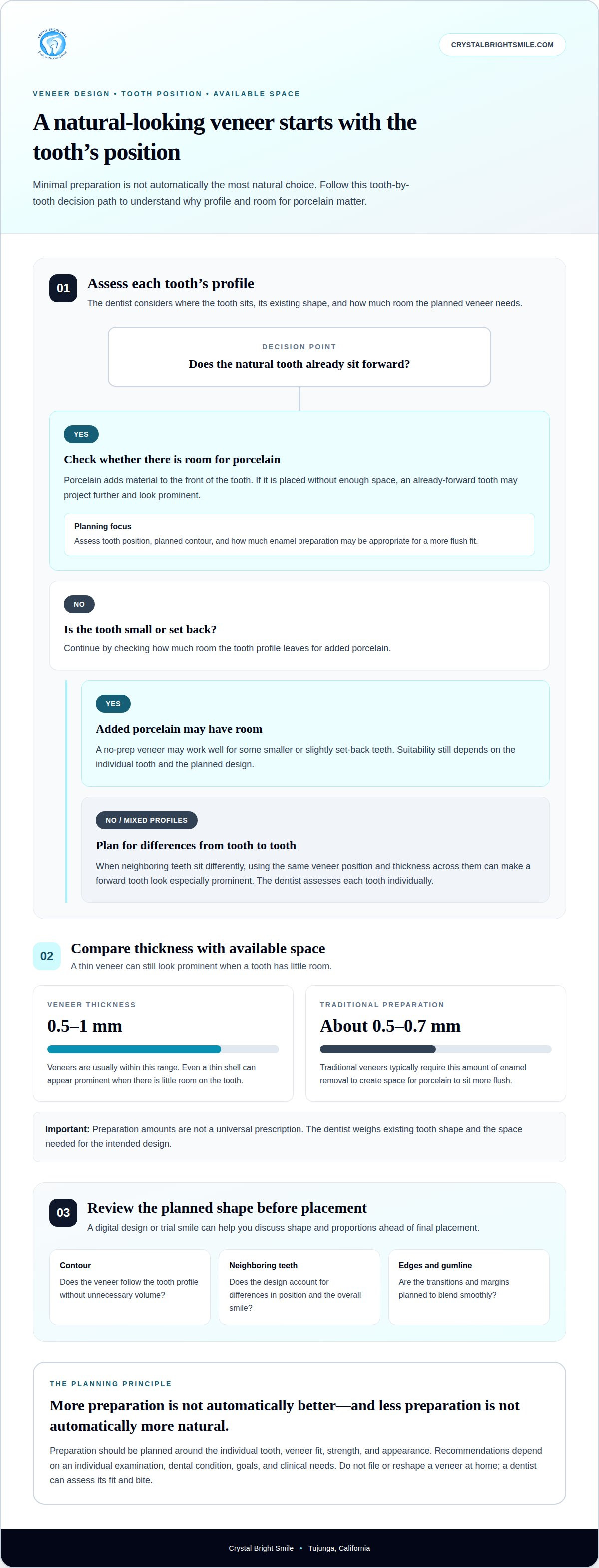
Tooth preparation carefully reshapes enamel to make room for a veneer. When a natural tooth already sits forward, adding porcelain without enough space can make its front surface project further. A cosmetic dentist considers tooth position and the planned contour before deciding how much enamel preparation is appropriate. The goal is a veneer that follows the tooth’s profile without adding unnecessary volume.
Porcelain, Thickness, and Available Space
Porcelain adds material to the front of a tooth, so its thickness affects the tooth’s overall volume. Veneers are usually between 0.5 and 1 millimetre thick, but even a thin shell can look prominent when placed over a tooth with little room. For example, if a tooth already angles outward, placing porcelain over it without accounting for that profile can make the smile look fuller than intended.
Tooth Profiles and Veneer Positioning
Tooth profiles describe how natural teeth sit in relation to neighboring teeth and the overall smile. A small or set-back tooth may have room for added porcelain, while one that already projects forward may need a different plan. The dentist assesses each tooth individually, since using the same veneer position across varied profiles can leave some teeth looking more prominent.
Preparation varies by patient, tooth, and veneer type. Traditional veneers typically require removing about 0.5 mm to 0.7 mm of enamel before fitting, creating space for porcelain to sit more flush. That figure isn’t a universal prescription: the dentist weighs the existing tooth shape and the amount of space needed for the intended design.
Consider two neighboring teeth: one sits in line with the smile, while the other angles slightly forward. Covering both with veneers of equal thickness without accounting for their positions may make the forward tooth look especially bulky. A suitable preparation and design account for that difference rather than relying on thickness alone.
More preparation isn’t automatically better. Enamel removal must be planned alongside the veneer’s fit, strength, and appearance, so aggressive filing isn’t a safe shortcut to a slimmer result. Before treatment, the dentist can explain how the proposed contour relates to each tooth and whether adjusting the plan could create a more balanced profile.
Causes of bulky-looking veneers
Several details can make porcelain veneers look oversized, even when their color appears natural. Contour, edge shape, gumline fit, and the relationship to neighboring teeth all influence the finished smile. For example, a veneer that projects sharply from the tooth can look thick from the side, while an abrupt transition near the gums can appear puffy from the front.
Overcontouring is one possible cause. Too much material near a veneer’s edges or gumline can create a prominent profile instead of blending smoothly with the natural tooth. Poorly fitting margins or rough edges can also irritate gum tissue. Swelling around those margins may add to a puffy appearance, so a dental evaluation should consider both the restoration’s shape and the surrounding gums.
Proportion matters across the smile, too. Treating only the front six teeth may make those veneers seem large beside untreated teeth farther back. The contrast can create a negative-space effect when smiling, even if each veneer looks acceptable on its own. A design that accounts for neighboring teeth and the overall smile can help avoid a sharp visual change between treated and untreated areas.
Material thickness and surface properties influence whether veneers look lifelike. Thick porcelain can block light transmission, making teeth appear flat rather than naturally dimensional. High-quality porcelain alone can’t correct an unsuitable contour: a veneer with an overly broad face or heavy edge may still look artificial. The dentist and dental laboratory need to consider shape, translucency, and tooth structure together.
Gumline details deserve attention during assessment. When an overcontoured edge is difficult to clean, plaque buildup or irritated gums can affect the appearance of the veneer margins. A rough edge may catch the gum and create an uneven transition. The concern may involve more than veneer size: examining the margins, gum health, and surface finish helps clarify what is contributing to it.
Perception can also change after placement. A new shape may initially feel larger because it differs from the natural teeth you’ve seen for years. That temporary unfamiliarity differs from veneers that visibly protrude, disrupt the way teeth meet, or remain uncomfortable. If a veneer seems bulky, don’t file or reshape it at home. A dentist can assess its fit and bite, then determine whether a careful adjustment is appropriate or replacement merits consideration.
Differences between minimal-prep and traditional veneers
Minimal-prep and traditional veneers differ mainly in how much space the dentist creates for porcelain. Minimal-prep treatment preserves more enamel, while traditional preparation reshapes the tooth to accommodate the planned veneer. Neither approach automatically gives a more natural cosmetic result. Tooth position, existing shape, and the intended veneer thickness all influence proportion.
“No-prep” and “minimal-prep” describe different degrees of preparation, not one design that suits everyone. A no-prep veneer may work well for someone with smaller or slightly set-back teeth, where added porcelain can improve shape without making the tooth project too far. If natural teeth already sit forward, adding material without making room may increase their visible volume.
Lumineers are one type of non-prep veneer. Like other no-prep options, they may feel or look bulky when placed over teeth without enough room for added material. The deciding factor isn’t the name of the veneer, but whether its thickness and position suit the individual tooth. A small change in front-to-back position can alter the profile of the whole smile.
Traditional veneers use enamel preparation to make room for porcelain and help it sit closer to neighboring teeth. This approach can be useful when a tooth’s current profile leaves little space for an added layer. But preparation must be planned around the tooth’s structure and the desired appearance. Removing enamel without a clear design goal doesn’t, on its own, create better proportions.
During a cosmetic consultation, discuss the balance between preserving enamel and controlling added volume. For example, a patient with naturally prominent front teeth may need a different plan from someone whose teeth sit slightly back. The dentist considers tooth position, shape, and condition alongside the desired color and length. These details guide whether minimal preparation, traditional preparation, or another option makes sense.
Ask how the proposed veneer will relate to your existing tooth profile, not only whether it’s called “no-prep.” Discuss the expected thickness, available space, and how the design will keep neighboring teeth in proportion. A preview, when used, can make shape and position easier to evaluate before placement. The right choice balances enamel preservation with a comfortable, natural-looking fit.
Digital smile design and trial smiles
A digital design or temporary mock-up can preview veneer size and shape before placement. It gives you and the dentist a chance to discuss appearance and comfort before treatment proceeds.
Digital Design and Smile Previews
Digital smile design uses a planned image, while a temporary mock-up lets you see a proposed shape on your teeth. Both can make details such as length, width, and front-to-back position easier to discuss. A trial smile can also show how the design looks in different lighting before final placement, rather than relying only on a photograph.
Ask the cosmetic dentist how the preview reflects your smile width, lip movement, facial proportions, and bite pressure. For example, a veneer edge that looks balanced in a still image may appear different when you smile or speak. Reviewing these movements connects the planned contour with how your teeth function and look in everyday expressions.
Contouring and Overcontoured Designs
Contour is the curve and profile of each veneer, including its transition near the gumline. A design that bulges outward or has a heavy edge may look too thick, even when its shade suits the surrounding teeth. Smooth contours help the restoration blend with the natural tooth and gumline, rather than looking like a separate layer.
During a preview, compare the veneer’s front profile with neighboring teeth and the smile as a whole. For instance, a prominent contour near the gumline can look puffy and make cleaning more difficult. Discuss whether changes to the shape, length, or position could improve appearance while preserving a comfortable bite.
Questions About Natural-Looking Veneers
Ask how the planned shape and thickness will suit your natural teeth, gum position, and bite. Also ask whether a digital design, temporary mock-up, or trial smile can help you assess the appearance before final placement.
When assessing before-and-after photos, look for cases with starting tooth shapes and positions similar to yours. Compare the final contours, proportions, and gumline transitions, not just the brightness of the color. Ask whether the photos show the dentist’s own patients and whether the examples reflect a result you find natural.
Bring specific preferences to the design discussion, such as a softer edge or a less prominent front profile. The dentist can explain how those goals relate to veneer shape, bite, and facial proportions. If a preview looks too thick, raise the concern before final placement, while the proposed contour can still be discussed.
Porcelain versus composite veneers
Porcelain and composite interact with light differently, which can influence a smile’s natural appearance. Porcelain has a semi-transparent quality at the edges that composite resin may not consistently replicate. That translucency can help a veneer blend with nearby teeth. Material alone, however, can’t correct an unsuitable shape, shade, or contour.
When comparing materials, look at the transition between a veneer and the natural tooth. Porcelain’s translucent edges may make that boundary appear less abrupt, while composite may produce a different surface effect. The finished appearance also depends on how the restoration is shaped and placed. A dentist considers these details together instead of selecting a material based on one feature.
Composite and porcelain may differ in surface appearance. The look of either type of veneer depends on factors such as its material, shaping, and placement. This doesn’t mean every composite restoration will look bulky. Patients can discuss how the surface appearance may affect contrast with neighboring natural teeth.
Porcelain can look lifelike, but it isn’t a shortcut around thoughtful design. A broad front surface or heavy contour may appear prominent even when the material’s edges transmit light. The dentist considers the tooth’s position, planned thickness, and transition near the gumline. These factors help determine whether the restoration complements the smile.
Understanding how to avoid bulky-looking veneers means considering material and design together. Ask how translucency, edge shape, and surface finish relate to the appearance you want. For example, a patient seeking a subtle transition may prioritize a natural-looking edge, while another may focus more on changing tooth shape. The dentist can discuss how those preferences suit the individual teeth and clinical needs.
For patients considering how to avoid bulky-looking veneers, the central question isn’t simply which material looks best. It’s whether the chosen material and contour suit the tooth’s position, neighboring teeth, and cosmetic goals. Shade, proportions, and surface details all contribute. A dental examination helps the dentist assess these factors and explain which treatment approach is appropriate.
Porcelain veneers can address changes to tooth color, shape, or size. Composite fillings are a separate restorative treatment, not the same thing as composite veneers. To discuss a porcelain design tailored to your smile, schedule a porcelain veneer consultation. Bring preferences such as a softer edge or a less prominent profile to guide the conversation.
Crystal Bright Smile: Porcelain Veneers
Crystal Bright Smile offers porcelain veneers for patients considering changes to their smile’s color, shape, or proportions. A cosmetic consultation can connect your goals with a veneer design that considers tooth position, bite, and the natural contours of your smile.
At its Tujunga, California office, the practice uses digital dental technology and personalized treatment planning. Veneer recommendations depend on an examination, your dental condition, and your clinical needs. This helps shape a discussion about preparation, material, and whether veneers suit your goals.
If you’re considering porcelain veneers, contact Crystal Bright Smile to discuss your smile and arrange a consultation.
Choose a Smile That Feels Like You
Your next step is to define what “natural” means for your smile. Perhaps you prefer subtle changes, softer edges, or a shape that keeps your familiar character. Bringing these preferences to a cosmetic consultation can turn a general idea into a focused discussion about the look you want.
Keep comfort in the conversation, too. A veneer plan should account for how your teeth meet and how the final design fits your dental needs, condition, and goals. The right path forward comes from weighing these clinical details alongside your aesthetic preferences, not choosing a treatment based on a label alone.
Understanding how to avoid bulky-looking veneers can help you have a more specific, confident conversation about your options. You don’t need to arrive with every detail decided. Start with the changes you’d like and the concerns you want addressed, then discuss a plan with a dental professional.
Ready to take that next step? Connect with Crystal Bright Smile to discuss your smile goals and arrange a consultation. Your preferences can guide a thoughtful plan toward a look that feels polished and distinctly yours.
Frequently Asked Questions
Why do some veneers look so obviously fake?
A newly changed smile can seem unfamiliar before it seems artificial. Give yourself time to see the veneers in everyday settings, not only in close-up photos. If the appearance still concerns you after you’ve adjusted, describe what feels different, such as how your smile looks when speaking or smiling. That gives the dentist a clearer starting point for assessing your concern.
Can thick-looking veneers affect your bite?
They can, and persistent pain or pressure deserves attention. If discomfort after placement doesn’t settle within a few days, contact your dentist for an assessment. The dentist can evaluate how your teeth meet and whether the restoration needs attention. Don’t try to file or reshape it at home, since an unsupervised change can affect its fit and surface.
Can veneers be made thinner?
Sometimes, but whether thinning is appropriate depends on the restoration’s material and construction. A dentist can determine whether a limited polish or reshaping is possible without compromising the veneer. If the concern is substantial, changing the restoration may be more suitable than removing too much material. An examination helps distinguish a minor refinement from an issue that needs a different solution.
Can minimal-prep veneers be removed if I am unhappy with the result?
A dentist must assess the veneers and the teeth beneath them before discussing removal. Even with minimal preparation, veneers are bonded to teeth, and some enamel may have been reshaped. Removing them doesn’t necessarily restore the teeth to their previous appearance. The next step depends on the preparation performed, the condition of the teeth, and the treatment appropriate for your needs.
Can veneers ever look completely natural?
They can be designed to feel and look natural, though adjusting can take time. Your tongue may notice the changed surfaces at first, and practising normal conversation or reading aloud can help you get used to them. If the sensation remains uncomfortable or the appearance continues to bother you, follow up with your dentist rather than assuming you must simply live with it.
How should veneers look when they are properly designed?
They should support comfortable function as well as the appearance discussed before treatment. A useful check is whether you can speak and bite without a persistent sense that one tooth is interfering. Tell the dentist about any pressure, rough sensation, or uneven contact. These observations can help identify whether the issue involves adjustment or needs a clinical assessment.
How important is shade selection in achieving a natural veneer result?
Shade selection can influence how well veneers harmonize with your overall appearance. Skin tone and the whites of your eyes can help guide the choice, alongside the surrounding teeth. Rather than choosing solely from a bright photograph, discuss how the proposed shade relates to your features in person. This gives the dentist useful context for translating your preferred look into a treatment plan.
What causes dental veneers to look bulky or unnatural?
Sometimes the apparent bulk comes partly from gum changes rather than the veneer alone. Swollen or irritated gums can make the area look puffy, while buildup near veneer edges can affect appearance and gum health. Gentle brushing and routine professional cleanings help keep gums healthy. If puffiness persists, a dentist can assess the gums and restoration to identify what needs attention.

Comments