


Loose Dental Implant in Sylmar? What to Do Now

Updated: Oct 7
Wondering what to do about a loose dental implant Sylmar residents may notice? Don’t panic, but don’t ignore it. The part that feels mobile may be the visible crown or its connector, rather than the implant fixture in the jaw. Only a dental examination can identify what’s moving and what care may be appropriate.
It’s understandable to worry about pain, swelling, or further damage. For now, avoid chewing on that side, and don’t wiggle, glue, or try to tighten anything yourself. Brush gently to help keep the area clean while you arrange an assessment. Pain or swelling deserves prompt attention, especially if symptoms are getting worse.
This guide explains what to do next, which warning signs shouldn’t wait, and how a dentist can assess the implant and nearby tissues. Crystal Bright Smile provides dental implant and emergency dental care at its office in Tujunga, California. An evaluation can clarify whether the crown, connector, or implant fixture is involved and help you understand the next steps.
Table of Contents
Loose Dental Implant in Sylmar: What to Do First
A loose-feeling implant can be unsettling, especially when you can’t tell whether the visible tooth or something beneath it is moving. Don’t try to diagnose the problem by touch. A dental assessment can identify what needs attention and guide the next steps. If you’re wondering what to do about a loose dental implant Sylmar, protect the area and arrange prompt dental care.
While you organize an evaluation, take these steps:
Stop testing the movement. Don’t wiggle, twist, push, or pull the implant or restoration with your tongue or fingers. Repeatedly checking it may irritate the area or put extra force on a component.
Protect the area. Avoid chewing on that side, and don’t try to tighten, glue, or otherwise repair anything yourself. Continue gentle oral hygiene without scrubbing or pressing on the moving part.
Arrange a dental assessment. Call a dental office promptly and explain that an implant or its restoration feels loose. Share when you first noticed the movement and whether your symptoms have changed.
What should you do immediately if an implant feels loose?
Keep the area undisturbed and avoid hard or sticky foods that could catch on the restoration. If a crown or another component comes off, save it in a clean container and bring it to your appointment. Don’t try to put it back in place. Make a brief note of any pain, swelling, bleeding, or recent impact to your mouth. These details can help the dental team understand what happened.
The visible tooth, connector, and implant fixture are parts of a dental implant system, but the sensation of movement doesn’t reveal which part is involved. A general overview of the dental implant can help explain its structure. Only an in-person assessment can evaluate your specific concern. Don’t delay care simply because discomfort is mild or absent.
Which symptoms need urgent attention?
Seek urgent dental advice for severe or rapidly worsening pain, facial swelling, fever, or bleeding that won’t stop. These are general warning signs, not a diagnosis or personalized triage. If you have difficulty breathing or swallowing, seek emergency medical care immediately. Don’t wait for a routine dental assessment if breathing or swallowing is affected.
To arrange an assessment, contact Crystal Bright Smile at (818) 352-8200. The practice provides dental implant and emergency dental care at its office at 7738 Foothill Blvd, Tujunga, California. A clinician can examine the area and recommend next steps based on your individual condition.
What Could Be Moving: Implant Crown, Connector, or Fixture?
A dental implant system has several parts, and saying “my implant feels loose” doesn’t identify which one is moving. The crown is the visible, tooth-shaped restoration. Beneath it, a connector, also called an abutment, joins the crown to the implant. The fixture is the portion placed in the jawbone. Because these parts connect, it can be difficult to locate the movement by sensation alone.
Movement in the restoration is not the same as movement in the implant fixture.
Can the crown feel loose while the implant fixture remains stable?
Yes. A person may notice movement in the crown or connecting component while the fixture remains stable. But a feeling of wobbling, clicking, or shifting can’t establish which part is involved or why. Don’t use your fingers or tongue to test it. A clinician needs to examine the restoration and surrounding area to identify the moving component and discuss appropriate next steps.
This distinction matters because the visible tooth is only one part of the system. Even if the movement seems limited to the crown, don’t assume the issue is minor or that tightening it is all that’s needed. An examination can help clarify what’s happening before any treatment decision is made. The FDA’s guidance on dental implants also provides information about possible complications and what to do if an implant feels loose.
What if the implant fixture itself seems to move?
If the movement seems to come from deeper in the jaw rather than from the visible restoration, arrange a prompt professional evaluation. That sensation deserves attention, but it doesn’t prove that the fixture has failed or determine what treatment is needed. A clinician may assess the crown and connector, examine the gums and tissues around the implant, and decide whether imaging would help clarify the situation.
Try not to jump to the worst conclusion. A loose-feeling restoration doesn’t automatically mean the entire implant must be removed, and apparent fixture movement can’t be diagnosed from a description alone. At the same time, whether an implant can be retained can’t be determined without an examination. The appropriate next step depends on the findings and your individual dental condition.
If you’re weighing what to do about a loose dental implant Sylmar, focus on getting a clear assessment rather than guessing which part is involved. Crystal Bright Smile provides dental implant and emergency dental care, with treatment planning based on individual clinical needs. You can learn about the practice’s dental implant care as you arrange an assessment.
How a Dentist Assesses a Loose Dental Implant
A careful assessment helps distinguish what you’re feeling from what’s happening. A crown that shifts, a connector that has loosened, and movement involving the implant fixture can feel similar, but they may call for different next steps. Recommendations depend on which component appears to move and what the examination shows. The goal is to gather enough information to explain the concern clearly, rather than assume a diagnosis based on your description alone.
What might happen during the dental examination?
Expect questions about when you first noticed the movement, whether it has changed, and whether you have pain, swelling, bleeding, or a recent injury. Mention it if a component came loose. Sharing specific details helps the clinician understand the timeline and focus the examination.
The clinician may examine the visible restoration and the tissues around the implant for signs that help clarify where the movement is coming from. The examination is tailored to your situation. Imaging may be considered if the clinical findings suggest it would help assess the implant or surrounding area. It isn’t automatically needed in every case.
To make the conversation useful, ask direct questions and request explanations in everyday language. For example:
Which component appears to be moving, if that can be determined?
What did the examination show about the restoration and nearby tissues?
Would imaging help clarify the findings?
What care do you recommend, and what changes should prompt follow-up?
How are recommendations decided?
There isn’t one treatment plan for every loose-feeling implant. Recommendations depend on the examination, your dental condition, and your individual goals and clinical needs. The clinician can explain what the findings suggest, discuss appropriate options, and clarify what to monitor. If the cause isn’t clear from the initial examination, they can explain what further assessment may be useful.
Patient education can help you prepare for the discussion. MedicalNewsToday’s overview of complications of dental implants describes potential problems, but it can’t determine what’s causing your symptoms. Use it as general background, then let an examination guide decisions about your care.
For what to do about a loose dental implant Sylmar patients may be concerned about, start with a clear assessment, not guesswork. Crystal Bright Smile uses modern dental technology and individualized treatment planning to help patients understand their findings and next steps. The practice’s office is in Tujunga, California, and serves nearby communities including Sunland, La Crescenta, Montrose, Shadow Hills, and Lake View Terrace.
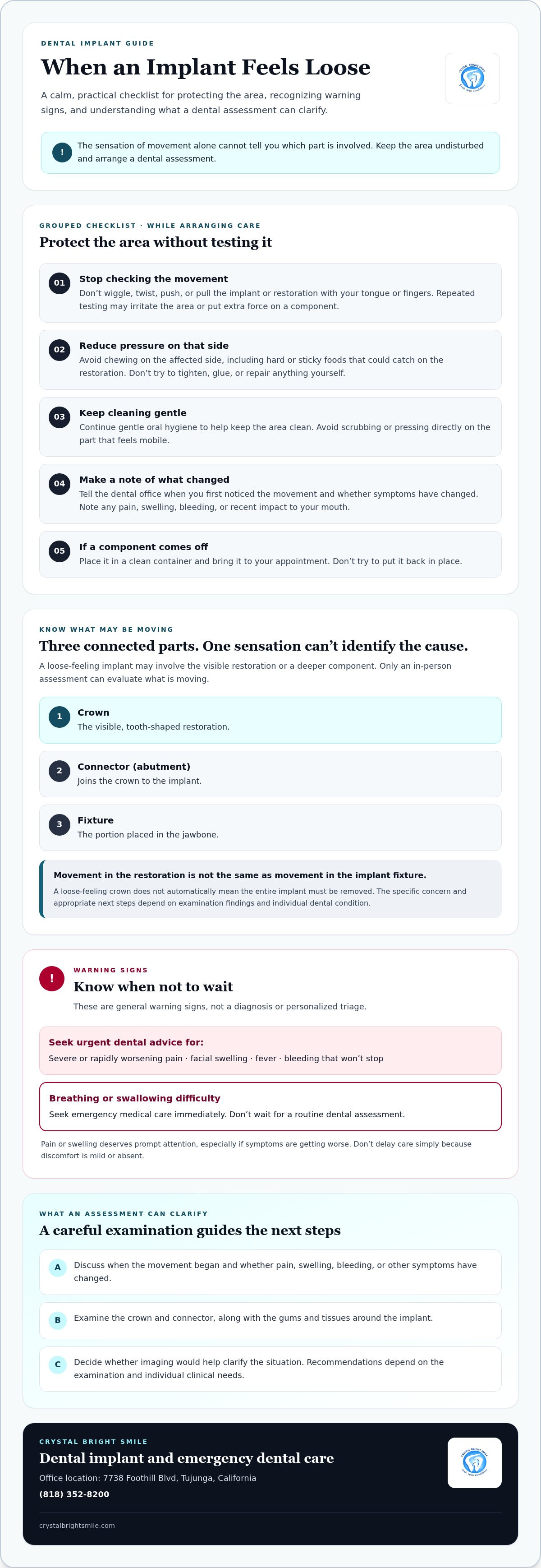
How to Protect the Area While Arranging Dental Care
While you’re waiting for a dental assessment, focus on keeping the area clean and avoiding extra pressure. These steps may help protect the site temporarily, but they won’t repair a loose crown, connector, or implant fixture. Home care shouldn’t delay an examination, even if the area feels more comfortable after you change what you eat.
What can you safely do before the appointment?
Keep brushing gently with a soft toothbrush, taking care around the implant. Don’t force floss, picks, or other tools beneath or around a restoration that feels unstable. Avoid chewing on the affected side, especially foods that are hard, crunchy, sticky, or difficult to bite. Choose foods that feel comfortable to eat without pressing on the area.
Notice changes without repeatedly checking whether the implant moves. Make a note of when symptoms started and whether pain, swelling, or bleeding has changed. If a component detaches, place it in a clean container and bring it with you. Don’t try to put it back yourself, even if it appears to fit.
Avoid household adhesives, glue, tools, and attempts to tighten or reposition the component. These approaches aren’t a substitute for dental care and may make the situation harder to assess. Don’t take leftover antibiotics or other medication as a do-it-yourself fix. Medication decisions should be guided by a qualified clinician who understands your health and symptoms.
When should you seek help sooner?
Contact a dental professional promptly for guidance if you have severe or worsening pain, fever, facial swelling, or bleeding that won’t stop. These symptoms call for urgent attention, but they can’t identify the cause on their own. If breathing or swallowing becomes difficult, seek emergency medical care immediately rather than relying on home precautions or waiting for a dental appointment.
Use these steps only to protect the area while arranging care. They don’t stabilize or repair an implant, and symptom relief doesn’t confirm that the underlying issue has resolved. If you’re deciding what to do about a loose dental implant Sylmar, an assessment can clarify which component is involved and what care may be appropriate.
Crystal Bright Smile provides dental implant and emergency dental care at its Tujunga office. Contact the practice to arrange an assessment and explain what you’ve noticed, including any changes in symptoms. Recommendations depend on your examination and individual clinical needs. Contact the Tujunga dental office to take the next step.
Dental Implant Assessment Near Sylmar: Your Next Step
If you’re in Sylmar and an implant feels loose, arrange a dental assessment and explain what you’ve noticed. Crystal Bright Smile’s physical office is in Tujunga, California, not Sylmar. The practice also serves nearby communities including Sunland, La Crescenta, Montrose, Shadow Hills, and Lake View Terrace. Knowing that Tujunga is the office location can help you plan your visit.
What information should you share when arranging an assessment?
Give the office a concise picture of what’s happening. Describe whether the crown, another visible part, or the area around the implant seems to move, but don’t worry if you can’t tell. Note when you first noticed it and whether the sensation or other symptoms have changed since then.
Also mention pain, swelling, bleeding, or a recent injury to your mouth. If a component has come off, say so and bring it with you in a clean container. These details help the dental team understand your concern and prepare for an assessment. You don’t need to identify the cause yourself. That requires clinical evaluation.
Dr. Souren Rostomyan, a board-certified oral and maxillofacial surgeon with more than 20 years of experience, focuses on advanced procedures including dental implant reconstruction. His experience is relevant to implant care, but recommendations for you depend on the examination and your individual clinical needs.
What happens after the initial assessment?
After evaluating the implant and surrounding area, the clinician can explain the findings and discuss recommendations based on your dental condition, goals, and clinical needs. The next step may depend on which component appears to be involved and whether additional assessment is appropriate. No specific repair or outcome can be determined before your individual examination.
Bring any questions you want answered, such as what the examination indicates, what care is recommended, and what changes should prompt follow-up. Clear communication can make it easier to understand your options and decide how to proceed. If restorative care is part of the discussion, ask how the proposed plan relates to the condition of the implant and restoration.
For readers searching what to do about a loose dental implant Sylmar, arranging an assessment is a practical way to move from concern to clearer information. Contact Crystal Bright Smile to arrange dental care at the Tujunga office.
Move Forward With a Clear Plan
A change in how an implant feels can make ordinary moments, from eating to smiling, feel uncertain. You don’t have to work out the cause on your own. The most useful next step is an in-person assessment, where questions can be answered in context and recommendations tailored to your dental needs.
If you’re still deciding what to do about a loose dental implant Sylmar, choose a professional assessment over repeated checking or online guesswork. Share what you’ve noticed, ask what the findings mean, and take time to understand the options before deciding how to proceed. You can also ask what follow-up may be helpful and what changes should prompt another call. A clear plan can help you feel more informed, even when the next step is still being determined.
Contact Crystal Bright Smile to arrange a dental assessment and discuss your concern with the team. Call (818) 352-8200 to take the next step.
Frequently Asked Questions
Is movement around a dental implant normal while it is healing?
The implant itself shouldn’t feel mobile during healing, so report any movement to your dental clinician. Tenderness or changes in the surrounding gum can occur after treatment, but they don’t confirm that the implant is loose or stable. Avoid testing it by pushing with your tongue or fingers. If you’re unsure whether the sensation comes from the implant or nearby tissue, describe exactly what you feel and when it occurs.
Can a loose dental implant cause an infection?
A loose implant doesn’t automatically mean there’s an infection, but infection or inflammation may be one concern a clinician evaluates. Watch for changes such as increasing redness, warmth, discharge, a persistent unpleasant taste, or feeling unwell. These symptoms can have different causes and can’t be diagnosed from appearance alone. Contact a dental professional for guidance, especially if symptoms are progressing, rather than relying on rinses or home remedies.
What can cause a dental implant to become loose?
Possible causes include a crown or connector loosening, a damaged component, or a problem affecting the implant’s support in the jaw. Inflammation around the implant and changes in the supporting bone can also be factors. Heavy biting forces may contribute in some cases. These possibilities aren’t interchangeable, and a description of the sensation can’t pinpoint the cause. An examination helps determine what needs attention.
Can a loose dental implant be repaired?
Sometimes the issue involves a restoration component rather than the implant fixture, and the appropriate care may differ. Whether a repair is possible depends on the part involved and the clinician’s findings. Don’t try to tighten or reattach anything at home, even if the movement seems slight. Ask the clinician to explain what appears to be affected, what options fit your condition, and whether follow-up is recommended.
Should I go to the emergency room for a loose dental implant?
A loose-feeling implant generally needs prompt dental assessment, while breathing or swallowing difficulty calls for emergency medical care. Severe or worsening pain, facial swelling, fever, or bleeding that won’t stop also warrants urgent attention. If you’re in Sylmar and asking what to do about a loose dental implant Sylmar, contact a dental office promptly for direction. Don’t wait for a routine visit if symptoms are rapidly worsening.
Can I use mouthwash if my dental implant feels loose?
Mouthwash won’t stabilize or repair a loose implant. If you normally use a rinse, avoid vigorous swishing around the area, particularly if the implant was placed recently or you have post-procedure instructions. Follow any specific guidance your dental clinician gave you, and don’t start a medicated rinse to treat the problem without professional advice. Gentle brushing can help maintain cleanliness while you arrange an assessment.
Can a dental implant become loose years after placement?
Yes, a loose sensation can develop long after implant placement. A crown or connector may shift, or changes involving the surrounding tissues and bone may affect support. The timing alone doesn’t reveal which part is involved or how serious the issue is. Even if the implant has felt stable for years, new movement deserves assessment. Share when you first noticed it and any recent changes in comfort or chewing.

Comments