


Loose Dental Implant: Why It Happens and How Dentists Treat It

A dental implant that feels loose needs prompt attention, but it doesn’t always mean the implant post has failed. If you’re wondering what to do if a dental implant feels loose, avoid chewing on that side or testing the movement, and contact a dentist for an evaluation. The crown or connecting screw may be loose while the post remains stable.
That distinction matters. A wobbly crown can feel alarming, but the right treatment depends on which part is moving and why. An examination can help determine whether the issue involves the restoration, the implant connection, or support from the surrounding bone and gums.
In this article, you’ll learn why an implant may feel loose, what signs can point to a problem, and how a dentist evaluates the cause. You’ll also see how treatment can differ when a crown or screw is loose versus when the implant post itself has lost support. Knowing what to expect can help you respond calmly and protect your comfort while you arrange care.
Table of Contents
How Can a Dentist Treat a Loose Implant?
A dentist checks whether the movement comes from the crown, abutment, screw, or implant post. A loose crown or abutment can often be repaired while keeping the implant itself, but a mobile post may need removal.
To identify which part is loose, the dentist examines the restoration and implant, then may use X-rays or a cone-beam CT scan. A loose component can often be saved; a fully mobile implant body usually needs removal. Replacement may be considered after healing.
Identifying the Loose Component
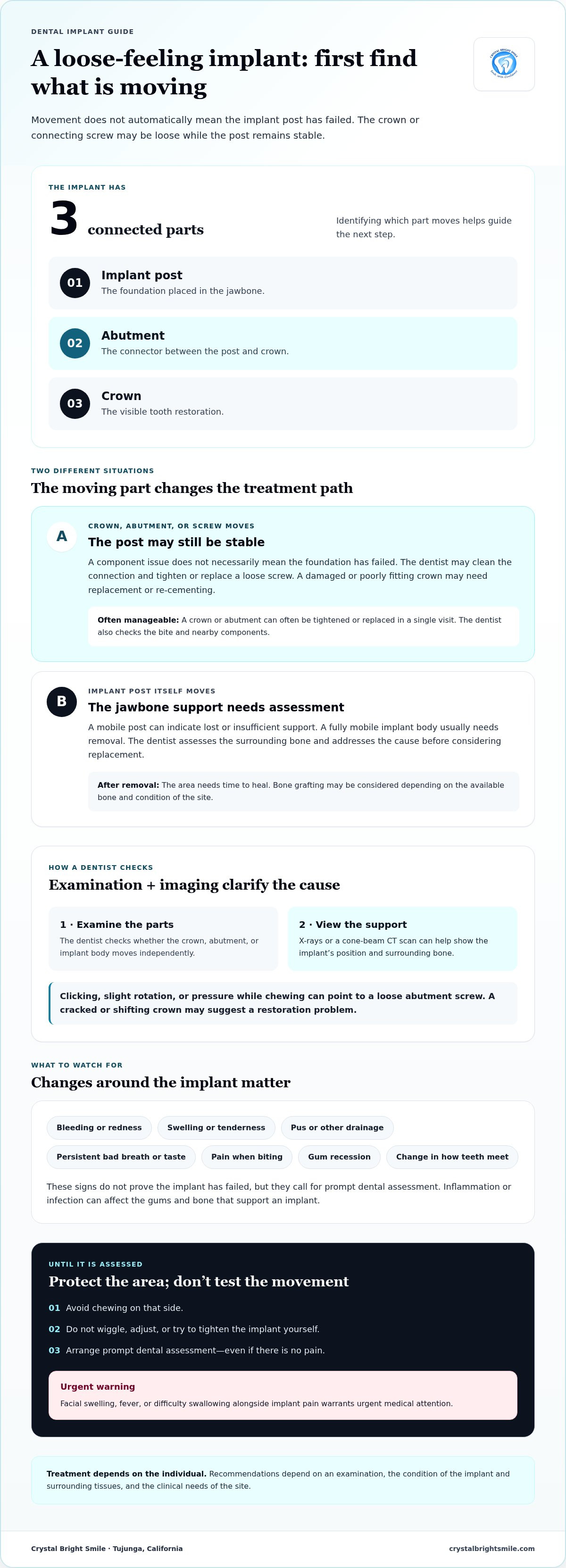
A dental implant has three connected parts: the post in the jawbone, the abutment, and the visible crown. If the crown shifts while the post remains stable, the issue may involve the crown or connecting screw. Movement of the post itself is different: it suggests the foundation in the jawbone has lost support. An examination and imaging help distinguish these problems; testing the movement yourself can’t identify the cause.
Clicking, slight rotation, or pressure during chewing can point to a loose abutment screw, while a cracked or shifting crown may indicate a restoration problem. The dentist checks whether the crown, abutment, or implant body moves independently. X-rays or cone-beam CT scans can show the implant’s position and surrounding bone, helping clarify whether the implant itself remains stable.
Treatment for Loose Crowns and Abutments
A loose crown or abutment involves parts attached to the implant, not necessarily its foundation in the jawbone. The dentist may access the connection, clean it, and tighten or replace a loose abutment screw. If the crown is damaged or no longer fits securely, replacing it may be more suitable than tightening the existing component.
Depending on how it is attached and what caused the movement, a loose crown may need to be re-cemented. A crown or abutment can often be tightened or replaced in a single visit. The dentist also checks the bite and nearby components, since a restoration that shifts under chewing pressure can remain unstable unless the underlying issue is addressed.
Treatment for a Loose Implant Body
A loose implant body means the post itself moves in the jawbone, rather than only its crown or abutment. This can indicate that the implant has not gained or retained stable support. A fully mobile post usually needs removal; the dentist assesses the surrounding bone and addresses the cause before considering another implant.
If infection or bone loss affects the implant, treatment may involve cleaning the area, managing infection, and evaluating the remaining bone support. After removal, the site needs time to heal. Depending on the available bone and the condition of the area, bone grafting may be considered to create a foundation before replacement.
These distinctions guide treatment: tightening a screw won’t stabilize a mobile post, while removing a stable post because of a loose crown may be unnecessary. Examination and imaging help the dentist choose between securing a component, replacing a restoration, or treating the implant site. Report movement promptly and avoid chewing on that side until it has been assessed.
Why Would a Dental Implant Become Loose?
Looseness can develop when inflammation affects the supporting bone or when healing doesn’t create stable integration. Peri-implantitis and failed healing are two possible causes a dentist may investigate.
Peri-Implantitis and Bone Loss
Peri-implantitis is inflammation and infection in the gums and bone around an implant. As bone loss reduces support, the implant may become unstable instead of remaining firmly anchored. Bleeding, swollen or tender gums, drainage, a bad taste, or persistent bad breath can signal inflammation around the site. These changes matter because a loose-feeling restoration can mask a problem affecting the underlying foundation.
A dentist assesses the gums and implant, then uses imaging to evaluate the supporting bone. If inflammation is present, treatment focuses on the affected tissues and infection rather than simply tightening a component. Bone loss can have several contributing factors, including smoking, health conditions that affect healing, and delayed follow-up care. Identifying those factors helps guide the next steps.
Signs of Infection or Implant Failure
Look for bleeding, redness, swelling, tenderness, pus or other drainage, and persistent bad breath near the implant. Pain when biting, gum recession, or a change in how your teeth meet can also signal a problem. These signs don’t prove the implant has failed, but they call for prompt dental assessment. A dentist can check whether the movement comes from the crown or the implant post itself.
Cost depends on the cause and treatment needed, such as securing a loose component, treating infection, or addressing bone loss. The cost is determined after a quote request and assessment of the work involved.
A loose implant warrants prompt dental attention, even without pain. Contact a dentist promptly, especially if you have pain or swelling. Facial swelling, fever, or difficulty swallowing alongside implant pain warrants urgent medical attention.
Failed integration is another possible cause, particularly when an implant becomes unstable during healing. Integration means the jawbone forms a stable connection with the implant post. Infection, insufficient bone, or other healing problems can interrupt this process, leaving the post without adequate support. A dentist evaluates the implant and surrounding area to determine whether the bone has integrated and whether the post can remain.
If bone loss or failed healing means the implant cannot be retained, removal may be needed. After the area heals, bone grafting may be considered to build a stronger foundation for a replacement implant. The decision depends on the remaining bone and the condition of the site. Treating infection or inflammation and assessing bone support help shape a plan to restore the area.
Common causes of implant looseness
A loose feeling can start in the restoration, the connection beneath it, or the implant’s support. For example, weakened cement may let a crown shift even when the implant post remains stable. A screw can also loosen under repeated chewing pressure. Finding the source matters because tightening a component won’t correct strain or damage elsewhere.
Mechanical issues often affect the parts above the jawbone. Cement may weaken, a crown may crack, or an abutment screw may lose its hold. A crown that rocks while the post stays still points toward a restoration or connection problem. A dentist checks the crown’s fit, the screw connection, and signs of damage to identify which part needs attention.
Pressure can contribute, too. Repeated clenching or grinding places extra force on the crown, screw, and supporting bone. A bite that directs heavy force onto one implant can create a similar concern, especially during chewing. Hard foods may also stress the restoration. If the feeling began after biting something hard or waking with jaw soreness, mention that during the examination.
Weakened cement: The crown may move because its bond has deteriorated.
Loose screw: Clicking or slight rotation can occur as the connection shifts.
Cracked crown: A damaged restoration may feel unstable during chewing.
Excess pressure: Grinding, clenching, or bite misalignment can strain connected parts.
Movement in the implant post itself has a different cause. The post depends on stable integration with the jawbone; if that support weakens, the implant can move rather than just its crown. Bone loss may be related to inflammation or infection around the implant. A dentist uses an examination and imaging to assess the bone and distinguish this from a loose restoration.
Timing and symptoms help guide the assessment. A crown that starts shifting after a hard bite may have a mechanical problem, while gum bleeding, swelling, or drainage can point to inflammation around the implant. These clues don’t identify the cause on their own. Describe when the feeling began, whether it changes with chewing, and any gum changes so the dentist can investigate the right parts.
Don’t try to tighten or reposition anything yourself. Pressing on the crown or testing it repeatedly can add pressure without revealing whether the problem involves cement, a screw, the crown, or the implant post. Avoid chewing on that side until a dentist evaluates it. An examination helps match treatment to the specific cause, rather than addressing the visible movement alone.
Treatment options for loose implant components
Treatment depends on whether the loose part is the restoration, its connector, or the implant post. A dentist tailors care to the cause identified through examination and imaging.
Treatment for Infection or Bone Loss
When infection or bone loss affects the implant, treatment addresses the surrounding tissues and remaining bone support. The dental team may clean the area, manage infection, and assess how much bone remains. This matters because tightening a crown or screw won’t resolve damage beneath the gumline. The findings help determine whether the implant can stay in place or needs further treatment.
Deep cleaning, medication, or other procedures may be used to restore the health of surrounding tissue. The choice depends on the location and extent of inflammation and bone changes. Mention symptoms such as gum bleeding or drainage, since those details help direct the examination. Imaging can show whether bone support has changed around the implant.
Treatment for Implant Failure
If the implant post has failed to integrate with the jawbone or is fully mobile, removal is usually needed. The dentist addresses the underlying cause and allows the area to heal. Replacement can take several months while the site is treated and heals, and bone grafting may be considered before another implant.
A general implant success rate doesn’t determine whether a particular loose implant can be retained. The key distinction is whether movement comes from a repairable component or the implant body. A dentist uses an examination and imaging to assess the difference and explain the treatment plan.
For a loose crown or abutment, the dentist may access the connection, clean it, then secure or replace the screw. A damaged crown may need replacement, while a crown that has come loose can often be tightened or re-cemented. These repairs can often be completed in a single visit. The dentist also checks that the connection and restoration fit securely after treatment.
If the screw or cement is no longer holding the artificial tooth, treatment can focus on replacing the failing material or component rather than removing a stable implant post. This may preserve the implant itself when its bone foundation remains sound. A cracked crown also needs attention, because tightening its screw alone won’t repair the damaged restoration.
When symptoms point to infection or bone loss, treatment focuses first on the affected tissues and implant support. If removal is needed, the area heals before replacement planning proceeds. Bone grafting may help create a foundation for a future implant, depending on the site. Each step addresses the cause, so identifying the moving part is central to choosing care.
Loose dental implant post
A moving implant post is different from a crown that shifts on top. The post sits in the jawbone, so movement can mean its support has weakened. Treat this as a serious dental concern, even if it doesn’t hurt. Prompt evaluation helps identify whether the implant body or only its restoration is moving.
If you’re deciding what to do if a dental implant feels loose, protect the area until a dentist examines it. Don’t wiggle the post with your tongue or fingers, and don’t try to tighten it yourself. Chew on the other side and choose soft foods rather than hard or sticky snacks. Brush gently around the implant to keep the area clean.
Call a dentist promptly: Explain when the movement began and whether it changes during chewing.
Limit pressure: Avoid biting directly on the implant or testing its movement.
Watch for changes: Note pain, swelling, bleeding, drainage, or a new bite change.
A dentist examines the implant and surrounding gums, then may use X-rays or cone-beam CT imaging to assess bone support. The key question is whether the post has stable integration with the jawbone. A crown moving while the post stays still points to a different problem than movement of the implant body itself.
A fully mobile implant body usually needs removal. The dental team addresses the underlying cause, such as infection or bone loss, and evaluates the site before discussing replacement. Healing comes first; bone grafting may be considered if the jaw needs a stronger foundation for another implant. Replacement planning depends on the condition of the area and available bone.
Don’t wait for pain to decide whether an assessment matters. A loose post needs prompt dental attention, and swelling or pain makes timely contact especially important. Facial swelling, fever, or difficulty swallowing alongside implant pain calls for urgent medical attention. These symptoms can signal a problem beyond a loose restoration.
Before your appointment, note whether the post moves, when you first noticed it, and whether chewing or gum changes accompany it. Sharing those observations helps the dentist focus the examination. Continue gentle brushing, avoid manipulating the implant, and don’t use household glue or tools to secure a moving part.
For an examination of a moving implant post, schedule a dental implant evaluation and describe the movement and any symptoms.
Crystal Bright Smile: Dental Implants
Crystal Bright Smile provides dental implant care for patients who need an evaluation of a loose-feeling implant or guidance about replacement options. An examination helps identify whether the concern involves the implant post or an attached restoration. Treatment recommendations depend on your dental condition, clinical needs, and goals.
At its Tujunga, California office, Crystal Bright Smile uses modern dental technology and personalized treatment planning to support clear communication about next steps. Contact the practice at (818) 352-8200 to discuss an appointment.
Take the Next Step Toward Comfort
A stable, comfortable bite can make everyday moments feel natural again. If you’re deciding what to do if a dental implant feels loose, arrange an examination rather than trying to manage the movement alone. A clear diagnosis can help you understand the available options and make a thoughtful decision about your oral health.
At Crystal Bright Smile, treatment recommendations are shaped by your examination, dental condition, clinical needs, and goals. You can discuss your concerns and what you’d like to restore, then consider a plan that fits your situation. You don’t need to have every answer before reaching out. Start with a conversation.
Contact Crystal Bright Smile to discuss an implant evaluation and take a confident step toward feeling comfortable with your smile again.
Frequently Asked Questions
Can an implant feel loose without pain?
Yes, an implant or its restoration can feel loose without hurting. For example, you might notice a crown shifting while speaking, even though chewing causes no pain. A lack of discomfort doesn’t show which part is moving or whether the implant’s support is affected. Don’t keep testing it with your tongue or fingers. Contact a dentist for an assessment and describe when you first noticed the change.
Is it the crown that's loose, or the implant itself?
A dentist can determine whether movement comes from the crown, its connector, or the implant post. You may notice the crown feels different when you bite, but that sensation alone can’t identify the loose part. Avoid trying to separate or reposition anything. At the appointment, explain whether the movement happens during chewing, speaking, or brushing. An examination, sometimes with imaging, helps distinguish a restoration problem from movement deeper in the jaw.
Can I still eat normally if my implant feels loose?
Don’t chew normally on a loose-feeling implant until a dentist evaluates it. Choose softer foods that need little chewing, and use the opposite side of your mouth. Avoid hard or sticky foods that could place extra force on the restoration. If even soft foods cause pain or pressure, stop chewing on that side. Keep brushing gently, but don’t push on the implant to see whether it moves.
How long after implant surgery should the implant feel solid?
Bone integration typically takes three to six months, though the implant’s healing experience varies. Follow the eating and care instructions provided for your surgery rather than judging healing by a date alone. Contact your dentist if the implant post seems to move during recovery, or if pain, swelling, or gum changes appear. A crown may be fitted at a different stage of treatment, so distinguish movement of the restoration from movement of the post.
Can teeth grinding loosen an implant?
Yes, repeated grinding or clenching can put excess pressure on the crown, connecting screw, and supporting bone. Morning jaw soreness, tightness, or waking with a damaged restoration are useful details to mention at an appointment. A dentist can assess your bite and discuss whether a night guard is appropriate. Don’t assume grinding is the only cause of movement, since a loose component or changes around the implant can also contribute.
Does insurance cover repairing or replacing a failed implant?
Coverage varies with your insurance plan, the procedure, and your policy’s benefits. Before treatment, ask your insurer whether the proposed repair or replacement is covered and what documentation it requires. Crystal Bright Smile offers insurance options, but coverage and patient costs depend on the plan. The office can help you verify current coverage. Don’t assume that repair and replacement have identical benefits under your policy.
Is it normal for an implant crown to feel slightly different than a natural tooth?
Yes, an implant crown may feel firmer or quieter when you bite than a natural tooth. An implant lacks the periodontal ligament that cushions natural teeth, which changes how pressure is perceived. A familiar difference in sensation isn’t the same as new movement. If the crown begins shifting, clicks, or changes your bite, arrange a dental evaluation instead of assuming the sensation is simply part of having an implant.
What May Be Loose?
The moving part may be the visible crown, the abutment or connecting screw beneath it, or the implant post in the jawbone. An implant-supported bridge or denture can also feel unstable if its attachment shifts. These parts connect but aren’t interchangeable, so the sensation doesn’t confirm which one is loose. Note what feels different, such as movement while speaking or biting, and share that observation with your dentist.

Comments