


Restoring a Smile After Years of Neglect in Sunland

Restoring a smile after years of neglect in Sunland starts with understanding what your teeth need for health, function, and appearance. A smile makeover involves at least two procedures, but it is not automatically the same as full-mouth rehabilitation. Restoring function may require restorative treatment alongside cosmetic care.
It is understandable to want a brighter, more confident smile and wonder where to begin. An examination, dental X-rays, and a professional cleaning help identify concerns to address before cosmetic treatment. This guide explains how care can be planned in stages, when options such as crowns, implants, veneers, or whitening may fit, and what to know about insurance. Dental plans may not cover cosmetic dentistry, though they may cover part of restorative treatment, such as a crown for a broken tooth. A thoughtful plan balances oral health, tooth function, appearance, and your goals.
Table of Contents
Veneers, bonding, implants, whitening, crowns, and bridges
Different treatments address different concerns, from a chipped front tooth to missing teeth. Planning starts by distinguishing appearance goals from damage that affects tooth structure or function.
Veneers and Bonding for Tooth Improvements
Porcelain veneers can change the visible shape or color of teeth, while dental bonding uses composite resin for smaller corrections. Bonding may suit a minor chip, gap, or discolored area; veneers may be considered for broader visible changes. The amount of tooth alteration, enamel condition, and desired result help guide the choice.
For example, a small chipped edge may need a different approach from several teeth with uneven shapes. Genetic imperfections can affect tooth size, shape, or color; veneers or crowns may be considered when those concerns also involve the tooth’s condition. An examination helps determine which option fits the actual need.
Options for Replacing Missing Teeth
Dental implants replace a tooth’s root function, while a bridge fills a gap by connecting a replacement tooth to neighboring teeth. Dentures replace multiple missing teeth and can be full or partial. The choice depends on how many teeth are missing, the condition of nearby teeth, and your oral health and goals.
Implant treatment includes a healing period as bone bonds with the implant post. A bridge may be considered when adjacent teeth can support it, while dentures offer a removable replacement option. Each approach has different planning and maintenance needs.
Whitening addresses tooth color, not chips, gaps, or missing teeth. It may be considered before veneers if a brighter shade alone meets your goal. Whitening is not permanent, so touch-ups may be needed to maintain the appearance. An examination can also identify whether discoloration has a cause that needs treatment rather than whitening.
A filling can repair a cavity or a smaller area of damage. When a tooth is more extensively worn or damaged, a dental crown covers the outer tooth to protect it and restore its shape. Crowns may use porcelain or zirconia, materials selected to suit the tooth and treatment plan. During crown treatment, a temporary crown may protect the prepared tooth while a laboratory makes the permanent crown.
Genetic differences in tooth shape or size can influence a smile’s appearance, but the right treatment depends on more than appearance alone. A veneer may address a visible surface concern; a crown may be appropriate when the tooth also needs greater coverage. Dental bridges and crowns can restore the look of damaged or missing areas, with recommendations shaped by the examination, tooth condition, and overall goals.
Restorations to improve tooth function and oral health
Restorative care can rebuild parts of a smile used for everyday tasks. A missing back tooth, for example, may change how you distribute chewing across your mouth. A damaged front tooth can affect biting into food. The practical goal is to choose restorations that address the affected teeth and suit the way you use your bite.
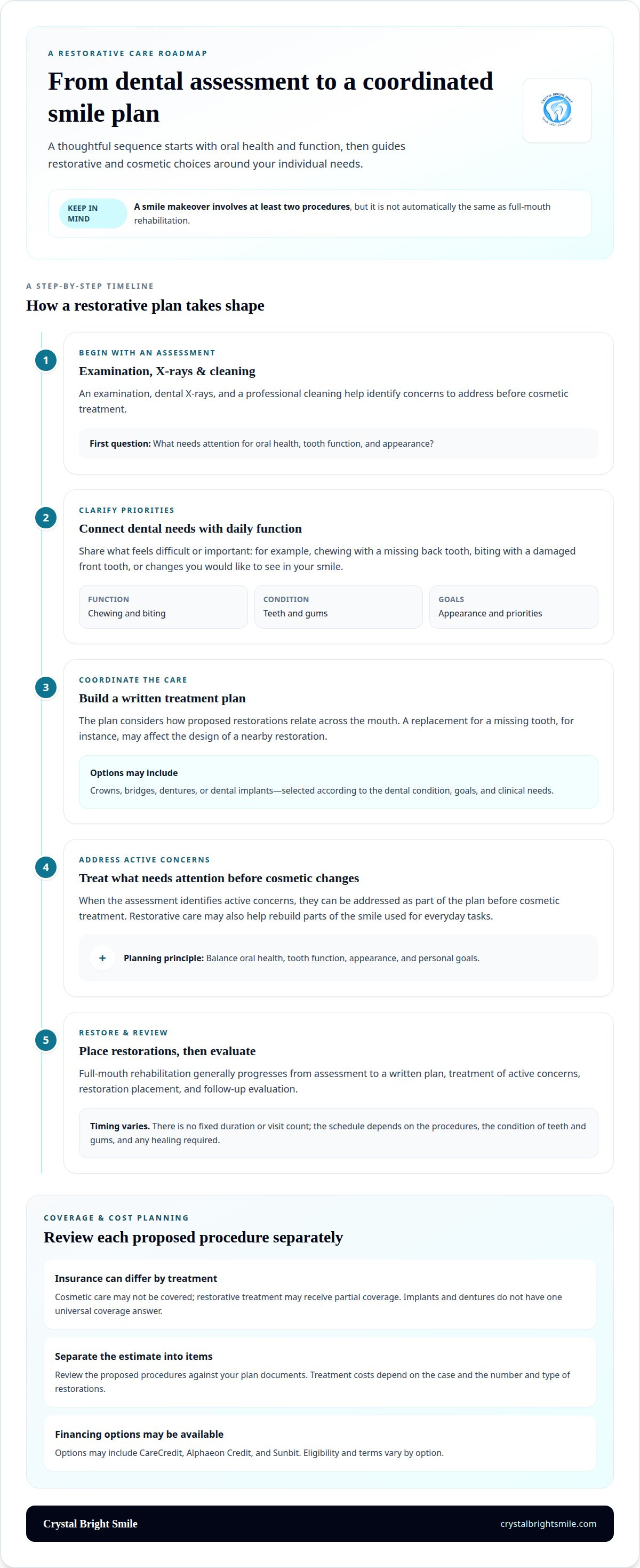
Full-mouth rehabilitation generally moves from assessment to a written plan, treatment of active concerns, placement of restorations, and follow-up evaluation. The plan accounts for how crowns, bridges, dentures, or dental implants relate to one another. Replacing a missing tooth, for instance, may affect the design of a nearby restoration. The dentist considers your dental condition, goals, and clinical needs when selecting procedures.
There is no fixed duration or visit count for full-mouth rehabilitation. The schedule reflects the procedures involved, the condition of your teeth and gums, and any healing required. A treatment plan can explain which visits involve preparation, restoration placement, or review, so you understand the sequence without assuming every case follows the same timetable.
Insurance coverage depends on your plan and the purpose of each procedure. Restorative care may receive partial coverage, while cosmetic dentistry may be excluded. Implants and dentures do not have one universal coverage answer. A useful estimate separates each proposed procedure and identifies the portion the plan may cover. For example, a patient considering an implant and a tooth-colored restoration can review each item separately against the plan documents.
Affordability near Sunland can involve both insurance benefits and available financing. Flexible financing options may include CareCredit, Alphaeon Credit, and Sunbit. Eligibility and terms vary by option. Treatment costs depend on the case and are provided after a quote request; the number and type of restorations influence the estimate. Discussing these items alongside the proposed plan can help patients consider a manageable sequence.
If you are restoring a smile after years of neglect in Sunland, use the planning conversation to clarify your daily priorities. Describe which foods are difficult to chew, whether a tooth feels unstable, and which changes matter most. These details connect a restoration to a functional goal rather than treating each tooth as an isolated concern. Ask how completed restorations will be reviewed and maintained over time.
Clarify function: Note specific challenges, such as biting with a damaged front tooth.
Review the plan: Understand how proposed restorations relate across the mouth.
Discuss payment: Separate insurance benefits, financing, and treatment estimates.
A restorative dental examination can help connect these priorities with an individualized treatment plan.
Exams, X-rays, and cleanings
A restorative plan starts with an examination, not a cosmetic choice. The dentist reviews visible teeth, existing restorations, and areas that may need closer assessment. A chipped tooth, cavity, or missing tooth can change which treatments make sense. This first step distinguishes health needs from appearance goals and gives the treatment plan a practical starting point.
During an examination, the dentist checks for signs of tooth decay and other concerns. Dentists check for these signs during biannual examinations. The visit can also identify changes around existing crowns, fillings, or bridges. Share concerns such as sensitivity or difficulty chewing, since these details help direct the examination. A clear record of concerns gives the dentist a better basis for recommending treatment priorities.
X-rays can reveal decay or cavities that aren’t visible during a visual examination. X-rays can help identify concerns that may need attention before cosmetic procedures. The American Dental Association says dental X-ray radiation exposure is low and the potential for harmful effects is minimal. The dentist uses imaging alongside the examination, rather than treating an X-ray as a complete picture of oral health.
A professional cleaning removes plaque and tartar from tooth surfaces and areas around the gumline. It also gives the dental team a chance to note areas needing extra attention, such as spaces around crowded teeth or near an older restoration. Cleaning does not repair a cavity or replace a missing tooth. Instead, it provides a clean foundation for assessing what treatment should come next.
Before cosmetic work, the dentist can use examination findings and X-rays to sequence care. If imaging shows a cavity beneath a planned veneer area, addressing the decay comes first. If a tooth is damaged, its structure and function need assessment before choosing a cosmetic approach. This order keeps health priorities in view while planning changes to your smile’s appearance.
For a useful first appointment, bring a list of concerns and identify specific teeth that bother you. Mention a chipped edge, a gap from a missing tooth, or discomfort while chewing. The dentist can connect each example to examination findings, explain which issues need attention first, and recommend a plan based on your oral health, goals, and clinical needs. This discussion turns scattered concerns into clear next steps.
Insurance coverage and restorative procedures
Insurance can affect how you plan restorative care, but coverage depends on the procedure and your plan. Cosmetic dentistry may not be covered, while a plan may cover part of restorative treatment, such as a crown for a broken tooth. Implants and dentures do not have a single coverage answer across plans, so review the benefits that apply to each proposed service.
Full-mouth rehabilitation is organized around the condition of your teeth and the order of treatment. The process generally begins with an examination and records of existing concerns, then moves through treatment planning, priority repairs, and planned restorations. A cavity affecting tooth structure, for example, may need attention before a crown or other restoration is placed. The sequence also accounts for healing when a procedure requires it.
At the planning appointment, request an itemized outline that separates each procedure. A written estimate can show which treatments are restorative or cosmetic, what your plan may contribute, and what remains your responsibility. A proposed crown and whitening procedure, for example, may be classified differently. Ask how the estimate relates to your specific benefits, including any plan limits, deductibles, exclusions, or waiting periods.
Dental insurance in California may contribute toward restorative care, but it does not guarantee coverage for every crown, implant, or denture. A plan may pay part of a crown’s cost when it restores a broken tooth; cosmetic procedures may be excluded. Implant and denture benefits depend on the policy terms and the treatment being considered. The benefit details and proposed procedure determine the answer.
For Sunland-area patients weighing affordability, financing can be another part of planning. Flexible financing options may include CareCredit, Alphaeon Credit, and Sunbit. Eligibility, approval, and terms vary, so no option should be treated as guaranteed. The price depends on the case and is given after a quote request; factors include the number of teeth involved, the type of restoration, and the treatment sequence.
Bring your insurance information to the appointment and discuss the estimate alongside the clinical plan. Separate urgent needs, such as cavities requiring treatment, from elective appearance changes. This distinction can help you understand which procedures protect tooth structure and which focus on appearance. A phased plan may make it easier to coordinate treatment and payment decisions without losing sight of oral health.
Before a smile makeover, dental X-rays may help identify tooth decay and cavities that need treatment before cosmetic procedures. Many smile makeover procedures can be completed in one or two office visits. Reviewing any needed treatment first can help keep cosmetic procedures in the planned sequence.
Natural-looking cosmetic results
A natural-looking smile plan considers more than brightness. Tooth shape, shade, spacing, and the way teeth relate to the lips all influence the overall appearance. Whitening may address overall discoloration, for example, while bonding may refine a small chipped edge. The right cosmetic choice depends on the feature you want to change and the condition of your natural teeth.
Shade selection should complement the surrounding teeth rather than make one restored tooth stand apart. A dentist can compare the proposed shade with nearby natural teeth and discuss how visible the change will be when you speak or smile. If several teeth are involved, the plan can consider their color together. These details help you describe whether you want a subtle refresh or a more noticeable change.
Shape matters, too. A front tooth that looks too short may call for a different approach than a narrow gap or uneven edge. Dental bonding can refine a small area, while porcelain veneers may suit changes across visible tooth surfaces. Recommendations depend on the examination, tooth condition, your goals, and clinical needs. A natural-looking result should fit your individual smile, not copy a one-size-fits-all design.
Whitening is an option when tooth color is your main concern. It changes the appearance of natural teeth, but does not repair a cavity, replace a missing tooth, or reshape a chipped edge. A patient with both discoloration and a damaged tooth, for example, may need a plan that addresses each concern differently. A dentist can assess your teeth first and discuss whether whitening fits the desired outcome.
Bring clear examples to a cosmetic consultation. Point out the tooth or feature that feels out of balance and describe what you would like to change. A photo can help explain your preferences, but the dentist must assess your teeth and oral health before recommending treatment. This conversation connects personal taste with clinical details, such as tooth structure and existing restorations.
Natural-looking results also depend on addressing health concerns before elective cosmetic changes. A cavity near a planned cosmetic area, for example, needs attention in the overall sequence. Ask how each proposed step affects tooth appearance and function, and how the final shade or shape will coordinate across your smile. Clear planning keeps cosmetic goals connected to the condition of your teeth.
Ready to explore a brighter, balanced appearance? Schedule a teeth-whitening consultation to discuss your goals and whether whitening suits your smile.
Crystal Bright Smile
Crystal Bright Smile can help turn your goals into a personalized plan, starting with an examination of your dental condition and priorities. Patients in Sunland can access care at the practice’s physical office in Tujunga, California.
Depending on your needs, treatment options may include dental implants for missing teeth, Invisalign for alignment, or porcelain veneers and professional teeth whitening for cosmetic changes. Recommendations depend on your examination, oral health, goals, and clinical needs. The right next step may be addressing a dental concern first, then considering appearance-focused treatment.
For a clear starting point, contact Crystal Bright Smile to arrange an examination and discuss your smile goals.
Take the First Step Toward a Smile That Feels Like Yours
Restoring a smile after years of neglect in Sunland can begin with a clear conversation about what you want to change and what your teeth need. You do not have to decide on every treatment before taking that first step. A focused assessment can turn a broad goal into a practical, personalized direction.
Crystal Bright Smile offers dental implants, Invisalign, and porcelain veneers among its treatment options. Which approach fits depends on your dental condition, goals, and clinical needs. Bring the changes you hope to see into the conversation, whether that means addressing a missing tooth, alignment, or the appearance of visible teeth.
When you’re ready to explore your options, contact Crystal Bright Smile to arrange an appointment. A thoughtful beginning can put renewed comfort and confidence within reach, one considered step at a time.
Frequently Asked Questions
Is a smile makeover the same as full mouth rejuvenation?
Not necessarily. “Smile makeover” commonly describes cosmetic changes to the visible smile, while “full-mouth rejuvenation” can suggest broader restorative needs. These phrases do not identify one fixed set of procedures. Someone seeking whiter-looking front teeth, for example, may have different goals from someone needing several damaged teeth restored. Focus on specific concerns, such as appearance, chewing, or missing teeth, and ask how the proposed plan addresses each one.
Who are the appropriate candidates for a smile makeover?
People seeking changes to their smile’s appearance may be candidates when their dental condition supports the planned treatment. Someone concerned about tooth color may discuss whitening, while a person bothered by tooth shape may ask about veneers or bonding. An examination helps identify decay, gum concerns, or existing restorations that affect the plan. Recommendations reflect the patient’s oral health, goals, and clinical needs.
Will dental insurance cover the cost of a smile makeover?
Insurance may not cover cosmetic procedures, though a plan may contribute to restorative treatment, such as a crown for a broken tooth. A smile makeover can combine procedures with different purposes, so coverage may vary across the plan. Request an estimate that distinguishes cosmetic services from repairs, then review the benefits for each procedure. Whitening and a crown, for example, may receive different coverage decisions.
What dental treatments can restore a smile after years of neglect?
Options may include composite fillings for cavities, crowns for damaged teeth, root canal therapy, bridges or dentures for missing teeth, and implants. Cosmetic treatments such as bonding, veneers, or whitening may address appearance goals. The right combination depends on the condition of your teeth and gums, along with your priorities. A smile with both cavities and discoloration, for example, may need restorative care considered before cosmetic changes.
How do dentists assess extensive tooth decay, gum disease, and missing teeth?
Dentists use an examination, dental history, and X-rays when needed to assess visible decay, tooth structure, gum concerns, and areas hidden from view. They also consider how missing teeth affect the overall treatment plan. Images may help identify a cavity that is not visible during a visual check. Findings guide decisions about which concerns need attention first and whether restorative or periodontal treatment should be considered.
What are the risks of delaying treatment for severe tooth decay or gum disease?
Leaving a cavity untreated can allow decay to worsen and potentially become infected. Completing a necessary root canal sooner makes it more likely the tooth can be saved.

Comments