


Will Dental Implants Make Me Look Younger? What They Can Change

Dental implants may make you look younger by replacing missing teeth and supporting the jawbone, which can help maintain facial fullness. The answer to “will dental implants make me look younger” depends on how tooth loss has affected your face. Implants can restore support around the mouth and create a natural-looking smile, but they do not reverse every sign of aging.
It makes sense to wonder whether replacing missing teeth can change more than your smile. Over time, tooth loss can reduce support for the cheeks and lips, while traditional dentures may shift as the shape of the jaw changes. This article explains how implants may affect facial fullness, jawline definition, and the appearance of your smile, then compares those effects with dentures. You’ll come away with a clearer picture of what implants can change, what they can’t, and which factors influence the result.
Table of Contents
Will Dental Implants Make You Look Younger?
Dental implants can restore some of the support lost after tooth loss, helping facial features look fuller and more balanced. They can refresh a smile, but they do not erase every sign of aging or guarantee a particular appearance.
Smile Restoration and Youthful Appearance
Implants replace missing tooth roots and support a restoration, such as a crown, in the gap. Teeth help support the lower face, and an implant can provide stimulation to the jawbone where a tooth is missing. For example, replacing a missing front tooth can complete the smile and restore support around the lips. The crown’s shape and color are planned to blend with surrounding teeth for a natural-looking result.
A youthful-looking smile depends on more than filling a gap. The restoration’s position, the color of nearby teeth, and gum condition all affect appearance. Implants can restore missing teeth and support a smile, but their effect on appearance is limited to the areas they address. The goal is to restore tooth support and smile balance, not reverse every visible sign of age.
Confidence Through Smile Appearance
A complete smile may feel easier to share in everyday moments, from speaking with colleagues to smiling for a photo. Some people feel more comfortable when a missing tooth no longer draws attention or affects pronunciation. For example, someone who covers a front-tooth gap when laughing may feel more at ease after restoration. The emotional effect is personal, but appearance and confidence can be connected.
Think of confidence as a possible benefit, not a promised outcome. A natural-looking restoration can make a smile feel more cohesive when its shape and shade suit the surrounding teeth. Planning considers the gap, bite, and neighboring teeth so the result fits the person’s face and smile rather than looking overly bright or uniform.
Timing of Facial Changes
Facial changes do not follow a fixed schedule after implant treatment. The smile may look different once the restoration is placed, while changes related to jawbone support develop over time. Timing depends on the treatment plan, healing, and whether additional procedures are needed. Seeing a new tooth and noticing a change in facial fullness are different outcomes.
For example, replacing a visible tooth can make a smile look more complete once the final restoration is in place. Changes related to bone support are less immediate and may not create an obvious difference in facial appearance. A dental examination assesses the missing tooth, jawbone, bite, and surrounding tissues to explain what changes are realistic.
Good oral hygiene helps keep the restoration and surrounding gums clean. Brush carefully around the implant crown and gumline, clean between teeth, and attend regular dental visits. Plaque can affect gum health, while stains on nearby natural teeth may make the restoration look different by comparison. Implants do not prevent the rest of your smile from staining, so consistent care supports a brighter, more even appearance.
Implant placement involves surgery, and possible risks include healing complications or problems with the tissues around the implant. Specific concerns depend on factors such as oral health, bone condition, and planned placement. A dental assessment helps identify these factors and explain how they may affect treatment and recovery.
Implants as an alternative to traditional dentures
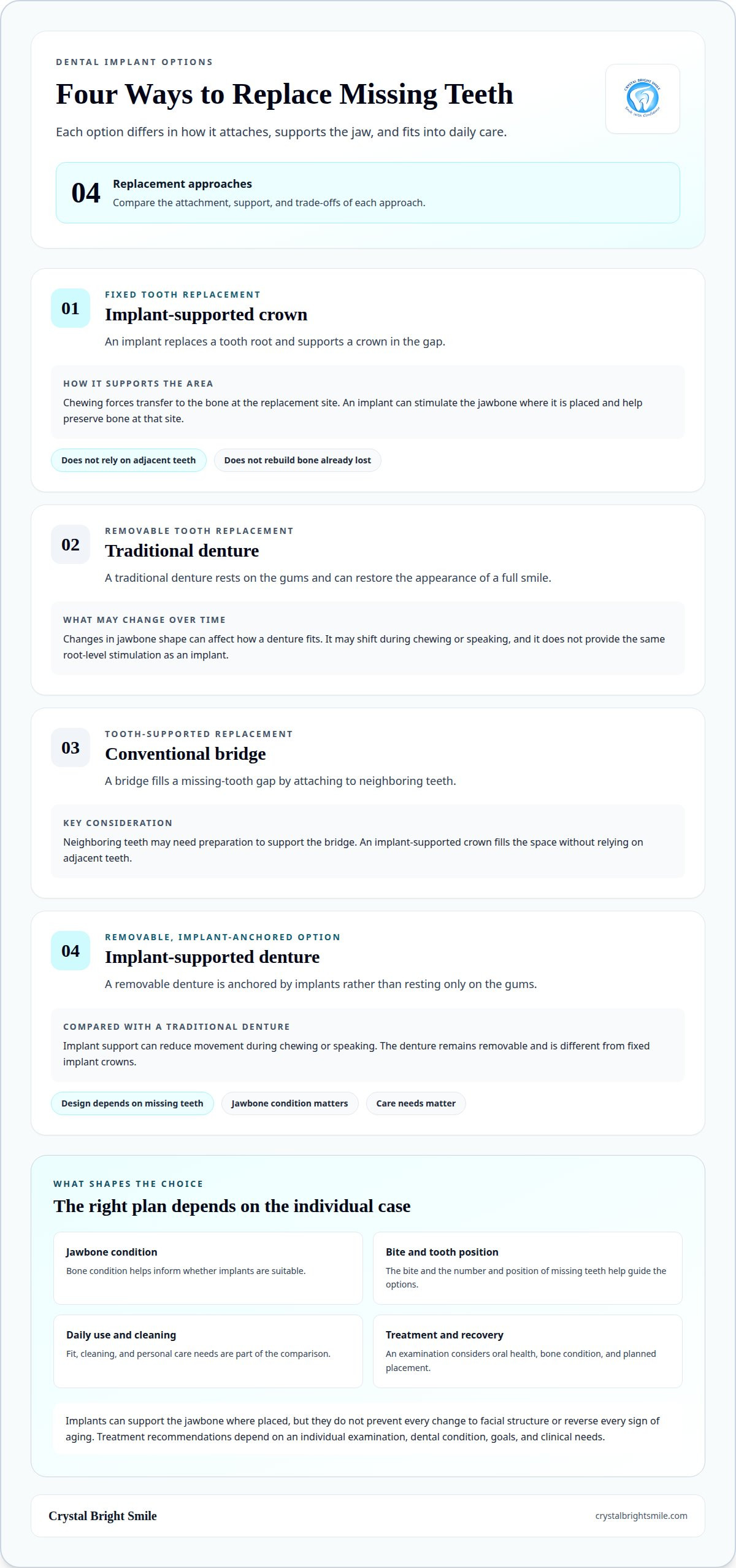
Dental implants and dentures replace missing teeth in different ways. An implant replaces a tooth root and supports a crown, while a traditional denture rests on the gums. Implants transfer chewing forces to the bone at the replacement site; dentures do not provide the same root-level stimulation. These differences affect stability, daily care, and the way tooth replacement supports facial structure.
Traditional dentures can restore the appearance of a full smile, but changes in the jawbone may affect their fit. A denture that once sat securely can shift during chewing or speaking as the underlying shape changes. For example, a loose lower denture may move while eating, affecting comfort and speech. Dentures do not stop the jawbone from being reabsorbed by the body, so facial changes may continue over time.
Implants offer a fixed option for replacing individual teeth or supporting a larger restoration. Because they replace roots, they can stimulate the jawbone where placed and help preserve bone at that site. They do not rebuild bone already lost or prevent every change to facial structure. An examination considers jawbone condition, bite, and the number and position of missing teeth when assessing whether implants are suitable.
Bridges address a missing-tooth gap differently. A conventional bridge attaches to neighboring teeth, which may need preparation for support. An implant-supported crown fills the space without relying on adjacent teeth. For a single missing tooth between healthy teeth, that difference may matter. Bridges and dentures may need replacement over time, while an implant is designed to remain in place, with its restoration maintained separately.
Implant-supported dentures combine a removable denture with implants that help anchor it. Compared with a traditional denture resting on the gums, this support can reduce movement during chewing or speaking. The denture remains different from fixed implant crowns, and the design depends on the number of missing teeth, jawbone condition, and personal care needs. For someone whose denture slips, it may offer a more stable fit without an individual implant for every missing tooth.
For example, someone missing several teeth may compare a removable denture, an implant-supported denture, and a fixed bridge. Each option differs in attachment, use of surrounding teeth, and support for the jawbone. Appearance is only one consideration: cleaning, fit, bone condition, and the pattern of tooth loss also shape the plan. That is why a dentist assesses the whole mouth before recommending a replacement.
Missing teeth and changes to neighboring teeth
A missing tooth changes more than the outline of a smile. Teeth beside the gap can tilt toward it, changing their alignment and how they meet opposing teeth. For example, a neighboring tooth may gradually lean into the space left by a missing back tooth. This can make cleaning harder and alter the bite. Restoring the gap re-establishes support where the tooth once stood.
These effects can build gradually, so even a small gap deserves attention. A shifted tooth can create a new space elsewhere, while uneven chewing contact changes how pressure is distributed. For example, food may collect near a missing molar if a neighboring tooth leans into the gap, and chewing may feel less balanced. These changes can affect appearance too, especially when a front tooth is missing and nearby teeth move out of line.
Tooth loss can also affect the jawbone beneath the empty socket. Without a tooth root transmitting chewing forces, the bone in that area loses its usual stimulation and can shrink over time. Replacing the tooth with an implant fills the gap and provides root-like support at that site. This can help preserve the surrounding bone and remaining teeth, but it doesn’t move teeth that have already tilted back into position.
Other replacements address a gap differently. A dental bridge uses neighboring teeth for support, while a removable partial denture rests against the gums and remaining teeth. An implant-supported replacement stands independently in the space. For example, when the teeth bordering a gap are healthy, an implant can avoid preparing them to anchor a bridge. The choice depends on the gap’s location, nearby teeth, bite, and available bone.
A consultation assesses these details before treatment planning. The dentist examines the missing tooth’s socket, checks how adjacent teeth meet, and evaluates gum and bone condition. Imaging can show the bone and position of nearby structures. If a neighboring tooth is weakened or decayed, that also affects the plan. Replacing a gap is not just a cosmetic decision; the health and alignment of surrounding teeth matter.
Wrinkles around the mouth and changes in lower-face support can accompany tooth loss, particularly when several teeth are missing. Replacing one tooth, however, focuses on that specific space, not on reversing every facial change. A front-tooth gap may affect how the smile looks when speaking, while a back-tooth gap can affect chewing without appearing in a photo. Matching treatment to each missing tooth’s location and condition keeps the goal clear.
Cheek and lip fullness
Tooth loss can change facial support because teeth help hold the soft tissues around the mouth. When several teeth are missing, cheeks may look less full and lips may appear thinner without their usual support. The effect depends on which teeth are lost and how many spaces remain. Missing front teeth affect lip support differently from missing back teeth beneath the cheeks.
Tooth loss can contribute to facial sagging or an older appearance when reduced jawbone support changes the contours beneath the cheeks and lips. A thinner-looking profile may also make folds around the mouth more noticeable. These changes develop as underlying support diminishes, but not every missing tooth causes visible sagging. For example, someone missing several teeth may find that the lower face looks less supported than before.
Implants restore support in the spaces where teeth were lost. An implant acts like a replacement root and transmits chewing stimulation to the jawbone, helping limit bone deterioration at that site. This can matter for facial fullness because the jawbone supports the tissues above it. An implant in one gap cannot restore cheek volume across the whole face or reverse bone loss elsewhere.
The location and pattern of tooth loss shape the likely change. Missing back teeth can reduce support beneath the cheeks, while missing front teeth can affect lip position and how the smile frames the face. Uneven tooth loss may make one side look more sunken. A dental examination considers these differences, the jawbone, and surrounding teeth before planning a restoration.
Fullness depends on more than bone. The number of missing teeth, gum condition, and fit of an existing denture all influence how tissues are supported. For instance, a denture that has become loose as the jaw changes may no longer support the lips in the same way. Restoring teeth can improve support, but the effect on facial appearance depends on the treatment and existing tissue structure.
Oral health helps protect the gums and tissues around a tooth replacement. Brush along the gumline, clean between teeth, and attend regular dental visits to help prevent plaque and bacteria from building up around the restoration. These habits support surrounding tissue health, but do not create facial fullness by themselves. Clean teeth alone cannot replace support lost through tooth loss.
Set a clear goal before treatment. Restoring a front-tooth gap may focus on lip support and smile balance, while replacing back teeth may address chewing and cheek support. Discussing these priorities during a consultation connects the plan to the changes you notice. The aim is to replace missing teeth in a way that suits your mouth, not to promise a specific change in facial fullness.
Jawline definition
The jawline’s appearance depends partly on support from the teeth and underlying bone. After tooth loss, reduced stimulation in the affected area can contribute to jawbone deterioration. This may affect lower-face contours, especially when several teeth are missing. For example, missing back teeth may reduce support around the lower cheeks, while tooth loss across an arch can change the profile more broadly.
As bone changes, the chin and lower face may appear less defined. Tooth loss can contribute to a sunken look or make the lower face seem to droop toward the nose. The effects vary: one missing tooth does not automatically alter the whole jawline. The number and position of missing teeth, existing bone condition, and facial structure all influence what becomes visible.
An implant replaces a missing tooth root and transmits chewing forces to the jawbone at that location. This stimulation can help limit deterioration where the implant is placed, supporting the bone around the replacement. It does not rebuild bone already lost or guarantee a sharper jawline. Restoring a single tooth, for example, may support one area without changing the contour of the entire lower face.
Facial changes also depend on when and how teeth were lost. If several teeth have been missing for a long time, bone changes may already have affected the shape beneath the gums, eventually influencing how a denture or other restoration fits. A beautiful smile and a defined jawline are different outcomes, so planning should consider both tooth replacement and the facial support that remains.
A dental assessment connects your visible concern with the condition of your mouth. The dentist evaluates which teeth are missing, how your bite meets, and whether the jawbone can support the planned restoration. Imaging can help assess the bone and nearby anatomy. If a tooth is weakened or likely to fall out, the plan may address it before its loss creates another gap.
Bring a specific concern to an implant consultation, such as a newly sunken area or a change in how your lower teeth meet. That gives the dentist a clear starting point for discussing facial appearance, oral condition, and possible tooth-replacement options. To discuss whether implants fit your dental needs and goals, schedule an implant evaluation.
Crystal Bright Smile: Dental Implants
Crystal Bright Smile provides dental implants for patients considering replacement for missing teeth and changes to their smile. An evaluation connects your goals, such as restoring a gap or improving chewing support, with the condition of your teeth, gums, and jawbone. Recommendations depend on your examination, dental condition, goals, and clinical needs.
Personalized planning also considers how a restoration will look beside your natural teeth. If your concerns include tooth color or alignment as well as a missing tooth, teeth whitening, porcelain veneers, or Invisalign may be appropriate options. Each serves a different purpose, so the plan should address the changes you want rather than assume one procedure fits every concern.
Crystal Bright Smile is located in Tujunga, California. Contact the office to discuss an implant evaluation and your smile goals.
Choose a Smile Plan That Feels Like You
Whether dental implants will make you look younger depends on the changes you want to address and your dental condition. Focus on a practical goal, such as feeling comfortable smiling in photos or replacing a tooth that affects your bite. A personalized examination can connect that goal with suitable care without assuming one treatment addresses every concern.
At Crystal Bright Smile, dental implants can be considered alongside Invisalign or porcelain veneers when concerns involve missing teeth, alignment, or tooth appearance. Each option serves a different purpose, and recommendations depend on your examination, goals, and clinical needs. The right plan starts with what matters most to you. The office offers a complimentary cosmetic consultation and flexible financing options.
Take the next step at your own pace. Contact Crystal Bright Smile to discuss your smile goals and explore an approach that feels comfortable, natural, and personal.
Frequently Asked Questions
How Can Dental Implants Affect Your Facial Appearance?
Dental implants can change how a smile frames the lower face by replacing visible gaps and supporting a tooth-shaped restoration. For example, a front-tooth replacement may make the smile look more complete when speaking or smiling. The crown’s proportions and position matter: one that fits neighboring teeth can look more harmonious than a restoration that appears too wide, too long, or noticeably different in shade.
Can dental implants make your face look younger?
Implants may create a fresher appearance when tooth loss has affected smile fullness or facial support, but they do not reverse aging overall. The effect depends on what changed after tooth loss. A realistic expectation is a more complete smile and potentially improved support in the treated area, not a change to unrelated features such as skin texture.
What facial changes can dental implants improve, and what can’t they fix?
Implants can replace missing teeth and help support the jawbone at treated sites, which may benefit facial contours affected by tooth loss. They do not smooth skin, remove wrinkles, or correct changes caused by unrelated factors. Replacing a missing front tooth can address a gap in the smile, for example, but will not change fine lines around the eyes. This distinction helps define a clear treatment goal.
Do dental implants restore jawbone and support facial structure?
Implants do not restore jawbone already lost, but they can provide stimulation at the placement site and help limit further deterioration there. Existing bone condition affects whether an implant can be placed as planned. An evaluation may include imaging to assess the jaw and plan treatment. The implant supports a restoration, while the surrounding bone and facial structure remain individual considerations.
How do dental implants compare with dentures or bridges for facial appearance?
Implants are anchored in the jaw, dentures rest on the gums, and bridges rely on neighboring teeth. These differences can affect how a replacement feels and stays in position. A removable denture may need adjustment if its fit changes, while a bridge may involve preparing teeth beside the gap. Cleaning and maintenance also differ, so appearance is only one part of the comparison.
Can dental implants make your face look worse or change your smile?
Yes, a restoration may look different from what you expect if its shape, shade, or position does not suit your smile. Planning considers neighboring teeth, the gumline, and how your teeth meet when biting. For example, a crown that looks too bright beside natural teeth may stand out. Sharing preferences, such as matching a nearby tooth, helps guide the design before treatment.
What factors determine whether dental implants will improve someone’s appearance?
Key factors include which teeth are missing, jawbone and gum condition, the bite, and the restoration’s design. A single front-tooth gap presents different aesthetic considerations from several missing back teeth. Personal goals matter too: someone focused on smile symmetry may prioritize different details from someone concerned about chewing. An examination brings these factors together to shape an individualized plan.
What are the risks and complications of dental implants?
Implant placement involves surgery, and risks include healing complications or problems with the tissues around the implant. Oral health, bone condition, and planned placement can affect the specific concerns.

Comments