


Signs of Porcelain Veneer Failure: What to Look For

Could a small chip or a darker edge mean your porcelain veneer is failing, or could something else explain the change? Signs of porcelain veneer failure can include a crack, a change in fit, or new sensitivity. A difference in appearance alone does not reveal what is happening beneath the surface.
It is understandable to worry about the tooth under a veneer when you notice a gap, discoloration, or discomfort. Some changes may involve the veneer itself; others may relate to its bonding edge, your gums, or the natural tooth. A dental evaluation can help distinguish between them.
Learn which changes are worth discussing with a dentist, what they may indicate, and why appearance alone cannot identify the cause. At Crystal Bright Smile’s Tujunga office, a personalized examination can guide next steps. The fully digital office uses digital X-rays, panoramic imaging, CBCT, and intraoral scanning to support treatment planning as appropriate. Recommendations depend on your dental condition, symptoms, and goals.
Table of Contents
What Do Signs of Porcelain Veneer Failure Actually Mean?
A veneer can look or feel different, or seem less secure than it used to. Those changes deserve attention, but they do not automatically mean the veneer has failed or needs replacement. A warning sign is a change to assess, not a clinical diagnosis. Taking that distinction seriously can help you act without jumping to conclusions.
A porcelain veneer is a thin restoration bonded to the front of part of a natural tooth. The veneer, the tooth, and the nearby gum tissue can each affect how the area looks or feels. A dentist considers the restoration and the surrounding natural structures rather than relying on a photo or one symptom alone. For general background on the types and use of dental veneers, see this overview.
The phrase signs of porcelain veneer failure describes observations that may warrant a closer look. It does not identify the cause. A rough edge, for example, could reflect damage to the veneer, but appearance alone cannot establish that. A shade difference may involve the veneer, its edge, nearby gum tissue, or lighting. The cause matters because different findings can lead to different next steps.
When does a change become a reason for evaluation?
Arrange an evaluation if you notice a new or increasingly noticeable change, such as an edge that feels different against your tongue, a visible line, or a change in how the veneer meets the gum. Even if a sign seems stable, mention it at a dental visit if you are unsure whether it is new. One observation cannot identify the cause, and it does not mean replacement is inevitable.
Context makes your description more useful. Note where the change is, when you first noticed it, and whether it appeared gradually or after a particular event. Mention tenderness, sensitivity, or discomfort, too. A dentist can consider your observations alongside an examination and your individual dental condition before discussing options.
Why the veneer and the tooth beneath it both matter
The veneer is only one part of the picture. A dentist may assess its surface, bond, and edges, as well as the natural tooth it covers and the surrounding gum. Tooth decay can affect natural tooth structure near or beneath a veneer; porcelain itself does not develop cavities. Assessing both the restoration and the tooth helps distinguish an appearance change from a concern that needs treatment.
The assessment depends on the location and timing of the change and any accompanying symptoms. A small visual difference without discomfort may be considered differently from a change accompanied by pain or a sense that the restoration moves. Neither observation confirms a diagnosis on its own. The aim is to understand what is happening before deciding whether monitoring, repair, or another treatment is appropriate.
Which Signs of Porcelain Veneer Failure Should You Look For?
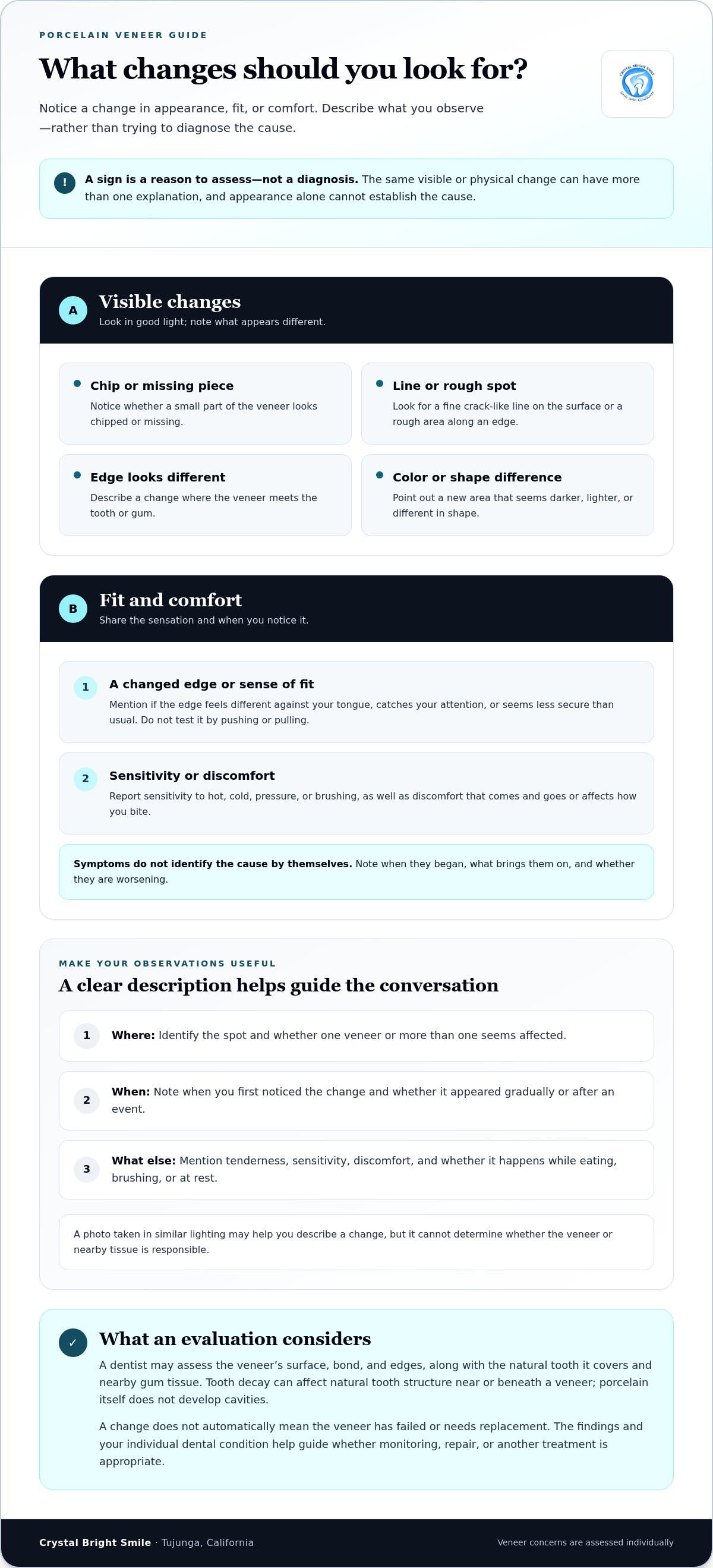
Focus on what has changed rather than trying to name the problem. A chip, a new edge, a difference in shade, or a sensation that the veneer feels less secure are all useful observations to share with a dentist. The same sign can have more than one explanation, so a mirror check is not a diagnosis. Look for changes in appearance, fit, and tooth symptoms, then describe what you noticed at a dental evaluation.
Visible changes: chips, cracks, edges, and color
In good light, look for a small piece missing from the veneer, a fine line on its surface, or a rough spot along an edge. You might also notice that the boundary where the veneer meets the tooth looks different, or that one area appears darker or lighter than before. These are visual clues, not proof of what caused the change.
Write down when you first noticed the difference and whether it seems to be changing. A photo taken in similar lighting may help you describe it, but it cannot establish whether the veneer or nearby tissue is responsible. The American Dental Association offers oral health resources, while an individual assessment is needed to evaluate your specific concern.
Changes in fit or comfort
Pay attention if the veneer feels different as your tongue passes over it, an edge catches your attention, or it seems less secure than usual. Do not test it by pushing or pulling. Describe the sensation and when it occurs instead. A noticeable change in fit needs an examination to determine what is happening.
Report new sensitivity to hot, cold, pressure, or brushing, as well as discomfort that comes and goes or affects how you bite. These symptoms can have different causes and do not identify a problem with the veneer or natural tooth by themselves. Share when symptoms began, what brings them on, and whether they are worsening.
Surface: Note a chip, crack-like line, or rough area.
Edge: Describe a margin that looks or feels different.
Appearance: Point out a new color or shape difference.
Comfort: Report looseness, sensitivity, or discomfort.
Be specific without deciding what the sign means. For example, “the edge feels rough when I run my tongue over it” gives a clearer account than “the veneer is broken.” Mention whether one veneer or more than one seems affected, and whether you notice the change while eating, brushing, or at rest. These details can help guide the conversation and examination.
If a change concerns you, arrange an evaluation rather than relying on appearance to settle the question. Crystal Bright Smile provides porcelain veneer care at its Tujunga office. Learn about arranging a dental evaluation and discuss your concern with the dental team.
What Can Cause Veneer Problems, and What Can an Exam Determine?
A change in a veneer’s appearance or feel is a reason to assess it, not a diagnosis. A dentist may consider wear, a change in how the restoration fits, the appearance of the gumline, and symptoms in the natural tooth. Similar visible signs can have different explanations, so avoid assuming what is happening before an examination.
Why similar-looking changes can have different explanations
An edge that looks different may prompt the dentist to assess the veneer’s surface and how it meets the tooth. A color difference may call for a closer look at the restoration, gumline, and nearby tooth structure. Neither observation points to one cause on its own. A dark-looking margin, for example, does not confirm a problem with the veneer or tooth.
The veneer, gum tissue, and natural tooth around or beneath it are connected, but each has its own condition to assess. Sensitivity may also have more than one possible explanation. It is useful information, but cannot establish whether the veneer, tooth, or another factor is involved.
This is a guide to possible assessment topics, not a chart for diagnosing yourself. Signs of porcelain veneer failure can overlap with changes that have other explanations. Tell the dentist what you observed and when it started; those details help shape the examination.
What a dental evaluation can clarify
A dentist can examine the veneer and surrounding tooth, ask about changes in comfort or function, and consider your dental history and goals. The findings help determine whether the concern relates to the restoration, its fit, the gumline, or the underlying tooth. Recommendations should reflect your examination and clinical needs, not the appearance of one sign alone.
Digital tools can support the process when appropriate. Crystal Bright Smile’s fully digital office uses digital X-rays, panoramic imaging, CBCT, and intraoral scanning as part of advanced treatment planning. The dentist selects tools based on the concern and examination. Imaging or scanning does not guarantee a diagnosis or dictate a particular treatment. A personalized evaluation brings the observations together and helps clarify sensible next steps.
What Should You Do If You Notice a Porcelain Veneer Problem?
A change in a veneer can feel unsettling, but a practical approach can help you get a clearer answer. Signs of porcelain veneer failure do not explain their own cause. An examination can help determine whether the veneer, the tooth, or another factor needs attention.
How to prepare for an appointment
Before your visit, make a few simple notes. You do not need technical terms or a guess about what happened. Describe what you noticed in your own words and when the change began. If you are unsure, say when you first became aware of it.
Record the change. Note what looks or feels different, such as the surface, edge, color, or fit. If it has changed over time, describe how.
Track any symptoms. Write down whether you have had sensitivity, discomfort, or a change in how the area feels when you bite. Include when it happens and whether it comes and goes.
Arrange a dental assessment. Share your notes when booking and bring them to the appointment. You can also bring a photo if it helps show what you noticed.
Describe your concerns at the visit. Mention what matters most to you, whether that is comfort, appearance, or how the veneer feels in daily use.
These details make the conversation more specific. You do not need to test the veneer or attempt to adjust it yourself. Let the dental team examine the area and advise you on appropriate next steps.
Why repair or replacement decisions are individualized
A recommendation depends on what the examination shows about both the veneer and the natural tooth. The dentist may consider the restoration’s condition and fit, the surrounding tooth and gums, your symptoms, and your goals. A change in appearance alone is not enough to determine which treatment, if any, is appropriate.
Depending on the findings, possible treatment categories may include a veneer, cosmetic bonding, or a dental crown. These are not interchangeable solutions, and none is right for every person. The choice depends on your dental condition and clinical needs, as well as the appearance and function you hope to maintain. Your dentist can explain the reasoning behind a recommendation and discuss relevant alternatives.
Crystal Bright Smile provides porcelain veneer care at its physical office in Tujunga, California. A personalized dental evaluation can clarify the concern and guide a treatment plan based on your examination, goals, and clinical needs. To arrange an evaluation, schedule a veneer assessment with Crystal Bright Smile.
How Crystal Bright Smile Evaluates Veneer Concerns in Tujunga
A veneer concern is personal. You may be focused on comfort, appearance, or whether the tooth feels different during everyday activities. Crystal Bright Smile’s physical office is in Tujunga, California. The team takes time to understand what you have noticed and what you would like addressed, then considers those priorities alongside your dental needs.
A personalized evaluation using a digital workflow
During an evaluation, share what prompted your visit and any questions about your veneer. The dentist considers your dental condition, goals, and clinical needs before discussing recommendations. The office’s digital workflow includes the imaging and scanning tools described earlier, used as appropriate to support assessment and treatment planning. These tools do not guarantee a particular diagnosis or result.
A useful next step is a conversation about the findings and what they mean for you. Ask how a proposed option relates to your concern, what alternatives may be relevant, and which factors shape the treatment plan. Crystal Bright Smile emphasizes clear communication and personalized recommendations, so the discussion can address your priorities as well as the clinical assessment. The practice brings 25+ Years of Experience to patient care.
Arrange a cosmetic consultation in Tujunga
Crystal Bright Smile offers a complimentary cosmetic consultation, same-week appointment availability, and flexible financing options. Treatment recommendations and costs depend on the examination and the care appropriate to your needs. Contact the office to discuss insurance coverage, financing eligibility, and treatment costs.
The Tujunga office serves patients from nearby communities, including Sunland, La Crescenta, Montrose, Shadow Hills, and Lake View Terrace. These are service areas, not separate office locations. If you are concerned about signs of porcelain veneer failure, bring your questions and any notes about changes or symptoms to your visit. A personal evaluation can help you understand the concern and consider a suitable next step.
To arrange a veneer evaluation or cosmetic consultation at Crystal Bright Smile in Tujunga, call (818) 352-8200.
Take the Next Step Toward Clarity
It can be difficult to know what a change means without an assessment. Rather than deciding on your own whether signs of porcelain veneer failure point to a larger concern, arrange a personalized conversation. An evaluation can help you understand what is happening and consider options based on your dental needs and goals.
You do not need to have all the answers before you book. Bring your questions, describe what you have noticed, and share what would help you feel comfortable moving forward. A thoughtful plan starts with listening and a clear understanding of your priorities.
Crystal Bright Smile welcomes patients at its Tujunga office for cosmetic dental care. Schedule an evaluation to discuss your veneer concern and explore an appropriate next step.
Frequently Asked Questions
What are the most common signs of porcelain veneer failure?
Common signs of porcelain veneer failure include a chip, crack, changed fit, looseness, a color difference, or new sensitivity. Note which tooth is involved and whether the change is visible in different lighting or noticeable only when you speak or eat. These details help the dentist understand what prompted your concern and focus the appointment on the change you noticed.
Can a chipped porcelain veneer be repaired?
A chipped veneer may be repairable, but an examination is needed to determine whether that approach suits the situation. Before your visit, note the chip’s location and whether it affects how the tooth looks or feels during normal use. At the appointment, ask what a proposed repair would address and how it fits your cosmetic goals. The dentist can explain suitable options after assessing the area.
Why does a porcelain veneer feel loose?
A veneer that feels loose should be evaluated, even if you cannot see a change. Describe whether the sensation happens at a particular time, such as while speaking or eating, and whether it has changed since you first noticed it. Avoid trying to determine the cause from the sensation alone. Your notes can help the dentist understand what you are experiencing and decide what to examine.
Can the tooth under a porcelain veneer still develop decay?
Yes. A veneer covers part of a natural tooth, and the tooth still needs routine dental attention. Keep regular dental visits and mention any change near a veneered tooth, even if you are unsure whether it matters. Porcelain itself does not develop a cavity. A dentist can assess the natural tooth during an examination and explain whether follow-up care is appropriate.
Does a dark line near a veneer mean it has failed?
A dark line does not establish that a veneer has failed. If you notice one, consider whether it is new, whether it appears in consistent lighting, and whether it seems to follow the gumline or veneer edge. Share those observations at your appointment rather than relying on appearance alone. A dentist can assess the area in context and explain what the finding means for you.
What should I do if my porcelain veneer changes or feels different?
Arrange a dental visit and prepare a brief timeline: what you first noticed, when you noticed it, and whether anything else has changed since. Write down questions about appearance, comfort, or function so you can cover each point during the appointment. The dentist can explain recommendations after assessing your individual needs. You do not have to decide on a treatment before you go.
How does a dentist check whether a porcelain veneer has failed?
The dentist starts by listening to your concern and examining the area. Be ready to describe when the change began and what you notice during everyday activities. The dentist determines whether additional assessment, including imaging or scanning, is useful for your case. Not every concern calls for the same evaluation. After reviewing the findings, the dentist can explain next steps that fit your dental needs.

Comments