


Can a Failed Dental Implant Be Replaced? Causes, Options, and Next Steps

If you’re worried about pain, looseness, or changes around your implant, you may be asking, can a failed dental implant be replaced? In some cases, replacement may be possible. The right next step depends on what’s causing the problem and whether the supporting bone and tissue can be restored.
It’s understandable to feel uncertain. The concern may involve the implant itself, the crown attached to it, or the surrounding gums and bone, and each can call for a different approach. An examination and imaging, when appropriate, can help identify what’s happening and whether treatment should address inflammation or infection, remove the implant, rebuild bone, or consider replacement. This guide explains possible causes of early or later implant problems, what an evaluation may involve, and which treatment paths a dentist may discuss. At Crystal Bright Smile in Tujunga, Dr. Souren Rostomyan brings more than 20 years of oral and maxillofacial surgery experience to personalized implant reconstruction planning. Recommendations depend on your examination, dental condition, goals, and clinical needs.
Table of Contents
Can a Failed Dental Implant Be Replaced? Start With What “Failure” Means
Can a failed dental implant be replaced? Sometimes. Whether replacement is an option depends on what has gone wrong and what an examination reveals about the implant and the tissues supporting it. “Failure” does not explain every problem by itself. The first step is identifying the source of the concern so the dentist can discuss appropriate care.
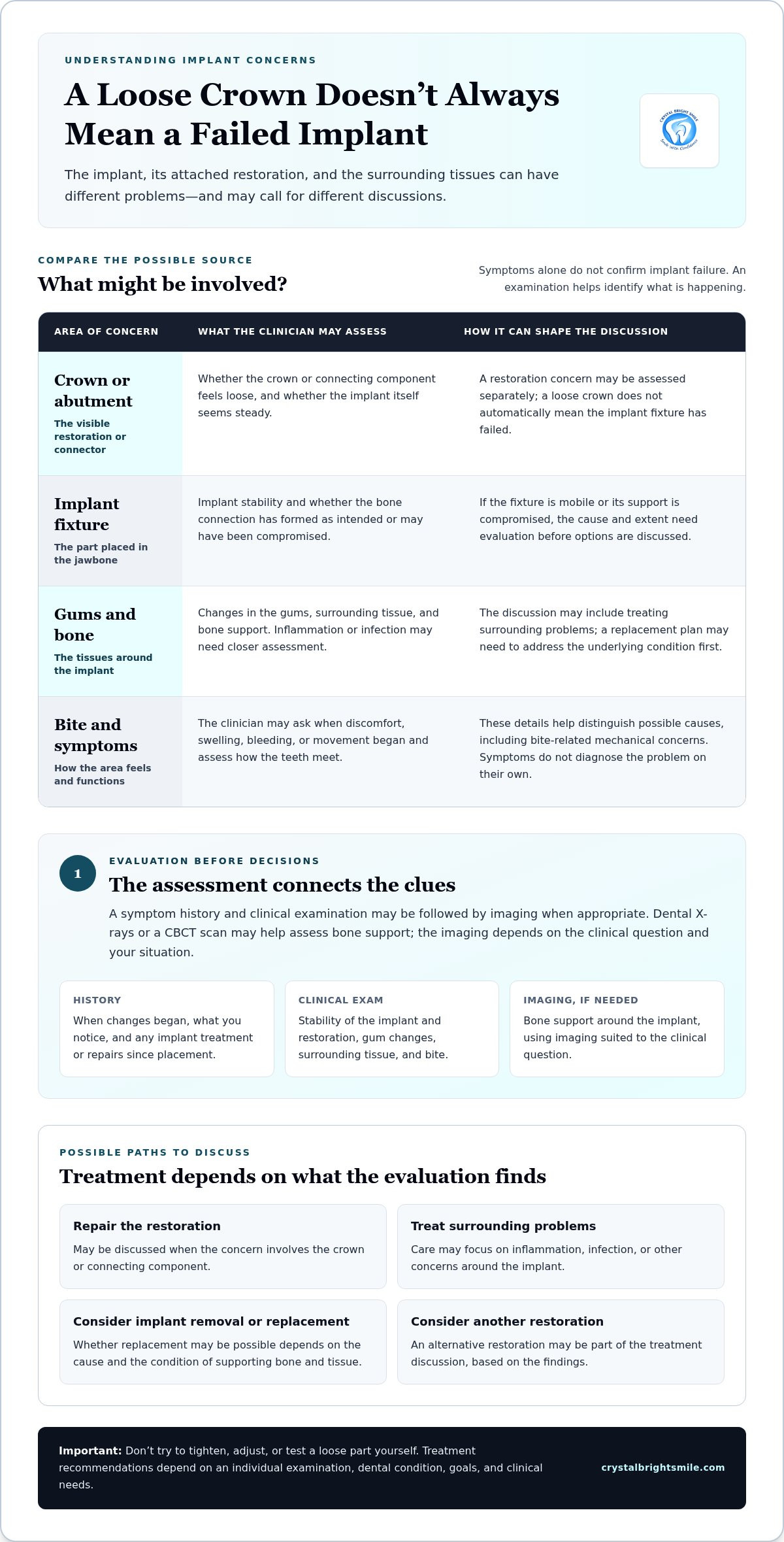
An implant restoration has several parts. The implant fixture is placed in the jawbone. An abutment connects it to the visible crown, which is shaped to function like a tooth. A problem with one part does not necessarily mean the others have failed. For example, a crown that shifts or feels loose may need attention as a restoration issue, while the implant fixture remains stable. A clinical assessment helps distinguish between these possibilities.
That distinction matters because the treatment discussion can differ. If the concern involves the crown or connecting component, the dentist may assess the restoration rather than assume the fixture must be removed. If the fixture itself is mobile or its surrounding support is compromised, the cause and extent of the problem need evaluation before options can be discussed. Don’t try to tighten, adjust, or test a loose part yourself. That cannot establish what is happening underneath.
What can “failed dental implant” mean?
The phrase can describe a range of clinical concerns, not one specific condition. It may refer to an implant that hasn’t integrated as intended, or to a later problem affecting the implant or surrounding tissues. A Dental Implant Failure overview discusses the term and possible causes, but it cannot determine what is happening in an individual mouth. The clinician’s findings guide that assessment.
Which signs should prompt an evaluation?
Pay attention to an implant that feels mobile, persistent discomfort, swelling, or changes in nearby gums, such as tenderness or bleeding. These signs can have different causes and do not confirm implant failure on their own. Note when the change began and whether it is getting worse. Arrange a dental assessment for concerning or worsening symptoms, and don’t rely on appearance or sensation alone to diagnose the problem.
A clinician considers the implant alongside the gums, bone support, bite, and restoration. That broader view helps distinguish a problem with the visible crown from one involving the fixture or surrounding tissues. It also keeps the next step grounded in the findings, rather than the assumption that every loose or uncomfortable implant needs replacement. Candidacy for treatment depends on your examination, dental condition, goals, and clinical needs.
How Dentists Assess a Failed Dental Implant and Its Cause
A careful evaluation starts with your symptoms and then examines details that may explain them. This helps distinguish a concern with the restoration from one involving the implant or its supporting tissues. It also gives the dentist a basis for discussing next steps instead of assuming replacement is the only option.
What happens during the clinical examination?
The conversation usually starts with what you’ve noticed and when it began. Be ready to describe discomfort, swelling, bleeding, or movement, as well as when the implant was placed and any treatment or repairs since then. Details such as whether the crown feels loose while the implant itself seems steady can help focus the assessment.
Next, the clinician examines the implant area. This may include checking the stability of the implant and restoration, looking for changes in the gums, and assessing surrounding tissue. The dentist may also evaluate your bite, since how your teeth meet can be relevant to mechanical strain. Findings determine whether further assessment is appropriate.
If imaging is needed, dental X-rays or a cone-beam computed tomography (CBCT) scan may help the clinician examine bone support around the implant. The type of imaging depends on the clinical question and your situation. The U.S. Food and Drug Administration’s overview of dental implants discusses potential risks and complications as general background, not as a diagnosis of your symptoms.
Why does the cause matter before replacement?
Different findings can lead to different treatment discussions. Inflammation or infection around an implant may prompt a closer assessment of the gums and bone. A loose restoration raises a different question than movement of the implant fixture. Reduced bone support, healing concerns, and bite-related mechanical problems also need to be considered in context. Peri-implantitis, an inflammatory condition that can involve loss of supporting bone, is one possible issue to assess, not an automatic explanation for every implant concern.
Osseointegration is the process in which the jawbone connects with and supports a dental implant. If that connection hasn’t formed or has been compromised, the discussion may differ from one involving only the attached crown. The clinician considers the implant, gum tissue, bone support, bite, and restoration together, then explains how the findings shape possible next steps. A replacement plan may need to address the underlying condition first.
Those findings help answer the practical question, can a failed dental implant be replaced, in your particular case. At Crystal Bright Smile, Dr. Souren Rostomyan focuses on implant reconstruction and personalized planning. If you’re in Tujunga, an individualized dental implant evaluation can help clarify the condition and the next steps to discuss.
Replace the Implant, Treat the Problem, or Choose Another Restoration?
Once the cause has been assessed, the conversation can turn to possible paths forward. A failed implant does not automatically need to be replaced. The concern may involve the restoration, or the surrounding tissues and implant support may need attention. These are possibilities to discuss, not treatment recommendations. The appropriate choice depends on examination findings, your dental condition, goals, and clinical needs.
When might repairing the restoration be considered?
A dentist may find that the implant fixture is stable while the crown or connecting part needs attention. In that situation, the discussion may focus on the restoration rather than removing the implant. Repairing or replacing a restoration is different from replacing the fixture itself. The examination helps determine the issue, so a loose crown alone does not establish which treatment is appropriate.
When might removal, grafting, or another restoration be discussed?
If clinical findings suggest the fixture can’t be predictably retained, removal may be discussed. That does not mean removal is necessary in every case. Afterward, the site and supporting bone may need assessment. Bone grafting can be considered if the treatment plan calls for addressing bone support. Whether grafting or a later implant is suitable depends on individual findings, and timing should be based on clinical guidance for that person.
A bridge or denture may also be discussed if another tooth-replacement approach better fits the patient’s needs. Each option involves different considerations, including the condition of nearby teeth and supporting tissues. The Mayo Clinic overview of implant surgery risks and complications provides general context, but it cannot determine which path fits an individual case.
So, can a failed dental implant be replaced? It may be possible, but replacement is only one potential path. A personalized plan considers the cause of the problem, the condition of the site, and available restoration options before settling on next steps.
What to Expect When Planning Dental Implant Replacement
A clear plan starts with the details of your situation, not a preset sequence. If replacement is being considered, your clinician will use examination findings and your goals to explain possible steps, factors that may affect timing, and how progress will be followed. Bring relevant information and prepare questions to make the discussion more useful.
How can you prepare for an implant evaluation?
Before your appointment, write down what you’ve noticed and when it began. Include changes in comfort, gum appearance, or how the restoration feels. If available, bring records from the original implant treatment and any later repairs, along with a current medication list and relevant dental history. These details give the clinician a fuller picture.
Symptom timeline: Note when each change started and whether it has stayed the same, improved, or worsened.
Implant records: Bring available treatment notes, images, or restoration details.
Medication and health information: List your medications and relevant health or dental history.
Questions: Ask what may be causing the concern, which paths could be discussed, and what findings will shape the plan.
You can also ask how the clinician will explain the benefits and limitations of each option, and whether anything should be addressed before replacement is considered. You don’t need to arrive with a diagnosis. Your observations and records help make the conversation more specific.
What should the treatment discussion clarify?
A useful discussion connects recommendations to your examination, dental condition, goals, and clinical needs. If replacement is one of the options, ask about the proposed sequence, procedures that may be considered, healing factors, and follow-up. Details depend on your findings, so the clinician should explain what is known, what remains uncertain, and how that affects planning.
Recovery varies with the care involved and the individual. The dental implant recovery expectations guide offers a separate overview. For background on implant fundamentals, the complete dental implant guide can help you prepare questions for your appointment.
Bring cost and insurance questions to your office discussion so they can be considered alongside the proposed plan. At Crystal Bright Smile in Tujunga, California, personalized planning and clear communication help patients understand their options. Schedule a dental implant evaluation to discuss your concerns and potential next steps.
Explore Failed Dental Implant Care With a Tujunga Dental Team
A concern about an implant can feel stressful, especially when it’s unclear whether the problem involves the implant, the restoration, or surrounding tissues. An evaluation can help replace guesswork with information about what the findings mean and which paths may be discussed. The goal is an informed plan, not an assumption that every patient needs another implant.
How does personalized implant planning support next steps?
At Crystal Bright Smile, treatment planning starts with the patient’s examination and clinical findings. The dentist considers the implant site alongside the patient’s dental health, goals, and needs. Dr. Souren Rostomyan, a board-certified oral and maxillofacial surgeon and Associate Professor at Loma Linda University, focuses on dental implant reconstruction. His experience informs individualized discussions about possible next steps, without assuming that a particular procedure is right for everyone.
The practice’s fully digital office uses modern dental technology to support evaluation and planning. Technology can help organize clinical information and support communication about treatment, but recommendations still depend on the examination. A clear discussion should help you understand why an option is being considered, what questions remain, and how your priorities fit into the plan.
The conversation can also account for your broader dental needs. The clinician may discuss how the condition of nearby teeth, the restoration, or supporting tissues relates to the options under consideration. If more than one path is appropriate to discuss, ask how each fits your goals and what factors may influence the sequence of care. Recommendations and candidacy depend on your examination, dental condition, goals, and clinical needs.
Where can patients in Tujunga and nearby communities seek guidance?
Crystal Bright Smile’s physical office is in Tujunga, California. The practice also serves patients from nearby communities, including Sunland, La Crescenta, Montrose, Shadow Hills, and Lake View Terrace. These are service areas, not separate office locations. Whether you’re coming from Tujunga or a neighboring community, bringing your questions and available implant records can help you make the most of an evaluation.
Before you leave, make sure you understand the findings, the options discussed, and what the proposed follow-up involves. If a detail is unclear, ask for an explanation in plain language. An open conversation can help you feel more prepared to weigh the next steps, even if further assessment is needed before a decision.
If you’re concerned about an implant, call Crystal Bright Smile at (818) 352-8200 or schedule an evaluation with Crystal Bright Smile to discuss your situation with the Tujunga dental team.
Move Forward With a Clearer Plan
Uncertainty can make an implant concern feel difficult to manage. An evaluation gives you a chance to replace assumptions with information specific to your situation. You don’t have to decide on a procedure before you understand the findings. Start by asking what the clinician sees, which options may fit, and what the next step would involve.
If you’re still wondering, “can a failed dental implant be replaced,” the answer depends on your individual clinical findings. A useful next step is a conversation that helps you understand what’s happening and make an informed decision. Even when the plan needs further assessment, knowing what questions to ask can bring clarity.
Crystal Bright Smile can help you discuss your implant concern and arrange an individualized evaluation. Begin a conversation about your dental implant and take a thoughtful step toward understanding your options. Call (818) 352-8200 to schedule an evaluation at the Tujunga office.
Frequently Asked Questions
Can a failed dental implant be replaced?
Yes, replacement may be possible, but it isn’t right for every situation. A dentist first needs to determine whether the implant fixture is affected, what contributed to the problem, and whether the site can support another treatment. In some cases, the plan may focus on the restoration or another tooth-replacement option instead. Ask the clinician to explain which findings support each option and what could affect your candidacy.
What are common signs that a dental implant may have failed?
Possible warning signs include movement, ongoing discomfort, swelling, bleeding, or other changes in the gums around the implant. A crown that shifts can feel alarming, but it doesn’t prove the implant fixture is loose. Keep track of what you notice, including whether symptoms change during chewing or over time. These clues can guide an evaluation, but only an examination can identify the cause.
Can a loose dental implant be saved?
It depends on what feels loose. If the movement is in the crown or a connecting part, the implant fixture may still be stable, and the clinician can assess the restoration. If the fixture itself moves, the concern may involve its support and needs prompt professional evaluation. Don’t try to tighten or wiggle the implant at home. Describe exactly what moves and don’t delay an assessment if the problem is worsening.
How long should you wait to replace a failed dental implant?
There isn’t one waiting period that applies to everyone. The sequence depends on the cause of failure, the condition of the site, and whether other care is needed first. If bone grafting is part of the plan, the area may need several months to heal before implant placement is considered. Your clinician can explain what affects timing and when follow-up or reassessment is appropriate.
Does replacing a failed dental implant require bone grafting?
No, bone grafting isn’t automatically required. It may be discussed if the examination shows that the site needs additional support for a possible replacement. The clinician assesses the available bone and overall condition of the area before recommending a plan. Ask what the findings show, whether grafting is being considered, and how that possibility could change the order of treatment.
What can cause a dental implant to fail?
Possible causes include an implant not connecting adequately with bone, inflammation or infection around it, reduced bone support, or mechanical stress such as excessive bite forces. Smoking can also be a risk factor. The timing and circumstances of the problem offer useful clues, but they don’t establish a cause on their own. Share relevant health habits and treatment history so the clinician can consider them during assessment.
Can I get a dental implant evaluation in Tujunga, California?
Yes. Crystal Bright Smile is located at 7738 Foothill Blvd in Tujunga, California, and serves patients from Sunland, La Crescenta, Montrose, Shadow Hills, and Lake View Terrace. These communities are service areas, not separate office locations. An evaluation can help clarify what may be affecting your implant and which options fit your clinical needs and goals. Recommendations depend on your individual examination and findings.

Comments