


What Happens If a Dental Implant Gets Infected Years Later?

Can an implant that has felt secure for years suddenly develop an infection? Yes. What happens if a dental implant gets infected years later depends on the cause, whether supporting bone is affected, and how stable the implant is. Redness, bleeding, tenderness, a bad taste, or drainage deserve attention, but none confirms an infection on its own. A loose feeling is especially concerning and calls for prompt dental assessment.
These symptoms can have more than one explanation, so they don’t automatically mean the implant has failed or must be removed. This guide explains which changes to watch for, what a dentist may check, how findings can shape treatment options, and when to seek care. It can help you prepare for an evaluation, but it can’t diagnose the cause.
During an evaluation, a dentist may inspect the gum tissue, measure pockets around the implant, assess the restoration and bite, and use dental X-rays to check for bone changes. Treatment may range from professional cleaning to more involved care. The recommendation depends on the extent of inflammation and the implant’s stability.
Table of Contents
Can a Dental Implant Get Infected Years Later? Signs and Causes
Yes. Problems around a dental implant can develop years after placement, even if it has felt comfortable and stable. Redness, bleeding, and tenderness are reasons to pay attention, but they don’t prove there’s an infection. A dentist needs to assess the symptoms and surrounding tissues to identify what’s happening.
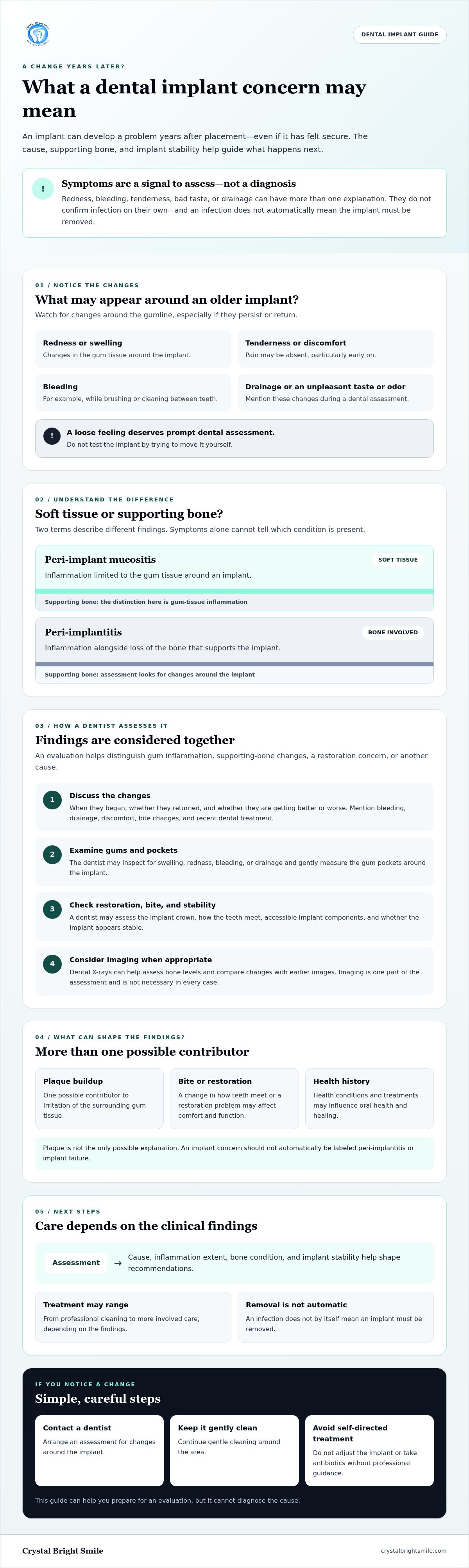
Two terms help explain the difference. Peri-implant mucositis is inflammation limited to the soft gum tissue around an implant. Peri-implantitis involves inflammation alongside loss of the bone that supports the implant. In brief, mucositis affects soft tissue, while peri-implantitis affects supporting bone. Symptoms alone can’t tell you which condition is present. The overview of Peri-implantitis explains this distinction.
What symptoms can appear around an older implant?
Watch for changes around the gumline, especially if they persist or return. You might notice redness, swelling, tenderness, bleeding while brushing or cleaning between teeth, or drainage near the implant. A persistent unpleasant taste or odor is also worth mentioning to a dentist. These signs can have different causes, so don’t use them to diagnose yourself.
Pain may be absent, particularly early on. An implant that feels comfortable doesn’t necessarily rule out inflammation or another concern. If you notice a change, note when it began, whether it has returned, and whether it is getting better or worse. Those details can help your dentist assess the problem.
Why can implant problems develop years later?
Plaque buildup around an implant is one possible contributor because it can irritate the surrounding gum tissue. Gum health and daily cleaning habits may therefore be part of the assessment. Plaque isn’t the only possible explanation, however, and an implant concern shouldn’t automatically be labeled peri-implantitis.
Your dentist may also assess bite forces and the restoration attached to the implant. A change in how your teeth meet or a problem with the restoration can affect comfort and function, even if the underlying implant isn’t infected. Your medical history may matter too, since health conditions and treatments can influence oral health and healing.
So, what happens if a dental implant gets infected years later? The first step is finding the cause, not assuming the implant has failed. An examination helps distinguish gum inflammation from bone-related disease or another issue, then guides appropriate care.
How Dentists Diagnose a Late Dental Implant Infection
An evaluation usually starts with questions about your symptoms and dental history, followed by an examination of the implant and surrounding tissues. The dentist may then consider imaging if it’s appropriate. The aim is to determine whether the concern involves gum inflammation, supporting bone, the restoration, or another cause.
What happens during the clinical examination?
Describe when you first noticed a change, how it has progressed, and whether you’ve had recent dental treatment. Mention bleeding, drainage, discomfort, changes in your bite, or a bad taste. Even a symptom that seems minor can help shape the assessment.
Your dentist may inspect the gum tissue for swelling, redness, bleeding, or drainage and gently measure the gum pockets around the implant. They may examine the implant crown, your bite, and accessible implant components, then assess whether the implant appears stable. If earlier dental records or images are available, comparing them with current findings may help show what has changed.
Symptoms alone cannot establish the extent or cause of an implant problem. Bleeding, for example, may indicate tissue irritation, but it doesn’t confirm that bone loss is present. A professional examination brings the findings together.
How do imaging and stability checks inform diagnosis?
When indicated, dental X-rays can help the dentist assess bone levels around the implant and look for changes compared with earlier images. Imaging is only one part of the assessment. It needs to be considered alongside the gum examination, pocket measurements, restoration, and implant stability.
If additional imaging is needed, the dentist can explain why and what it may help clarify. Advanced imaging isn’t necessary in every case. Mobility or changes in the surrounding bone may raise concern, but neither should be interpreted in isolation. Don’t test the implant by trying to move it yourself.
If you’re wondering what happens if a dental implant gets infected years later, diagnosis helps distinguish a localized tissue concern from a more extensive problem and informs the next decision. Treatment recommendations depend on the examination, and referral may be appropriate in some cases.
For an implant concern in Tujunga or the San Fernando Valley, a local dental evaluation can help clarify suitable next steps. You can learn more about arranging a dental evaluation in Tujunga through Crystal Bright Smile.
Can an Infected Dental Implant Be Saved? Comparing Treatment Paths
An infection doesn’t automatically mean a dental implant must be removed. Whether it can be retained depends on clinical findings, including how much supporting bone remains, whether the implant is stable, and how the surrounding tissues respond to care. Your dentist can explain the options after examining the site. Symptoms alone can’t predict the outcome.
The treatment discussion often differs depending on whether inflammation is limited to soft tissue or involves supporting bone. The pathways below are general examples, not a diagnosis or a guarantee of a particular result.
When might care focus on the surrounding tissue?
If examination findings point to inflammation limited to the gum tissue, care may include professional cleaning around the implant and guidance on keeping the area clean at home. Any additional treatment depends on the diagnosis, your health history, and other individual factors. Don’t try to scrape the implant or use prescription treatments without a dentist’s direction.
Follow-up is part of care. Symptoms can change, and inflammation can return. Your dentist can reassess the tissue and adjust recommendations based on how the area responds.
When might more extensive treatment or referral be discussed?
Significant bone loss, persistent inflammation, or implant mobility can change the conversation. A dentist may discuss more involved treatment or recommend assessment by another dental professional. A referral doesn’t mean removal is certain. It can help clarify the available options and the factors that affect prognosis.
If removal is being considered, the decision should be individualized. The dentist can explain why it may be appropriate, what alternatives exist, and whether replacement could be considered later. The answer to “what happens if a dental implant gets infected years later” depends on examination findings, not the implant’s age alone. Ask what the examination shows, what each option aims to address, and what follow-up it requires.
What to Do If Your Dental Implant Shows Infection Symptoms
If you notice persistent swelling, bleeding, drainage, or worsening discomfort near an implant, contact a dentist promptly. Explain what you’re experiencing and follow the individualized instructions you receive. An evaluation can help determine whether the issue needs treatment and how quickly to address it.
How quickly should you seek dental care?
Call a dentist about symptoms that persist, worsen, or return. Describe when they started and whether you’ve noticed changes such as drainage or increasing tenderness. The dental office can advise you on appropriate next steps based on what you report.
Some symptoms call for urgent assessment. Facial swelling or fever should be taken seriously and discussed with a dental or medical professional promptly. If you have trouble breathing or swallowing, seek emergency medical care immediately. Don’t wait for a routine dental appointment in that situation.
Before your visit, gather any implant records or information about when the implant and restoration were placed. Bring a list of medications, relevant medical history, and details about recent dental treatment. These details can help the clinician understand your situation and plan an assessment.
What should you avoid before an appointment?
Keep the area gently clean with your usual careful brushing, but don’t force tools into a sore spot or try to tighten, move, or adjust the implant. Avoid placing household products or unprescribed substances around it. These steps can irritate the tissue or make it harder for a dentist to assess the area.
Don’t take leftover antibiotics or start medication prescribed for someone else. If you already take a prescribed medication, don’t stop or change it without contacting the clinician who prescribed it. A dentist or medical professional can advise you based on your symptoms and health history.
If you’re wondering what happens if a dental implant gets infected years later, a timely assessment can clarify the cause and help guide care. For background on looking after an implant, read this guide to dental implant recovery and care.
For implant concerns in Tujunga and the San Fernando Valley, contact Crystal Bright Smile about a dental evaluation. A dentist can review your symptoms and discuss appropriate next steps.
Get a Dental Implant Concern Evaluated in Tujunga and the San Fernando Valley
An implant concern is easier to assess when a dentist can examine it directly. A local evaluation gives you a chance to describe what you’ve noticed, review the implant’s history, and discuss next steps based on examination findings. That’s more useful than trying to determine the cause from symptoms alone.
Crystal Bright Smile offers dental implants, restorative care, and emergency dental services for patients in Tujunga and surrounding San Fernando Valley communities, including Burbank, Sunland, Glendale, Pasadena, La Crescenta, La Cañada, Sylmar, Sun Valley, Los Angeles, Sherman Oaks, Encino, Tarzana, and Pacoima. The practice is owned and operated by Dr. Marine Martirosyan, DDS, who brings over 25 years of clinical experience. Recommendations for an implant concern depend on the individual evaluation, and additional assessment or referral may be discussed if appropriate.
What information helps a dentist assess the concern?
A few details can make your visit more productive. Before your appointment, note when symptoms began and whether they’re improving, recurring, or getting worse. If you know when the implant was placed or have details about the attached restoration, bring them along.
Previous dental images or treatment records may also be useful if available. Share your current medications and any relevant changes in your health. These details help the dentist consider your history alongside current findings and discuss care that fits your situation.
What can you expect from a local consultation?
The dentist will review your concerns and assess the implant area before discussing recommendations. Depending on the findings, additional imaging may be considered. If the issue calls for care beyond the services available at the practice, a referral may be discussed. The goal is to understand the concern and explain suitable next steps, not to assume a diagnosis or outcome in advance.
If you’d like broader background before your visit, explore this complete dental implant guide. If your assessment raises questions about restoring comfort or function, learn more about restorative dentistry in Tujunga.
Still wondering what happens if a dental implant gets infected years later? The right next step depends on what an examination reveals. Contact Crystal Bright Smile to ask about an evaluation and discuss your implant concern with the team.
Take the Next Step Toward Clarity
An implant concern years after placement deserves a professional assessment, but symptoms alone don’t reveal the cause or determine whether an implant can be kept. A dentist can examine the surrounding tissue, assess bone and stability, and recommend next steps based on the findings. That’s the clearest way to understand what happens if a dental implant gets infected years later.
Crystal Bright Smile offers dental implant, restorative, and emergency dental services to patients in Tujunga and surrounding San Fernando Valley communities. Owned and operated by Dr. Marine Martirosyan, DDS, the practice brings over 25 years of clinical experience to patient care. Treatment recommendations depend on your individual evaluation, and referral may be discussed if appropriate.
If you’ve noticed a change around your implant, don’t rely on guesswork. Contact Crystal Bright Smile to ask about an implant evaluation and discuss your concerns. A professional assessment can help you understand the next step.
Frequently Asked Questions
Can a dental implant get infected years after placement?
Yes. Inflammation or infection around an implant can develop years after it was placed, even if it has felt comfortable for a long time. If you’re wondering what happens if a dental implant gets infected years later, the next step is an assessment to identify the cause and check the surrounding tissue and bone. Symptoms don’t confirm an infection on their own, so contact a dentist about persistent or changing symptoms.
What are the signs of a dental implant infection?
Possible signs include red, swollen, or tender gums around the implant, bleeding while brushing, and drainage near the gumline. A persistent unpleasant taste or odor can also be worth reporting. Some people have little or no pain, so comfort alone can’t rule out a problem. These symptoms can have different causes, and a dentist needs to examine the area to determine what they may mean.
Can an infected dental implant be saved?
Sometimes an implant may be retained, but infection doesn’t guarantee that it can be saved or that it must be removed. The outlook depends on examination findings, including whether supporting bone has changed and whether the implant is stable. Care may focus on the surrounding tissue or involve more extensive treatment. A dentist can explain suitable options after assessing the implant and your health history.
What happens if peri-implantitis is left untreated?
Peri-implantitis involves inflammation around an implant along with loss of supporting bone. If it continues, bone loss may progress and the implant may become less stable, potentially leading to implant failure. The extent and pace of the problem can’t be determined from symptoms alone. A dental assessment can help identify whether bone is affected and what care or monitoring may be appropriate.
How quickly should I see a dentist for a possibly infected implant?
Contact a dentist promptly if swelling, bleeding, drainage, or discomfort persists or gets worse. Explain when symptoms began and how they’ve changed, then follow the instructions you receive. Facial swelling or fever warrants urgent assessment. If you have difficulty breathing or swallowing, seek emergency medical care immediately. Patients in Tujunga and the San Fernando Valley can contact a local dental practice to ask about evaluation options.
Can antibiotics alone treat an infected dental implant?
Antibiotics alone may not address the source of a problem around an implant, such as plaque or buildup on its surface. A dentist needs to determine whether medication is appropriate and whether professional cleaning or other care is also needed. Don’t take leftover antibiotics or medication prescribed for someone else. Use antibiotics only as directed by a qualified clinician who has considered your symptoms and health history.
Can I keep brushing and flossing around an implant that is sore?
Usually, keep the area gently clean with careful brushing and your usual flossing routine, but don’t force floss or other tools into a painful spot. Avoid scraping the implant or placing unprescribed products around it. If cleaning causes significant discomfort, or the soreness persists or worsens, contact a dentist for personalized guidance. Gentle home care can support cleanliness, but it doesn’t replace an examination.
Does a loose dental implant always need to be removed?
No. A loose sensation doesn’t automatically mean the implant must be removed, but it should be assessed promptly because mobility can signal a concern with the implant, restoration, or supporting bone. Avoid testing or adjusting it yourself. A dentist can examine the area, review any available records or images, and explain whether the implant is stable and what options may be appropriate based on the findings.

Comments